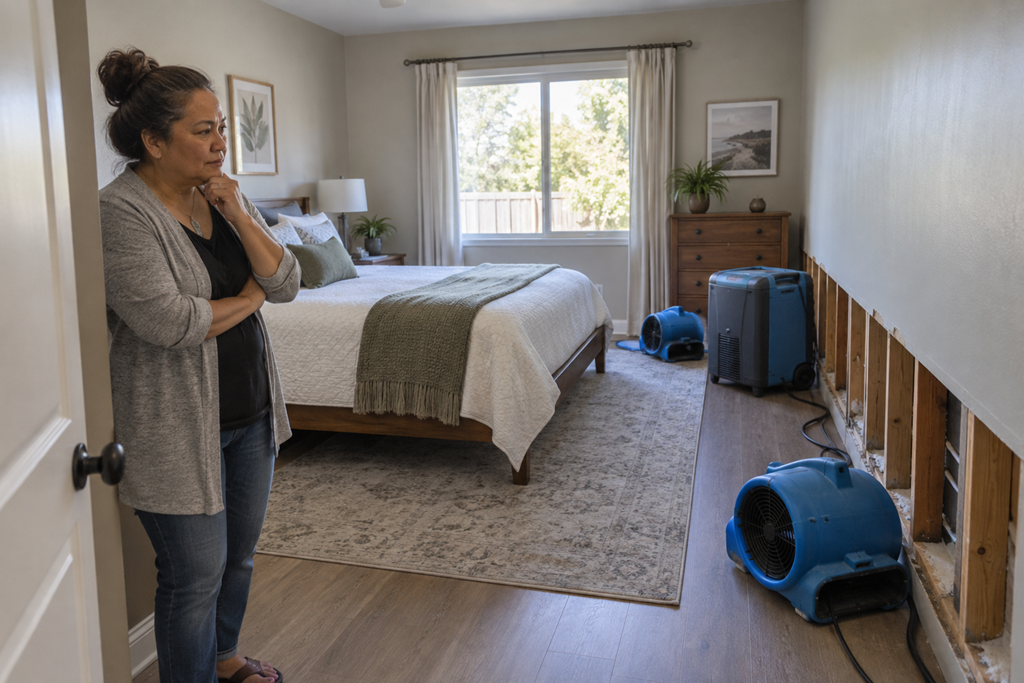
Water damage restoration is usually a process rather than a single repair visit. A restoration company may first evaluate where the water traveled, what materials were affected, and whether moisture remains in places that are not obvious. From there, the work can move through water removal, drying, cleanup, material removal when necessary, and repairs or reconstruction depending on the extent of the damage.
That distinction matters because homeowners sometimes expect restoration to look like an ordinary repair: someone arrives, fixes the damaged area, and leaves. In reality, a room may spend time looking unfinished while moisture is being addressed before cosmetic repairs can reasonably begin.
For Sacramento-area homeowners trying to understand what happens next, knowing the general rhythm of the process can make conversations with restoration providers much easier to follow.
The First Visit Is Often About Understanding the Real Scope
The most obvious water damage is not always the complete picture.
A wet section of flooring, staining near a wall, or water beneath a cabinet may show where the problem became visible. A restoration professional may also evaluate nearby materials and adjoining areas to better understand how far moisture traveled.
This is one reason the initial evaluation matters. The visible spot can be relatively small while the area that needs attention is somewhat larger—or the damage may prove more limited than the homeowner first feared.
The goal at this point is not simply to make the room look dry. It is to understand which areas and materials have actually been affected.
A provider may use moisture-detection equipment, visual inspection, photographs, and information about what happened to establish the likely scope of the restoration work.
Removing Standing Water Does Not Mean the Area Is Fully Dry
When there is visible or accumulated water, removing it can create an immediate visual improvement.
But restoration typically does not end when the visible water disappears.
Building materials can retain moisture even when their surfaces no longer appear wet. Depending on the situation, a restoration company may use professional drying equipment and continue checking conditions over time.
This phase can feel uneventful from a homeowner's perspective. Equipment may be operating while the room itself appears largely unchanged.
That does not necessarily mean nothing is happening.
One of the useful things to understand about the restoration process is that some of its most important progress may be difficult to see. The provider may be watching how affected materials respond and determining when the drying portion of the work has reached an appropriate stopping point.
The Room May Look More Disrupted Before It Looks Finished
Water damage restoration can sometimes involve removing affected materials so that the remaining area can be evaluated, dried, cleaned, or prepared for repair.
Depending on the damage, that could involve portions of trim, flooring, wall material, cabinetry components, insulation, or other materials. Other items may be able to remain in place.
This can create a confusing middle stage.
The original water may be gone, yet the room may have exposed areas, moved belongings, drying equipment, or unfinished surfaces. To someone expecting an immediate repair, the property can temporarily look less complete even though the restoration process is moving forward.
That middle stage is worth recognizing because restoration and reconstruction are not always the same activity.
Addressing moisture and damaged materials generally comes before making the space look finished again.
Drying and Monitoring Can Affect the Timeline
There is no single restoration timeline that fits every water-damage situation.
The amount of water involved is only one factor. The materials affected, how far moisture traveled, accessibility, the layout of the property, and what needs to be removed or dried can all influence the amount of work involved.
A provider may also need to evaluate more than one area.
For example, water that became visible in one room may have reached an adjoining wall, flooring transition, cabinet base, or nearby space. That does not automatically mean extensive damage exists, but it explains why the restoration scope may not be based solely on the size of the first visible stain.
This is also why two situations that initially look similar can progress differently.
Rather than focusing only on how many days the project is expected to take, it can be more useful to understand what conditions the restoration company is monitoring and what needs to happen before the next phase begins.
Cleanup and Material Decisions Depend on What Was Affected
Not every material exposed to water is handled in exactly the same way.
Some materials may remain after they have been appropriately addressed. Others may need to be removed because of their condition, composition, location, or the circumstances of the water damage.
The provider should be able to explain what they believe needs attention and why.
For homeowners, this is an important point to slow down and understand. A restoration project should not feel like unexplained demolition, but it also should not be judged solely by whether a material still looks acceptable from across the room.
If part of the proposed work is unclear, ask which areas are affected, which materials are expected to remain, which may be removed, and how those decisions relate to the restoration scope.
Repairs Usually Come After the Moisture Problem Has Been Addressed
Once the restoration portion reaches the appropriate point, the property may still need repairs.
Those repairs could be minor or more involved depending on what was removed or damaged.
This is where another common misunderstanding can arise: the company handling the initial water-damage work may or may not be the same company completing every final repair.
Some restoration providers handle both the initial restoration work and reconstruction. In other situations, different professionals may be involved in different phases.
Before assuming the entire job is included, ask what the provider considers part of its scope.
Understanding where water removal and drying end and where reconstruction begins can prevent confusion later when the room is dry but does not yet look finished.
Documentation May Be Happening Throughout the Project
A restoration company may document affected areas, conditions, moisture readings, removed materials, equipment placement, or work performed during different portions of the project.
If an insurance claim is involved, homeowners may also have additional conversations with their insurer about documentation and coverage. Coverage decisions depend on the individual policy and circumstances, so the restoration provider's work and the insurer's coverage decision should not automatically be treated as the same thing.
Even when insurance is not involved, documentation can help a homeowner understand what was found and what work was performed.
If something about the scope changes during the project, asking for an explanation of what changed and why can make the next decision easier to evaluate.
A Few Questions Can Make the Process Much Easier to Follow
Water damage is disruptive enough without feeling uncertain about what each stage of the project means. Before or during the work, useful questions can include:
- What areas have you identified as affected?
- What part of the process are we currently in?
- What are you monitoring before moving to the next phase?
- Are any materials expected to be removed, and why?
- Which portions of the property are expected to remain untouched?
- Does your scope include final repairs or reconstruction?
- What should I expect the room to look like when your portion of the work is complete?
- If the scope changes, how will that be explained before additional work proceeds?
A provider should be able to discuss the project in terms a homeowner can understand rather than expecting the homeowner to interpret equipment, terminology, or unfinished surfaces on their own.
The Most Important Expectation Is That Restoration Happens in Phases
Water damage restoration can be easier to understand once it is viewed as a sequence of related phases rather than one repair appointment.
The visible water may be addressed first, but evaluating moisture, drying materials, deciding what can remain, removing affected materials when necessary, and completing final repairs can all happen at different points.
For Sacramento-area homeowners comparing restoration companies or preparing for work to begin, ask what the provider is responsible for, what stage comes next, and what conditions determine when the project can move forward.
Knowing that a temporarily unfinished room can be part of the process—not necessarily the final result—can help you evaluate the work and communicate with a local restoration provider more effectively.