High humidity inside your home can make rooms feel uncomfortable, cause condensation to collect on windows, create persistent musty odors, and expose household materials to unnecessary moisture. Reducing indoor humidity starts with understanding where the excess moisture comes from and how it accumulates. In many situations, adjusting everyday household habits, improving ventilation, and monitoring moisture levels can make a noticeable difference without requiring major home improvements.
Understand where excess indoor moisture comes from
Humidity refers to the amount of moisture in the air. Although some indoor humidity is normal, problems can develop when moisture enters or accumulates faster than it can be removed.
Many ordinary household activities release moisture into the air, including:
- Taking hot showers and baths.
- Boiling water and cooking uncovered food.
- Drying laundry indoors.
- Using humidifiers unnecessarily.
- Operating clothes dryers that do not vent properly.
- Using evaporative cooling equipment.
- Allowing wet towels, clothing, or other damp materials to accumulate.
Outdoor humidity, insufficient ventilation, plumbing leaks, and moisture entering through parts of the building can also contribute.
The source is not always obvious. A bathroom may generate moisture that eventually affects an adjoining bedroom, while a poorly ventilated laundry room may contribute to humidity elsewhere in the home.
Identifying when and where humidity increases can help you determine which changes are most likely to be useful.
Find out whether your indoor humidity is consistently high
A room that feels warm or stuffy is not necessarily excessively humid. Temperature, limited air circulation, and other indoor conditions can create similar sensations.
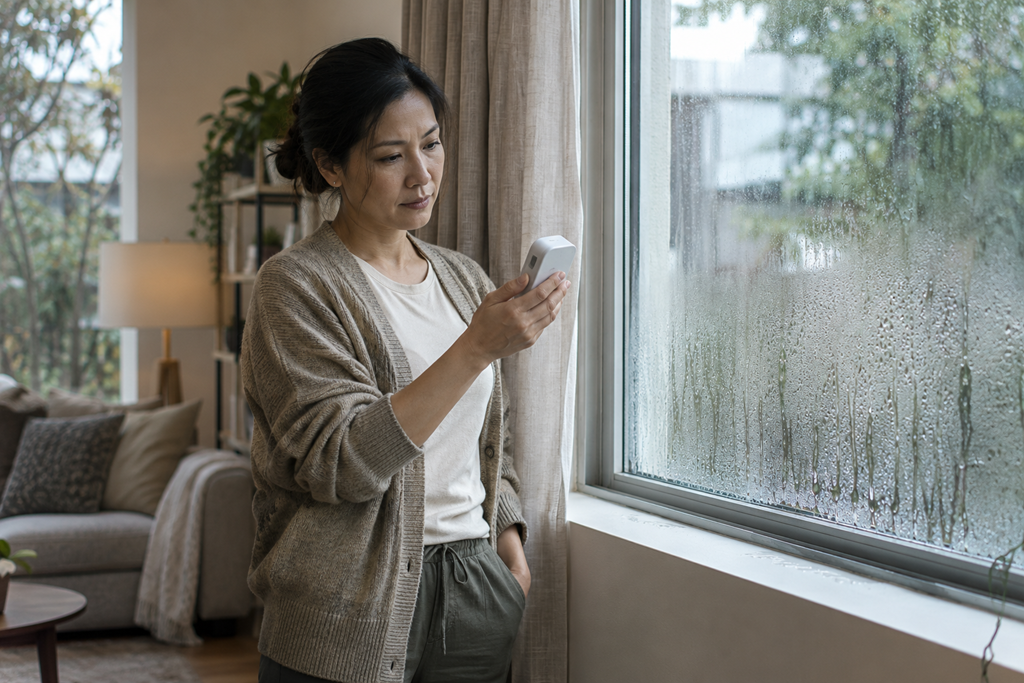
A small household humidity monitor, also called a hygrometer, can help you distinguish between these conditions.
As a general household guideline, aim to maintain indoor relative humidity between 30% and 50% when practical. Persistent readings above 60% deserve closer attention because prolonged moisture exposure can encourage mold growth and contribute to other household moisture problems.
Rather than relying on one measurement, check humidity at different times and in different areas of your home.
Useful measurement locations may include:
- Bedrooms that frequently feel stuffy.
- Living areas where household members spend considerable time.
- Bathrooms after showering.
- Laundry rooms during and after use.
- Basements or other areas that regularly feel damp.
Follow the monitor's placement instructions and avoid positioning it immediately beside a shower, cooking appliance, direct sunlight, or air-conditioning vent when measuring general room conditions.
A temporary increase after cooking or showering is different from humidity that remains elevated throughout the day.
Reduce moisture at its source
One of the most useful ways to lower indoor humidity is to reduce the amount of moisture being released into your living space.
Small adjustments to everyday routines can help prevent moisture from accumulating unnecessarily.
Manage bathroom moisture after showering
Use an existing bathroom exhaust fan that vents outdoors while showering, and allow it to continue operating afterward until excess moisture has cleared.
When practical, wipe away standing water from shower surfaces and hang wet towels where they can dry without remaining bunched together.
If bathroom mirrors, walls, or windows remain wet long after showering, the room may not be removing moisture adequately.
Limit moisture released during cooking
Cooking can introduce considerable moisture into the kitchen, particularly when boiling water or preparing meals that produce sustained steam.
Use lids on pots when appropriate and operate an outdoor-vented kitchen exhaust hood during moisture-producing cooking activities.
A recirculating range hood may help capture grease and certain cooking odors, but it generally does not remove water vapor from the home.
Pay attention to laundry-related moisture
Drying clothing indoors releases moisture as water evaporates from the fabric.
Whenever practical, use a suitable outdoor drying location or a properly functioning clothes dryer designed to manage or exhaust moisture appropriately.
Avoid leaving wet laundry in enclosed rooms for extended periods, particularly in spaces that already experience elevated humidity.
Review unnecessary humidifier use
If you regularly use a humidifier, check whether the room actually needs additional moisture.
A humidifier that was helpful during a dry period may become unnecessary when indoor conditions change. Monitoring humidity can help you determine when to reduce or discontinue its use.
Bring in fresh air when outdoor conditions are suitable
Opening windows can help reduce indoor humidity when outdoor air contains less moisture than indoor air.
However, opening windows during rainy, muggy, or particularly humid conditions may introduce additional moisture instead of removing it.
Outdoor relative humidity alone does not always provide a reliable comparison because humidity percentages change with temperature. When available, comparing indoor and outdoor dew points can provide a better indication of which air contains less moisture.
If outdoor conditions are favorable and air quality is acceptable, opening suitable windows can help exchange humid indoor air with drier outdoor air.
When outdoor air is particularly moist, keeping windows closed and relying on appropriate indoor moisture-control equipment may be more helpful.
The goal is not simply to introduce more air. It is to introduce air that helps improve indoor conditions.
Improve air circulation in areas where moisture tends to linger
Some parts of a home receive less air circulation than others. Closets, enclosed utility areas, corners behind furniture, and rooms with frequently closed doors may develop localized moisture concerns.
Consider making ordinary adjustments such as leaving reasonable space between large furniture and walls, avoiding overcrowded closets, and keeping accessible heating and cooling vents unobstructed.
Household fans can also help circulate air in suitable locations.
However, air circulation and moisture removal are not the same thing.
A fan may help wet surfaces dry by moving moisture into the surrounding air, but it does not directly remove that moisture from the home. Ventilation, air conditioning, or dehumidification may still be necessary.
This distinction matters when a room continues to feel damp despite having a fan running regularly.
Use air conditioning or a dehumidifier when appropriate
Many air-conditioning systems remove some moisture from indoor air as part of their cooling operation.
During suitable weather, normal air-conditioning use may help improve both temperature and humidity. However, cooling equipment that is not operating as intended may provide limited moisture control.
A household dehumidifier can provide additional moisture removal in rooms where humidity remains elevated.
Dehumidifiers are particularly useful to consider when dealing with:
- Frequently damp basements.
- Laundry rooms with recurring moisture concerns.
- Bedrooms that remain humid despite routine ventilation.
- Living areas where humidity stays elevated for extended periods.
When selecting or operating a dehumidifier, consider the size of the area, the amount of moisture present, available placement space, and the manufacturer's operating and maintenance instructions.
Keep the collection container clean, empty it as needed, and maintain the equipment according to its instructions.
A dehumidifier can remove moisture from the air, but it cannot repair a plumbing leak, stop water from entering a building, or correct an underlying ventilation defect.
Recognize when humidity is a symptom of another problem
Not every indoor humidity issue originates from ordinary household activities.
A room that remains damp despite reasonable moisture-control efforts may have an underlying problem that deserves further evaluation.
Pay particular attention to conditions such as:
- Recurring water stains on walls or ceilings.
- Persistent dampness around flooring or baseboards.
- Unexplained moisture beneath sinks or near appliances.
- Musty odors that continue after humidity levels improve.
- Repeated condensation affecting the same area.
- Persistent or extensive visible mold growth.
- Humidity that remains unusually high despite appropriate ventilation and dehumidification.
These observations do not establish a specific cause. They indicate that reducing airborne moisture alone may not address the entire situation.
Depending on the circumstances, an HVAC professional, plumber, building moisture specialist, or water damage restoration professional may be appropriate.
Renters should document recurring moisture conditions and notify their landlord or property manager rather than attempting unauthorized repairs or modifications.
Maintain indoor moisture levels instead of repeatedly correcting them
Once humidity becomes more manageable, continue the household habits that helped improve it.
Occasional monitoring, appropriate exhaust fan use, attention to damp household materials, and suitable ventilation can help you recognize changing conditions before moisture becomes a persistent concern.
If you need equipment to support these efforts, the Sacramento Local Pros Store's Home Monitoring and Moisture Management category is intended to help you explore household humidity monitors, dehumidification equipment, and other moisture-management products.
Disclosure: Sacramento Local Pros may earn a commission from qualifying purchases made through links on the Sacramento Local Pros Store.
Reducing high humidity inside your home is ultimately about balancing the moisture being introduced with the moisture being removed. By understanding that relationship, you can make more informed household adjustments and recognize when persistent dampness deserves attention beyond routine moisture management.