Your home exterior may need new paint when the finish is no longer protecting the surface underneath, not just when the color looks faded. Peeling, cracking, chalky residue, exposed wood, worn trim, separated caulking, water stains, and uneven fading can all be signs that it may be time to talk with a qualified house painting professional.
For many Sacramento-area homeowners, the confusing part is knowing whether the exterior only looks a little tired or whether the paint is starting to fail. That difference matters because exterior paint is more than appearance. It helps protect siding, trim, stucco, wood, and other surfaces from sun exposure, dry conditions, seasonal rain, and everyday wear.
Fading alone does not always tell the whole story
A faded exterior can make a home look older than it is, but fading by itself does not automatically mean the paint has failed. Some colors naturally show sun exposure more clearly than others, especially on sides of the home that receive strong daylight.
The bigger question is whether the surface still looks sealed and intact. If the color is faded but the paint is smooth, attached, and not chalking heavily, the timing may be less urgent. If fading appears alongside peeling, cracking, rough patches, or exposed material, it may be a sign that the protective layer is breaking down.
This is where a local painting estimate can help. A good conversation should go beyond color selection and include what the painter sees in the surface condition.
Peeling, cracking, and bubbling deserve closer attention
Paint that is peeling, cracking, blistering, or bubbling is often easier to recognize than simple fading. These signs suggest the coating is no longer staying bonded to the surface the way it should.
Small isolated areas may be connected to trim edges, older caulking, moisture exposure, or surface preparation from a previous paint job. Larger areas may point to broader wear. Either way, the important point is not to assume new paint alone will solve every visible problem.
Before hiring a house painter, Sacramento homeowners should ask whether the estimate includes preparation, scraping, sanding, priming, caulking, minor surface repairs, and any areas that may need additional evaluation. The quality of preparation often affects how clearly the project scope is understood.
Chalky residue can be a quiet warning sign
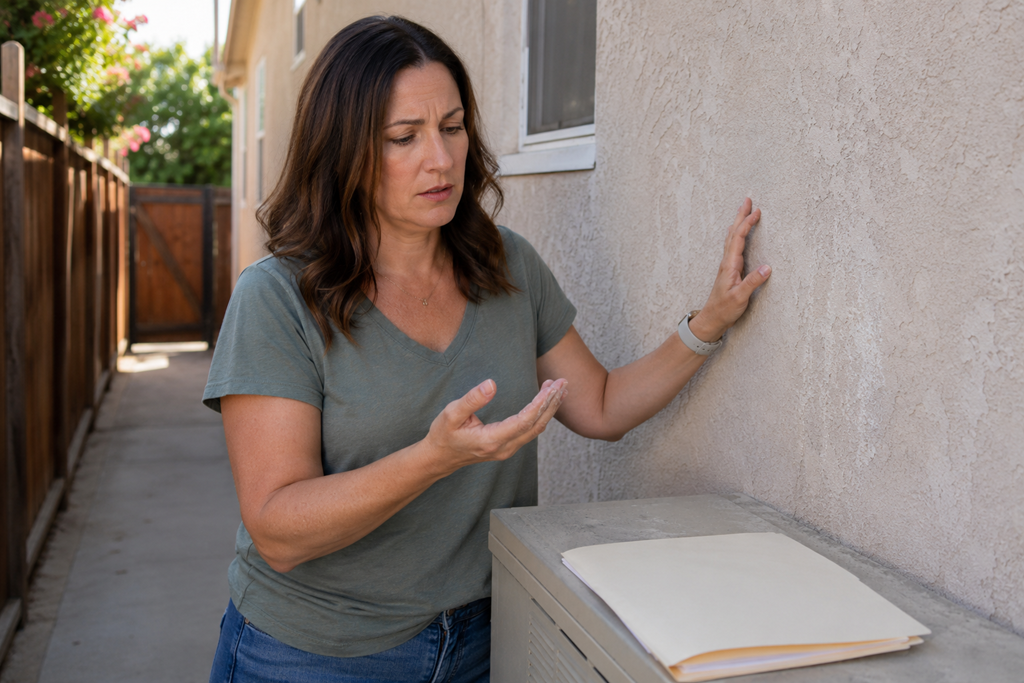
One common sign homeowners miss is chalking. This can look like a powdery residue on the exterior surface. Sometimes it shows up when someone brushes against the siding or notices a pale film on their hand after touching the wall.
A small amount of weathering can be normal on older exterior paint, but heavy chalking may mean the paint film is breaking down. It can also affect how well a future coating bonds if the surface is not prepared correctly.
This is not something most homeowners need to diagnose on their own. It is simply a useful detail to notice before requesting an estimate, because it gives the painter a clearer picture of what may be happening.
Exposed wood, worn trim, and open seams should not be ignored
Trim, fascia, window frames, porch posts, and other detailed exterior areas often show wear before broad wall surfaces do. These areas may have edges, joints, or horizontal surfaces where paint wears faster.
If wood is exposed, paint is flaking around seams, or caulking has separated around windows and trim, the issue may be more than cosmetic. The surface may need prep work or minor repair before repainting makes sense.
This is also where estimates can vary. One painter may include more preparation and caulking in the scope, while another may focus mainly on applying paint. When comparing quotes, the wording matters. A lower price may not mean the same work is included.
Uneven wear can reveal where the home takes the most exposure
Not every side of a home ages the same way. One wall may face stronger sun. Another may show more wear near sprinklers, landscaping, roof edges, shaded areas, or places where water tends to linger.
Uneven fading, stained sections, or worn paint near specific surfaces can help a painter understand where the exterior is under more stress. It can also help homeowners avoid thinking of the project only as a color refresh.
The more specific you can be about what you have noticed, the easier it is to have a useful estimate conversation. You do not need technical language. “This side looks powdery,” “the trim is peeling,” or “this area looks different after rain” can be enough to start a better discussion.
When the exterior looks tired but you are unsure
Many homeowners reach the decision point before there is obvious damage everywhere. The house may look dull. The trim may be uneven. The color may no longer look consistent. A few areas may be peeling, but not the whole exterior.
That uncertainty is normal. Exterior paint usually wears gradually, so the signs can be easy to explain away. The practical question is whether waiting is likely to make the project simpler or more complicated. If the visible wear is expanding, if bare surfaces are showing, or if multiple areas need attention, it may be worth getting a professional opinion before the scope grows.
This does not mean every faded home needs immediate repainting. It means the condition of the surface should guide the decision more than appearance alone.
Helpful questions before comparing painting estimates
When speaking with a Sacramento-area house painting provider, a few simple questions can make the estimate easier to understand:
What areas of the exterior show the most paint wear?
Does the estimate include surface preparation, caulking, priming, and cleanup?
Are there areas that may need repair before painting?
What paint type or finish is being recommended for the surfaces involved?
How will changes be handled if additional prep work is discovered?
These questions help shift the conversation from “How much to paint the house?” to “What condition is the exterior in, and what work is actually included?”
A worn exterior is easier to understand when you separate appearance from protection
The easiest mistake is treating exterior paint as only a curb appeal issue. Color matters, but protection matters too. A home can look faded without needing major work right away, and another home can still look decent from the street while trim, seams, or hidden sides are starting to fail.
A better way to think about the decision is to look for patterns. One faded wall may be cosmetic. Fading plus peeling trim, chalky surfaces, cracked caulking, and exposed material tells a different story.
Before hiring a local painter, take a slow walk around the home, notice where the wear is showing, and use those observations to guide the estimate conversation. You do not need to diagnose the problem yourself. You just need enough clarity to ask better questions and compare painting providers with more confidence.