An HVAC system may be working too hard if it runs for long stretches, struggles to keep rooms comfortable, turns on and off more often than usual, or needs repeated thermostat adjustments just to make the home feel normal.
For Sacramento-area homeowners, this can be especially noticeable during warm afternoons, dry stretches, or seasonal temperature swings. The issue is not always obvious at first. The system may still turn on. Air may still come through the vents. The thermostat may still show a reasonable setting. But the home may feel like the equipment is constantly chasing comfort instead of maintaining it.
That is the difference many people miss: an HVAC system does not have to stop working completely to be under strain.
When “Still Running” Does Not Mean “Running Well”
Many homeowners assume an HVAC problem is only serious when the system stops producing cool or warm air. In reality, a system can continue operating while using more effort than it should.
You may notice the air conditioner running almost nonstop but certain rooms still feel warm. You may lower the thermostat a few degrees and still wait a long time for the house to catch up. You may hear the system start frequently, shut off, and then start again soon after. Or you may realize the home only feels comfortable in one area while bedrooms, upstairs rooms, or sun-exposed spaces feel different.
These patterns do not automatically mean the system needs replacement. They do mean something may be making the equipment work harder than expected.
Everyday Signs Your HVAC System May Be Straining
A system that is working too hard often reveals itself through patterns, not one single clue.
One common sign is longer run time. If the system seems to stay on for extended periods without making the home noticeably more comfortable, it may be fighting against airflow problems, heat gain, duct issues, or equipment wear.
Another sign is uneven comfort. One room may feel fine while another feels stuffy, hot, or slow to cool. This can lead homeowners to keep changing the thermostat even though the real issue may not be the thermostat setting.
Frequent cycling can also be a clue. If the system turns on and off repeatedly in short bursts, it may be struggling to complete a normal heating or cooling cycle. This is different from ordinary cycling throughout the day.
Unusual noise, weaker airflow, more dust near vents, or a home that feels humid or stale can also point to strain. None of these signs gives a complete diagnosis by itself, but together they can help a homeowner recognize when the system deserves closer attention.
Why This Can Be Easy To Misread
HVAC strain is easy to misunderstand because the symptoms often feel like ordinary household annoyances.
A warm upstairs room may seem like “just how the house is.” A system that runs longer during hot weather may seem normal. A higher energy bill may be blamed only on the season. A thermostat adjustment may feel like the easiest fix.
Sometimes those explanations are reasonable. Sacramento-area homes can be affected by sun exposure, insulation gaps, older layouts, attic heat, and room-by-room airflow differences. But when the same comfort problem keeps returning, it is worth looking at the pattern instead of only the moment.
The important question is not, “Did the system turn on?”
A better question is, “Is the system able to maintain comfort without constant help?”
The Thermostat Is Not Always The Main Problem
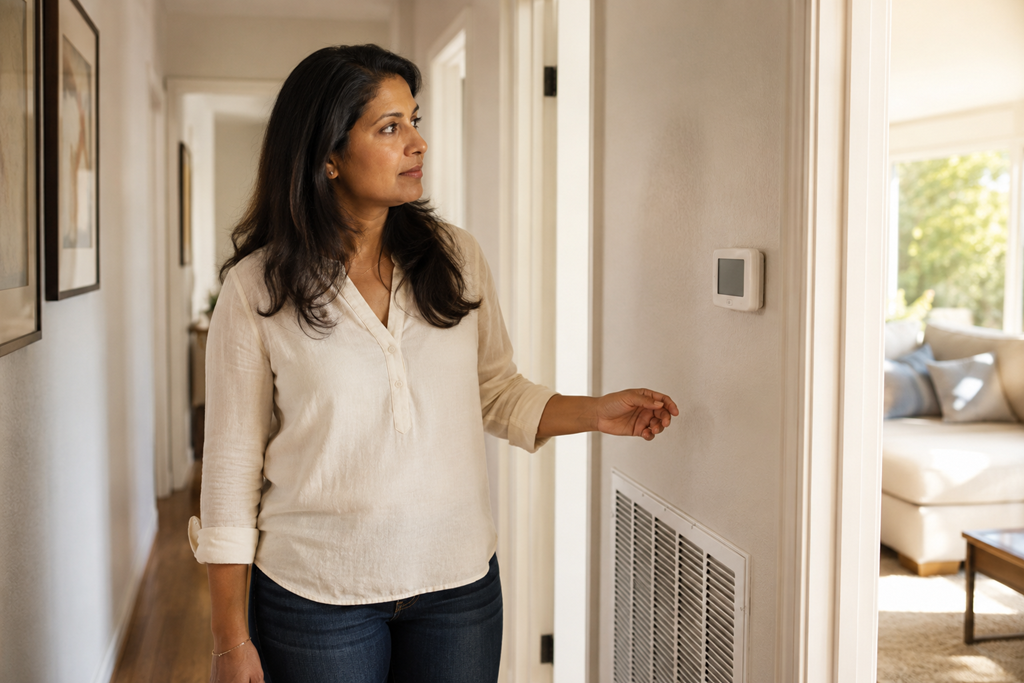
When a home feels uncomfortable, many people start with the thermostat. That is understandable. It is the part of the system homeowners interact with most.
But a thermostat setting is only one part of the comfort picture. If airflow is restricted, ductwork is leaking or poorly balanced, the filter is clogged, the outdoor unit is obstructed, the system is aging, or the equipment is not matched well to the home’s needs, lowering the thermostat may not solve the underlying issue.
In some cases, lowering the temperature can make the system run longer without making the home much more comfortable. That can create a frustrating cycle: adjust the thermostat, wait, adjust again, and still feel unsure whether the system is doing its job.
This is one reason it helps to describe the pattern clearly when speaking with an HVAC professional. “The house will not cool down” is useful, but “the system runs for a long time, the upstairs stays warm, and the airflow feels weaker in two rooms” gives a clearer starting point.
Comfort Problems May Come From The Home, Not Just The Equipment
An HVAC system does not work alone. It is part of a larger home comfort system that includes insulation, windows, ducts, vents, filters, attic conditions, thermostat placement, and how different rooms receive air.
That means an overworked system is not always caused by a failing unit. Sometimes the equipment is trying to overcome a home condition that makes comfort harder to maintain.
For example, rooms with strong afternoon sun may warm faster than shaded rooms. A closed or blocked vent can affect airflow. A dirty filter can restrict movement through the system. Leaky ducts can reduce the amount of conditioned air reaching living areas. Older homes may have comfort differences that become more noticeable during heavy heating or cooling demand.
This matters because the right conversation may not be only about repair versus replacement. It may also involve airflow, duct performance, maintenance history, thermostat location, insulation, or whether the system is being asked to do more than it was designed to handle.
Patterns Worth Mentioning During An HVAC Visit
Before scheduling service or comparing local HVAC providers, it helps to pay attention to what you are actually experiencing.
You do not need to diagnose the system yourself. The goal is to explain what is happening in plain language so the provider can ask better questions and evaluate the right areas.
Helpful details may include whether the issue happens during certain parts of the day, whether one room feels different from the rest of the home, whether airflow feels weaker from specific vents, whether the system runs longer than it used to, or whether the thermostat setting keeps needing adjustment.
You can also mention whether the problem appeared suddenly or gradually. A sudden change may point the conversation in one direction, while a slow decline over time may suggest something else.
The more specific you can be about the pattern, the easier it is to avoid a vague appointment where everyone is guessing from scratch.
Questions To Ask Before Assuming The Worst
If you think your HVAC system is working too hard, it can help to ask a few simple questions during a service visit or estimate conversation:
- Could airflow, ductwork, or filtration be contributing to the problem?
- Is the system completing normal cycles, or does it appear to be running longer than expected?
- Are certain rooms receiving less conditioned air than others?
- Does the equipment condition match the age and layout of the home?
- Are there maintenance issues that should be ruled out before discussing replacement?
- If replacement is suggested, what specific findings support that recommendation?
These questions are not about challenging the provider. They are about making sure the explanation is clear enough for you to understand the decision in front of you.
A good HVAC conversation should help you understand whether the concern is likely a maintenance issue, a repair issue, a comfort-balancing issue, or a larger equipment decision.
Watch For Vague Explanations
One red flag is a recommendation that skips over the reason behind the problem.
If someone says the system is “old,” “not enough,” or “probably done” without explaining what they checked, the homeowner may be left with more confusion than clarity. Age can matter, but age alone does not explain every comfort issue.
Another unclear pattern is when a provider focuses only on equipment size without discussing the home itself. Bigger equipment is not automatically better. Comfort depends on how the system operates with the home’s layout, airflow, ducts, insulation, and thermostat setup.
You do not need a technical lecture. But you should be able to understand the basic reasoning behind any recommendation before approving a repair, replacement, or larger project.
A Hard-Working System Is A Signal To Get Better Information
An HVAC system that seems to be working too hard is not always an emergency and not always a sign that replacement is the next step. But it is a useful signal.
It tells you something in the comfort system may need attention. That could be maintenance, airflow, duct performance, thermostat behavior, equipment condition, home heat gain, or a combination of factors.
For Sacramento residents comparing local HVAC service options, the goal is not to become an HVAC expert. The goal is to recognize the difference between normal operation and a recurring pattern that deserves a clearer explanation.
When you can describe what you are noticing, ask focused questions, and listen for a provider’s reasoning, you are in a better position to make a thoughtful decision before scheduling work, comparing estimates, or committing to a repair or replacement.