Choose flooring by matching the material to what the room regularly has to handle—not just by choosing the look you like most. Foot traffic, moisture, sunlight, pets, furniture, noise, comfort, and cleaning habits all affect whether a floor feels practical after installation. A surface that works well in a quiet bedroom may be frustrating in a busy entryway, kitchen, or family room.
Flooring decisions often become confusing because samples are usually viewed apart from the conditions they will face. A color may look attractive in a showroom, but the more useful question is whether that material fits the way people actually move through, clean, furnish, and live in the room.
The Best Floor Depends on the Demands of the Space
There is rarely one flooring material that is automatically best for every room.
A good flooring choice is one that can handle the room’s normal use without creating unnecessary maintenance, discomfort, or worry. That means two rooms in the same Sacramento-area home may reasonably need different flooring, even when the homeowner prefers a consistent appearance.
For example, a formal guest room may receive little foot traffic and almost no exposure to spills. A nearby hallway may experience shoes, pets, furniture movement, and repeated daily use. Choosing both floors based only on appearance overlooks how differently those spaces function.
One helpful way to think about the decision is this:
Many disappointing flooring outcomes are not caused by a bad product. They are caused by a reasonable product being placed in the wrong room.
Start With What Regularly Reaches the Floor
Before comparing materials, consider what actually comes into contact with the floor during an ordinary week.
That may include:
- Shoes carrying dust or grit
- Water near sinks or exterior doors
- Pet nails and food bowls
- Children’s toys
- Rolling desk chairs
- Heavy dining chairs
- Direct afternoon sunlight
- Laundry baskets or cleaning equipment
- Furniture that is moved frequently
These details may seem minor during a flooring consultation, but they help reveal what the surface will be expected to tolerate over time.
A room that looks quiet when empty may function very differently once daily routines are considered.
High-Traffic Areas Need More Than a “Durable” Label
Entryways, hallways, kitchens, and central family spaces often experience concentrated wear. People repeatedly follow the same paths, turn in the same places, and bring in small amounts of dirt that can affect a floor’s surface.
Durability matters, but the word alone does not tell the whole story.
When evaluating flooring for a busy room, it can help to ask how the material handles:
- Repeated foot traffic
- Surface scratching
- Visible dirt
- Frequent cleaning
- Chair movement
- Worn paths in specific areas
Color, finish, texture, and pattern can also affect how everyday wear appears. A very smooth or highly uniform surface may show dust, marks, and scratches differently from a floor with more visual variation.
The goal is not to find a floor that never shows use. It is to choose one whose appearance and maintenance needs match the amount of activity the room receives.
Moisture Changes the Flooring Decision
Bathrooms, laundry rooms, kitchens, mudrooms, and areas near exterior doors require special consideration because water can reach the floor in different ways.
Some rooms face occasional splashes. Others may experience damp shoes, appliance leaks, pet bowls, wet towels, or repeated mopping.
Terms such as water-resistant and waterproof can sound reassuring, but they may not describe every part of the installation. The flooring surface, seams, perimeter, underlayment, and subfloor may respond differently when moisture is present.
Before selecting a material for a moisture-prone room, ask the installer to explain:
- What level of moisture exposure the product is designed to handle
- Whether water can enter through seams or edges
- How spills should be cleaned
- Whether the subfloor requires special preparation
- What moisture-related situations may not be covered by the product warranty
This does not mean every room with a sink needs the same type of flooring. It means the expected source and frequency of moisture should be part of the comparison.
Comfort and Sound Matter in Quieter Rooms
Bedrooms, nurseries, upstairs rooms, and home offices may not require the same resistance to dirt and water as an entryway, but they have their own practical demands.
In these spaces, homeowners may care more about:
- How the floor feels underfoot
- Whether it feels cold during certain parts of the day
- How footsteps travel through the home
- Whether chairs create noticeable noise
- How much sound is absorbed or reflected
- Whether the room feels comfortable without area rugs
A hard flooring surface may be easy to clean but feel louder than expected in an upstairs bedroom. A softer material may feel comfortable but require more attention in a room with a rolling office chair or frequent spills.
These are not simply design preferences. They affect how the room feels during normal use.
Sunlight and Heat Can Reveal a Poor Fit
Sacramento-area homes can have rooms that receive strong sunlight through windows or patio doors. That exposure may influence the appearance and performance of certain flooring materials.
Direct sunlight can contribute to fading or color changes. Heat near large windows may also affect how some materials expand, contract, or feel underfoot.
The amount of exposure can vary significantly within the same home. An interior hallway may receive little direct light, while an adjoining room experiences several hours of concentrated sun.
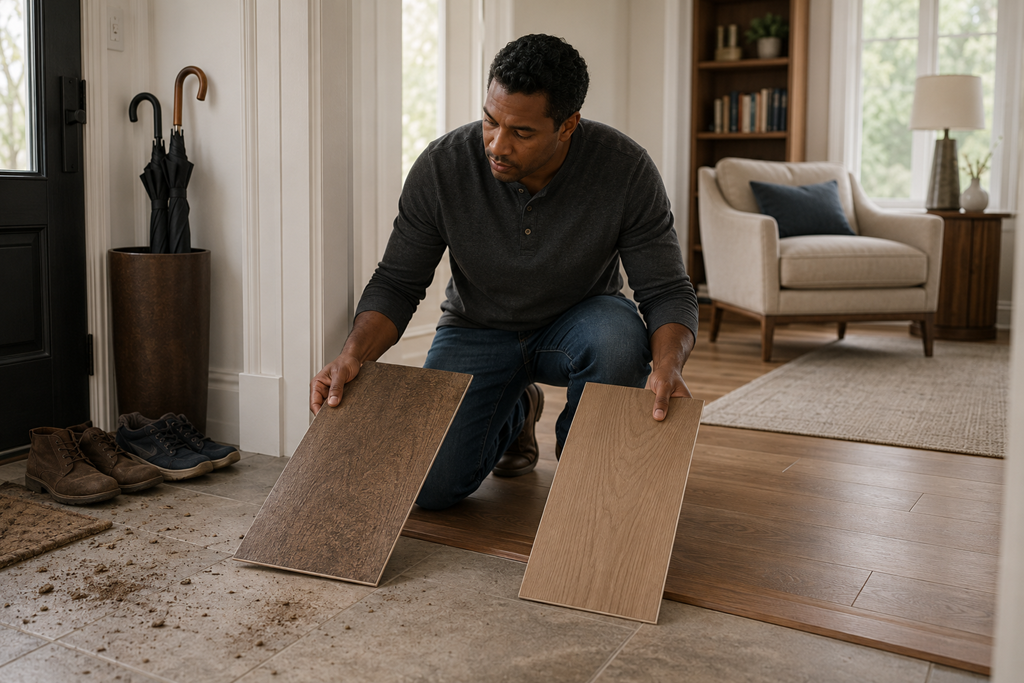
When reviewing flooring samples, consider placing them in the actual room at different times of day. This can reveal how the color changes in natural light and whether a finish shows glare, dust, or surface variation more clearly than expected.
A local flooring professional should also be able to explain whether prolonged sun exposure creates concerns for the material being considered.
Pets, Children, and Furniture Create Specific Wear Patterns
A room does not need to be crowded to place stress on a floor.
A single active pet may repeatedly turn near a doorway. A dining chair may slide across the same area several times a day. A child’s play space may experience dropped toys, craft materials, and frequent cleaning.
Rather than asking only whether flooring is “pet-friendly” or “family-friendly,” ask what that description means in practical terms.
A flooring option may resist stains but still show scratches. Another may hide marks well but require faster cleanup after spills. A textured finish may provide useful traction while requiring a different cleaning routine.
The better question is not whether the floor works for all pets or all families. It is whether it fits the particular activity happening in that room.
A Consistent Look Does Not Require One Material Everywhere
Some homeowners choose one flooring material throughout the home because they want uninterrupted visual flow. That approach can work, but it should not override the needs of individual spaces.
Different materials can still feel connected when they share similar color temperatures, plank proportions, patterns, or finishes. Thoughtful transitions can make room-specific flooring feel intentional rather than mismatched.
This may be especially useful where a dry living area meets a moisture-prone laundry room, bathroom, or exterior entrance.
Before committing to one material throughout the property, ask whether any room would be accepting a significant practical compromise merely to maintain visual continuity.
The most attractive whole-home design is not always the one with the fewest materials. It is often the one in which each material appears appropriate for its location.
Questions That Help Match Flooring to the Room
When speaking with a Sacramento-area flooring installer or repair professional, a few focused questions can make the discussion more useful:
- What conditions would make this flooring a poor fit for this room?
- How does it respond to the amount of traffic this room receives?
- What happens when water reaches the seams or edges?
- Is direct sunlight likely to affect its appearance?
- How will pets, rolling chairs, or moving furniture affect the surface?
- What preparation does the existing floor or subfloor require?
- What cleaning products or routines should be avoided?
- Can I view a larger sample in the room before deciding?
Clear answers should connect the product’s features to the way the room will actually be used. Be cautious when every option is described as suitable without any discussion of limitations or tradeoffs.
Choose for Daily Life, Not Just Installation Day
Flooring is easiest to evaluate when the room is treated as an active space rather than an empty design project.
Think about who uses the room, what reaches the floor, how often it is cleaned, where sunlight falls, and what kinds of wear are most likely. Then compare materials based on those conditions.
A qualified local professional can help explain product differences, installation requirements, and possible limitations. The final choice should make sense not only when the new floor is first revealed, but also during the ordinary routines that follow.