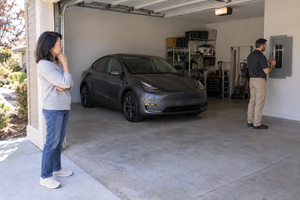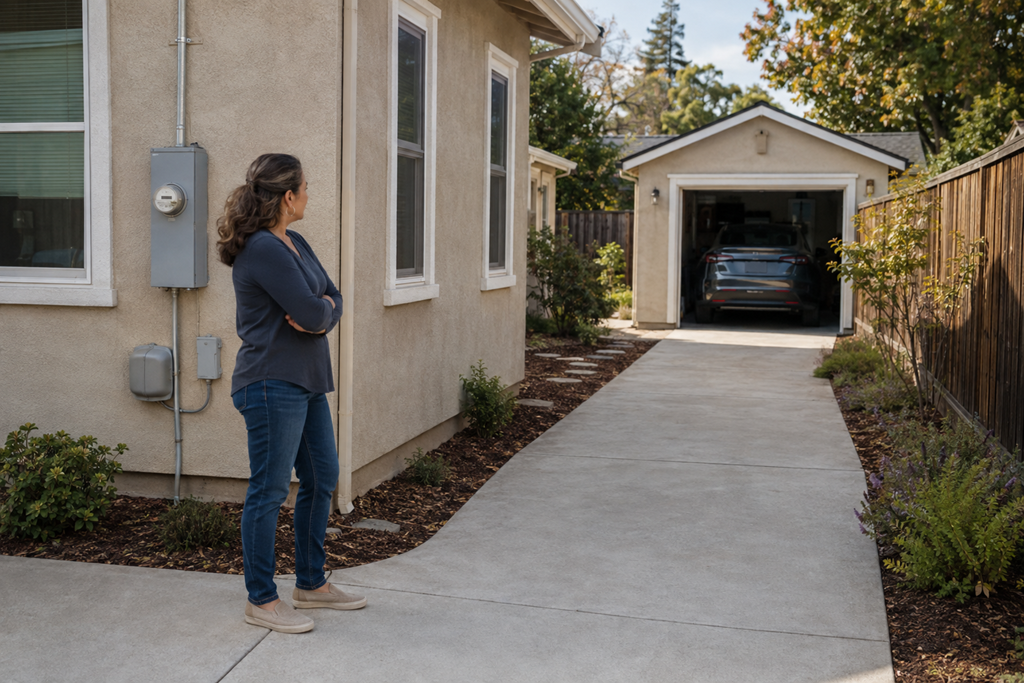
The cost of EV charger installation can vary because the charger itself is only one part of the project. For a Sacramento-area homeowner, the final scope may depend on the home’s existing electrical capacity, where the charger will be located, how easily wiring can reach that location, and whether other electrical or property work is needed to support the installation.
That is why a project that sounds simple at first — adding a charger in the garage or near the driveway — can produce very different estimates from one home to another. The visible charger may look similar, but the work required behind it can be quite different.
Understanding those differences can make it easier to compare quotes without assuming that every installation should cost roughly the same amount.
The Charger Is Only One Part Of The Installation
It is easy to focus on the charging unit because that is the part you will eventually see and use.
But an installation estimate may reflect much more than mounting the charger.
A qualified electrical professional may need to consider the home's existing electrical system, the intended charging location, the path between the electrical source and that location, and any additional work required to complete the project appropriately.
In one home, the planned charger location might be relatively close to the relevant electrical equipment with a straightforward path between them. In another, the preferred parking location could be farther away, separated by finished walls, outdoor areas, structural features, or other obstacles.
Those projects may involve the same type of charger while having very different installation scopes.
Your Existing Electrical System Can Change The Starting Point
One of the biggest variables is what already exists at the property.
Homes do not all begin with identical electrical systems, available capacity, panel configurations, or previous upgrades. A professional evaluating an EV charger project may need to determine whether the existing system can reasonably support the proposed installation or whether additional electrical work should be discussed.
This is an important distinction when comparing estimates.
One quote may be based on a relatively straightforward addition to an existing system. Another property may require additional work before the charger itself can be installed.
That does not automatically mean one provider is charging more for the same job. The underlying job may not actually be the same.
The Charger Location Can Affect More Than Convenience
Where you want to park and charge the vehicle can influence the amount and type of work involved.
A charger located near the home's electrical equipment may present a different project than one installed across a garage, on another exterior wall, near a driveway, or in a detached structure.
The important issue is not simply the straight-line distance between two points.
The actual route needed to connect the charging location to the home's electrical system may matter more.
Finished walls, cabinetry, doorways, ceilings, exterior surfaces, landscaping, concrete, gates, and other property features can affect how straightforward that route is.
For Sacramento-area homeowners comparing quotes, asking how the proposed charger location affects the scope can be more useful than simply asking how much the charger costs.
Property Access And Finished Surfaces May Affect The Work
Installation conditions around the property can also matter.
A clear, accessible garage may allow a professional to approach the project differently from a garage filled with built-in storage, a narrow side yard, a detached structure, or a charging location surrounded by finished surfaces.
The same is true when reaching the proposed location requires working around parts of the property that the homeowner wants to preserve.
This does not mean that every obstacle creates a major additional expense. It simply means that physical access and the condition of the installation area can be part of the scope.
When reviewing an estimate, it can be helpful to understand whether any restoration, surface work, access preparation, or related property work is included or expected to be handled separately.
The Charger You Choose Can Influence The Installation
EV chargers are not all identical, and the charging setup a homeowner wants may affect what the project requires.
A provider may ask about the vehicle, charging equipment, preferred charging location, and how the homeowner expects to use the charger before defining the project.
The goal for the consumer does not need to be understanding the technical design.
Instead, it is useful to recognize that selecting a charger and determining the installation scope are connected decisions.
Buying charging equipment first and assuming that every home can accommodate it in the same way can create confusion later.
Before purchasing equipment independently, homeowners may want to ask whether the professional they are considering has any compatibility or installation considerations they should understand.
Additional Project Requirements Can Change The Estimate
Some installations may involve more than electrical labor and the charging unit itself.
Depending on the property and proposed project, an estimate could potentially account for related site work, access considerations, restoration, equipment, evaluation, or administrative requirements associated with completing the installation.
Permit, inspection, or utility-related considerations may also differ depending on the particular project and local requirements.
Rather than assuming those items are automatically included or excluded, ask the provider to explain what their estimate covers.
That makes the conversation less about guessing what a price means and more about understanding what work the price represents.
Two Quotes May Not Be Pricing The Same Scope
This is where EV charger estimates can become confusing.
Suppose one provider gives a lower total while another gives a higher one. At first glance, the lower estimate may appear to be the obvious choice.
But the totals alone do not reveal whether both providers included the same work.
One estimate might include the charging equipment while another assumes you will supply it. One may account for additional electrical work that another has not yet determined is necessary. Restoration or related property work may be included, excluded, or handled differently.
The useful question becomes:
What exactly is each provider pricing?
A detailed explanation of the proposed scope can make a price difference much easier to understand.
A Few Questions Can Make Cost Comparisons Clearer
You do not need to become an electrical expert to have a useful conversation with a provider.
Before comparing EV charger installation estimates, consider asking:
- What work is included in this estimate?
- Is the charging equipment included, or would I purchase it separately?
- Does the estimate assume my existing electrical system can support the proposed installation?
- How does the charger location affect the project?
- Are there any access, surface, or property conditions that could change the scope?
- Are permit, inspection, or other administrative costs included when applicable?
- What could cause the final scope to change after the project is evaluated more closely?
These questions can help separate the visible price from the assumptions behind it.
Be Careful With Estimates That Look Similar But Explain Different Things
A common misunderstanding is treating EV charger installation as a standardized service with one predictable cost.
It is not necessarily that simple.
Another mistake is comparing only the bottom-line price while overlooking differences in equipment, electrical work, installation location, site conditions, and excluded items.
A lower quote is not automatically incomplete, and a higher quote is not automatically more thorough. The useful comparison is whether each provider has clearly explained the work being proposed.
If two estimates differ substantially, asking each provider to walk through the scope can reveal whether the difference comes from pricing or from completely different assumptions about the project.
A Clear Scope Makes The Price Easier To Evaluate
The cost of EV charger installation is easier to understand when you stop viewing it as the price of attaching a charger to a wall and start viewing it as the cost of completing a property-specific electrical project.
The charging unit matters, but so do the home's existing electrical system, the charger location, the route needed to reach it, site access, property conditions, and what the estimate includes.
For Sacramento-area homeowners, understanding those variables can make conversations with local professionals more productive and make competing estimates easier to compare.
You do not need to determine the technical solution yourself. The practical goal is to understand what each provider believes the project involves before deciding which proposal makes the most sense for your home.