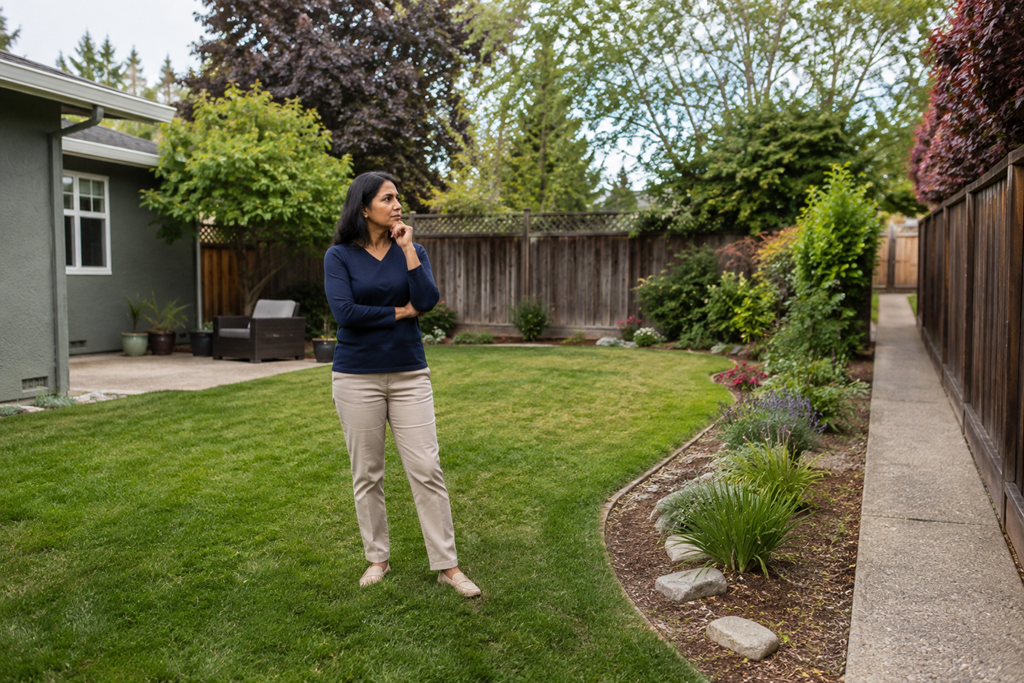
Landscaping costs can vary widely because the price is shaped by much more than the size of the yard. The amount of site preparation, the condition of the existing landscape, access to the work area, the materials and plants selected, irrigation needs, drainage concerns, and the amount of ongoing maintenance expected can all change what a project involves. Two Sacramento-area properties with similar square footage can therefore lead to very different estimates.
That is one reason landscaping quotes can be confusing at first. A homeowner may look at the yard and think primarily in terms of its dimensions, while a landscaping professional may be considering how many different tasks, materials, site conditions, and service requirements are involved.
Understanding those differences can make it easier to review an estimate without assuming that one number should automatically apply to every property.
Start With What The Landscaper Is Actually Being Asked To Do
“Landscaping” can describe very different kinds of work.
One homeowner may want routine mowing, trimming, and general maintenance. Another may be considering a one-time cleanup. Someone else may be planning new planting areas, irrigation changes, lawn replacement, mulch, decorative rock, walkways, or a larger redesign involving several parts of the property.
Those projects may involve the same backyard or front yard, but they are not the same service.
The first useful question when thinking about cost is therefore not simply, “How large is the yard?”
It is, “What work is actually included?”
A relatively large property with a straightforward maintenance plan may sometimes involve less work than a smaller property with several planting areas, established landscaping, limited access, and numerous requested changes.
Existing Conditions Can Change The Amount Of Preparation
The starting condition of the property can affect what needs to happen before the desired landscaping can be completed.
An open planting area that is already ready for new plants presents a different starting point from an area containing established vegetation, old landscape materials, edging, irrigation components, or other features that need to be worked around.
The same applies when homeowners want to keep parts of the existing landscape.
Preserving established plants, working around trees, protecting features that are staying, or connecting new landscaping with an existing yard can add considerations that may not be obvious when someone first describes the project.
This does not necessarily mean that a more complicated property is a problem. It simply means the existing landscape is part of the scope.
When comparing estimates, it can be helpful to understand whether preparation, removal, cleanup, protection of existing features, and disposal are included rather than assuming every landscaper is pricing the same starting conditions.
Access Can Affect How Straightforward The Work Is
Where the landscaping is located on the property can matter as much as how much space it covers.
A front yard with direct access from a driveway or street can present a different working situation from a backyard reached through a narrow side gate, around tight corners, or across areas that need to remain undisturbed.
Access may influence how workers, materials, equipment, plants, and removed landscape material move in and out of the project area.
This can be easy for homeowners to overlook because access does not change the appearance of the finished landscape. It can, however, change what is involved in creating it.
Before comparing two landscaping estimates, make sure each provider understands the actual access conditions rather than discussing the project only from photos or approximate dimensions.
Plant And Material Choices Can Change More Than Appearance
Two landscape plans can cover the same amount of ground while using very different combinations of plants and materials.
Plant size, quantity, variety, and placement can all affect the scope. So can choices involving mulch, decorative rock, edging, lawn or lawn alternatives, pavers, and other landscape materials.
The important point is not that one option is automatically better.
It is that changing the selections can change the project.
For example, simplifying one portion of a plan may reduce the number of materials or installation steps involved, while adding several distinct planting areas or material transitions may make the project more involved.
This is why it can be difficult to compare a very basic verbal estimate with a more detailed proposal without first checking whether both describe the same finished result.
Irrigation And Water Needs May Be Part Of The Picture
Landscaping decisions also interact with how plants and lawn areas will be watered.
A project using an existing irrigation arrangement may involve different considerations from one where changes are being discussed. The number and type of planting areas can also affect what a landscaping professional needs to evaluate.
Sacramento-area homeowners may naturally think about sun exposure, heat, dry conditions, and seasonal rain when considering what they want from their landscape. Those conditions can influence conversations about plant selection, irrigation, drainage, and long-term upkeep.
These are areas where a qualified landscaping professional can evaluate the specific property rather than relying on assumptions based only on yard size.
The Desired Level Of Maintenance Can Affect Ongoing Service Costs
Cost considerations do not end when landscaping is installed.
For homeowners comparing ongoing landscaping services, the frequency and scope of maintenance can be major differences between proposals.
A service limited to basic mowing and edging is not the same as one that also includes ongoing attention to shrubs, planting beds, leaf or debris cleanup, seasonal tasks, and other landscape features.
A property containing several types of landscaped areas may also require a different level of attention from a simpler yard.
This makes it useful to distinguish between the frequency of service and the work included during each visit.
Two providers might both describe a service as recurring landscape maintenance while including noticeably different tasks.
Changes In Scope Can Change The Estimate
Landscaping plans often become more specific as homeowners think through what they actually want.
A conversation that begins with “refresh the backyard” might eventually involve several separate decisions about plants, lawn, irrigation, pathways, cleanup, or existing features.
That is not necessarily a problem. It simply means the scope has changed.
Cost confusion often appears when the homeowner is comparing a newer, more developed plan with an earlier estimate that covered less work.
If an estimate changes, asking what changed in the scope can be more useful than looking only at the difference in the total.
The same principle applies when comparing several landscaping companies. One estimate may appear lower because certain work is excluded, left optional, or simply not discussed.
A Lower Estimate May Be Describing A Different Project
A price difference does not automatically tell you why two landscaping estimates differ.
One provider may have included preparation and cleanup while another has not. One may be pricing larger plants or a different material selection. Another may have interpreted a portion of the yard as outside the project.
That is why the useful comparison is usually scope to scope, not just total to total.
A detailed estimate can help you identify what you are actually comparing.
If the descriptions are vague, ask for clarification before treating the proposals as equivalent.
The goal is not to make every estimate identical. It is to understand the differences well enough to decide which proposal most closely matches what you want done.
Questions That Can Make Landscaping Estimates Easier To Compare
You do not need to become a landscaping expert before contacting local providers. A few practical questions can help reveal what is behind the price:
- What areas of the property are included in this estimate?
- What preparation or removal is included?
- Which plants and landscape materials are being priced?
- Are cleanup and disposal included?
- Does the estimate assume changes to irrigation or existing landscape features?
- For recurring maintenance, what tasks are included during a normal visit?
- Are there parts of the proposed work that are optional or priced separately?
- What could reasonably cause the scope or price to change?
Clear answers make it easier to recognize whether two estimates are actually describing the same service.
The Most Useful Number Is One You Understand
There is rarely one single factor that determines the cost of landscaping services.
Property size matters, but so do the condition of the existing yard, the amount of preparation required, access, plant and material selections, irrigation considerations, maintenance expectations, and the exact boundaries of the service.
For Sacramento-area homeowners, understanding those factors before comparing local landscaping providers can make the numbers much easier to interpret.
Instead of asking only which estimate is lowest, look for an estimate that makes it clear what work the price represents. That gives you a better basis for comparing options and deciding which landscaping plan fits your property and priorities.