Before a deck is used for a crowded gathering, heavy outdoor furniture, large planters, a grill setup, or other concentrated activity, homeowners should look beyond surface appearance and consider whether the structure feels stable, well connected, and free of visible deterioration. A deck can look acceptable from above while weakened railings, loose stairs, damaged boards, or problems underneath remain easy to miss.
“Heavy use” does not necessarily mean placing one unusually heavy object on the deck. It can also mean several people gathering in one area, guests leaning against a railing, furniture being moved toward an outer edge, or multiple heavy items being grouped together.
The goal is not to diagnose structural problems yourself. It is to notice whether anything about the deck makes heavier or more frequent use worth discussing with a qualified professional.
A Clean-Looking Surface Does Not Tell the Whole Story
Homeowners naturally focus on the part of the deck they can see most easily: the walking surface. Fresh stain, recently cleaned boards, and neatly arranged furniture can make a deck appear ready for use.
However, surface appearance and structural condition are not the same thing.
The boards people walk on are only one part of the deck. Stairs, railings, posts, framing, connections, and the areas where the deck meets the home also affect how secure the structure feels during use. Some of those components may be difficult to view without going underneath the deck or moving objects that have hidden them.
This is one reason deck safety can be misunderstood. A homeowner may reasonably think, “The boards look fine,” while not realizing that other parts of the structure carry much of the responsibility for stability.
Heavy Use Can Reveal Movement That Quiet Use Does Not
A deck may seem normal when one person walks across it but feel different when several people gather in the same area.
Movement does not automatically mean the deck is unsafe. Some decks feel more flexible than others because of their design, size, materials, or age. What matters is whether the movement seems new, excessive, localized, or accompanied by other changes.
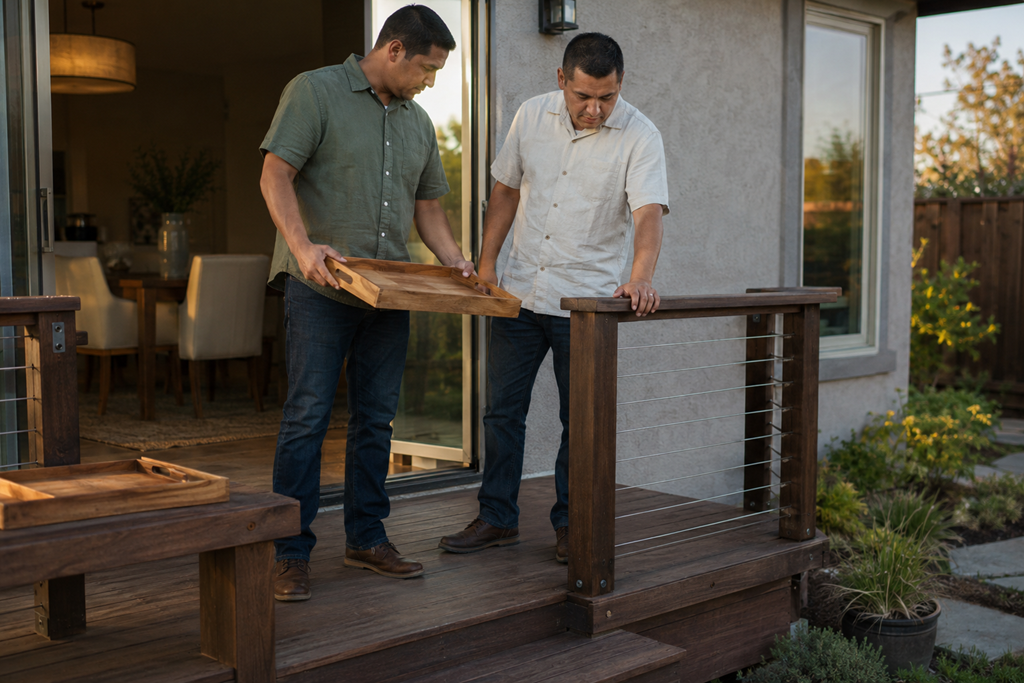
A railing that shifts when lightly touched, stairs that feel less stable than before, or a section of the deck that moves differently from the surrounding area may justify a closer look before a large gathering or major furniture change.
The important distinction is between noticing a change and trying to determine its technical cause. Homeowners can observe that something feels different without attempting to tighten, dismantle, probe, or repair structural components themselves.
Railings and Stairs May Face More Stress Than Expected
Railings and stairs often receive concentrated force during gatherings.
Guests may lean against a railing while talking. Children may hold it while moving around the deck. People may carry food, coolers, or furniture up and down the stairs. A loose component that seemed minor during everyday use may become more noticeable when the area is busier.
Before heavier use, pay attention to whether:
- A railing post or section moves noticeably
- Stair treads feel loose or uneven
- A stair landing shifts under normal use
- Handrails appear separated from their supports
- Boards near stairs or railings show splitting or deterioration
These observations do not reveal the full condition of the structure, but they can help a Sacramento-area homeowner describe the concern clearly when speaking with a deck professional.
Visible Wear Does Not Always Indicate the Same Kind of Problem
Deck wear can appear in several forms, and similar-looking damage may have different meanings.
A weathered surface may be mostly cosmetic. A deeply cracked, softened, loose, or deteriorated area may deserve more attention. Discoloration might reflect ordinary exposure, trapped moisture, or another condition that cannot be identified from appearance alone.
Sacramento-area decks may experience strong sun, prolonged dry periods, heat, and seasonal rain. Over time, those conditions can affect finishes, exposed wood, fasteners, and areas where water or debris repeatedly collects.
The key is not to assume that every mark is dangerous or that every worn board is harmless. A qualified evaluation can help distinguish routine maintenance concerns from repairs that affect how the deck should be used.
Weight Placement Can Matter as Much as Total Weight
Homeowners often think about how much weight is being added but not where that weight will be placed.
Large planters, storage containers, outdoor kitchens, grills, water features, and substantial furniture can concentrate weight in a relatively small section. A gathering can do the same thing when everyone stands near a doorway, railing, serving table, or shaded corner.
That does not mean these items cannot be placed on a deck. It means the arrangement should not be based only on where everything looks best.
When a homeowner is considering a significant change in use, a deck professional may need to understand:
- What will be placed on the deck
- Approximately where it will sit
- Whether the setup is temporary or permanent
- Whether the deck has been modified or repaired previously
- Whether movement or deterioration has already been noticed
Clear information helps the professional evaluate the actual plan rather than giving a general opinion about the deck.
Temporary Fixes Can Create False Reassurance
A loose board may be covered by a rug. An unstable table may be moved over a spot that feels uneven. Furniture may be positioned in front of a questionable railing section so guests do not stand there.
These choices can make the area feel more usable without addressing the underlying concern.
Cosmetic improvements can create similar reassurance. Cleaning, staining, painting, or replacing a few visible boards may improve appearance, but those changes do not necessarily confirm the condition of the complete structure.
This is especially important when purchasing a home with an existing deck or preparing a deck that has not been heavily used for some time. A good-looking surface should not be treated as proof that every component has been evaluated.
Questions to Ask Before Scheduling a Deck Evaluation
When contacting a Sacramento-area deck building or repair professional, concise questions can help keep the conversation focused:
- Can you evaluate the deck for the type of use I am planning?
- Will the evaluation include stairs, railings, framing, supports, and visible connections?
- Are there areas that should remain unused until they are examined?
- Can you explain which concerns are cosmetic and which may affect safe use?
- If repairs are recommended, what problem is each repair intended to address?
A clear provider should be able to explain what can be observed, what remains uncertain, and whether another type of professional opinion may be appropriate.
Be cautious about vague reassurance that is based only on a quick look at the deck surface. On the other hand, a responsible provider should not use every minor imperfection to pressure you into a major project without explaining the reasoning.
The Right Time to Pause Is Before the Deck Is Put Under Greater Demand
Deck safety decisions do not have to begin with visible failure or a dramatic event.
A change in how the deck will be used is itself a reasonable time to reconsider its condition. That may include planning a large gathering, installing heavier furnishings, adding several planters, moving a grill station, or beginning to use a previously neglected deck more frequently.
When something feels unstable, newly different, or difficult to interpret, limiting use of the affected area and requesting a professional evaluation can be more sensible than guessing.
The practical takeaway is simple: before a deck handles more people, more weight, or more activity than usual, consider the complete structure rather than relying on how the surface looks. That perspective helps homeowners ask better questions and make a more informed deck building or repair decision.