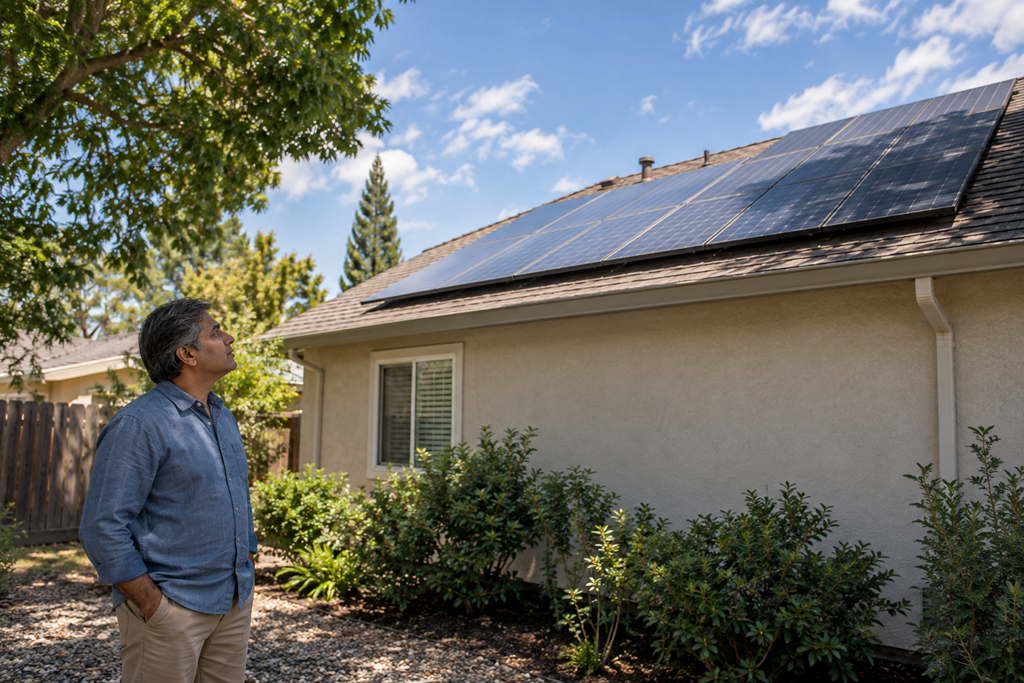
When a home solar system seems to be producing less energy than expected, the first step is not to assume that something has failed. Production can change for several reasons, including weather, shade, seasonal sun patterns, temporary equipment issues, or a difference between what the homeowner expected and what the system was actually designed to produce. The useful goal is to confirm what has changed, gather the information you already have, and decide whether the situation is worth discussing with a qualified solar service professional.
For Sacramento-area homeowners, the concern may start with a monitoring alert, a production number that looks unusually low, or an electricity bill that does not seem to match expectations. Because those signals do not all mean the same thing, identifying what actually appears different can make the next conversation with a solar provider much more useful.
Lower Production Does Not Automatically Mean Something Is Broken
Solar production naturally changes. A system will not necessarily produce the same amount of energy every day, every month, or during every season.
Cloud cover, changing daylight hours, temporary shade, accumulated surface debris, and other site conditions can affect what a homeowner sees. Equipment or monitoring problems are also possible, but a lower number by itself does not identify the cause.
That distinction matters because it is easy to jump from “production looks lower” to “the solar system needs a major repair.” There may be a problem worth evaluating, but the available information should support that conclusion.
Instead of trying to diagnose the system yourself, focus first on understanding the pattern you are seeing.
Define What “Not Producing As Expected” Actually Means
Before contacting a solar service provider, clarify what triggered the concern.
For example, perhaps the system's reported production appears noticeably lower than it did during a comparable period. Maybe production dropped suddenly and has stayed lower. Or perhaps the concern began because an electricity bill increased even though nothing obvious seems different.
These situations can point to different questions.
A change in the household's electricity use is not the same as a change in solar production. Likewise, a brief production dip during different weather conditions is not necessarily the same as a persistent decline that continues under otherwise similar conditions.
Knowing which problem you are actually trying to understand helps prevent the service conversation from becoming too broad.
Look For A Pattern Rather Than One Isolated Number
One unusual day may provide less useful information than a pattern that continues.
If your system includes homeowner-accessible monitoring, reviewing its normal historical information can help you notice whether the change was sudden or gradual and whether it has persisted. You can also think about obvious environmental differences you can safely observe from the ground, such as extended cloudy conditions or new shade affecting part of the roof.
Sacramento's strong sun exposure, hot periods, dry stretches, and seasonal rain can create noticeably different conditions throughout the year. That does not mean you should determine for yourself how much any one condition should affect your particular system.
The point is simply to gather context.
A qualified professional can then help distinguish normal variation from something that deserves closer evaluation.
A Higher Electricity Bill Is Not Always A Solar Production Problem
One of the easiest misunderstandings is assuming that an unexpectedly high electricity bill proves that the solar equipment has stopped producing properly.
Your household's electricity use can change independently of solar production.
More air-conditioning use, additional people in the home, new appliances, an electric vehicle, changes in daily routines, or other electrical loads can affect how much electricity the property consumes. Billing structures and how energy moves between the home and utility service can also make the relationship between solar production and the final bill less intuitive than homeowners sometimes expect.
That is why it helps to separate two questions:
Is the solar system producing differently than expected?
and
Is the household using more electricity than expected?
A solar service professional may be better able to discuss the first question when you can explain why you believe the production itself has changed.
Gather Useful Information Before Scheduling Service
You do not need to diagnose rooftop equipment or open electrical components to prepare for a service conversation.
Instead, gather information that can help a provider understand what prompted your concern. That might include the approximate date you first noticed the change, whether the issue appears continuous or intermittent, information available through your normal monitoring system, and any documents you already have about the installation or equipment.
If the system displayed an alert or stopped reporting information, make a note of what happened without attempting to access electrical components or rooftop equipment.
This preparation gives the provider a clearer starting point and may help you explain the problem without relying on a vague statement such as, “My solar doesn't seem to be working.”
Know When A Professional Evaluation May Be Worth Discussing
A professional evaluation may be reasonable when an unexplained production change continues, the system appears to have stopped producing, monitoring repeatedly indicates a problem, or the difference between expected and observed performance remains unclear.
The purpose of the evaluation should be to understand what is happening before deciding what solution is appropriate.
Be cautious about assuming that a repair, equipment replacement, system expansion, or other major project is automatically necessary before the cause has been explained.
A good service conversation should help you understand what the provider intends to evaluate, what evidence they are using, and why any recommended work relates to the production concern you originally reported.
Questions That Can Make The Service Conversation More Useful
A few focused questions can help you evaluate the explanation you receive:
- What information would help you evaluate the production concern?
- Does the pattern appear consistent with normal variation, or does it warrant further investigation?
- What will be evaluated during the service appointment?
- How will you determine whether the issue involves production, monitoring, equipment, or another factor?
- If work is recommended, what specific finding supports that recommendation?
- Are there existing installation records, service agreements, or equipment warranty information I should locate before scheduling?
You do not need to become a solar technician to ask useful questions. You simply want the explanation and proposed next step to connect clearly to the problem you reported.
Avoid Jumping Straight To The Most Expensive Explanation
Unexpectedly low production can be frustrating, especially when the homeowner purchased solar expecting it to offset a meaningful portion of household electricity use.
That frustration can make two reactions tempting: ignoring the concern because solar performance seems too complicated to understand, or assuming that the system needs major corrective work.
Neither reaction gives you much useful information.
A better approach is to define the concern, observe whether there is a meaningful pattern, gather the information already available to you, and ask a qualified provider to explain what the evidence suggests.
If a provider immediately recommends substantial work without clearly connecting that recommendation to an identified issue, asking for a fuller explanation can help you make a more informed decision before committing.
The Goal Is To Understand The Change Before Choosing The Fix
When solar production does not seem to match expectations, the most useful first move is usually clarification rather than assumption.
Determine what appears different, separate solar-production concerns from changes in household electricity use, and bring any relevant monitoring or installation information into the service conversation. Avoid climbing onto the roof, opening electrical equipment, or attempting technical troubleshooting that should be handled by a qualified professional.
Once the underlying concern is better defined, you are in a stronger position to evaluate whether service is necessary and whether a provider's proposed next step makes sense for your Sacramento-area home.