Before meeting with an accountant, prepare the information that will help them understand why you are there, what questions you want answered, and what records may matter to the conversation. For Sacramento-area residents and small business owners, the goal is not to arrive with a perfectly organized financial life. It is to bring enough context so the accountant can see the situation clearly, identify what is missing, and explain what the next steps may involve.
That distinction can make preparation much easier. Many people assume they need to gather every financial document they have before speaking with an accountant. In reality, the most useful starting point is usually a clear reason for the meeting supported by the records that relate to it.
Start With Why You Are Meeting
Before gathering paperwork, be able to explain what prompted the appointment.
Someone meeting with an accountant about preparing a tax return may need different information from a small business owner who wants help cleaning up bookkeeping records. A person who received an unfamiliar tax notice may have a different priority from someone comparing accountants for ongoing business accounting support.
You do not need to know exactly what service or solution you need before the conversation. That may be one of the reasons you are meeting with a professional in the first place.
Instead, try to describe the situation in plain language. For example:
- what you want help understanding
- what has changed since you last worked with an accountant
- what part of your records feels incomplete or confusing
- whether you are looking for one-time help or ongoing accounting support
- whether there is a document, notice, transaction, or reporting issue that prompted the meeting
This gives the accountant a useful starting point before getting into individual documents.
Bring Records That Help Explain the Situation
The right records depend on the reason for the appointment.
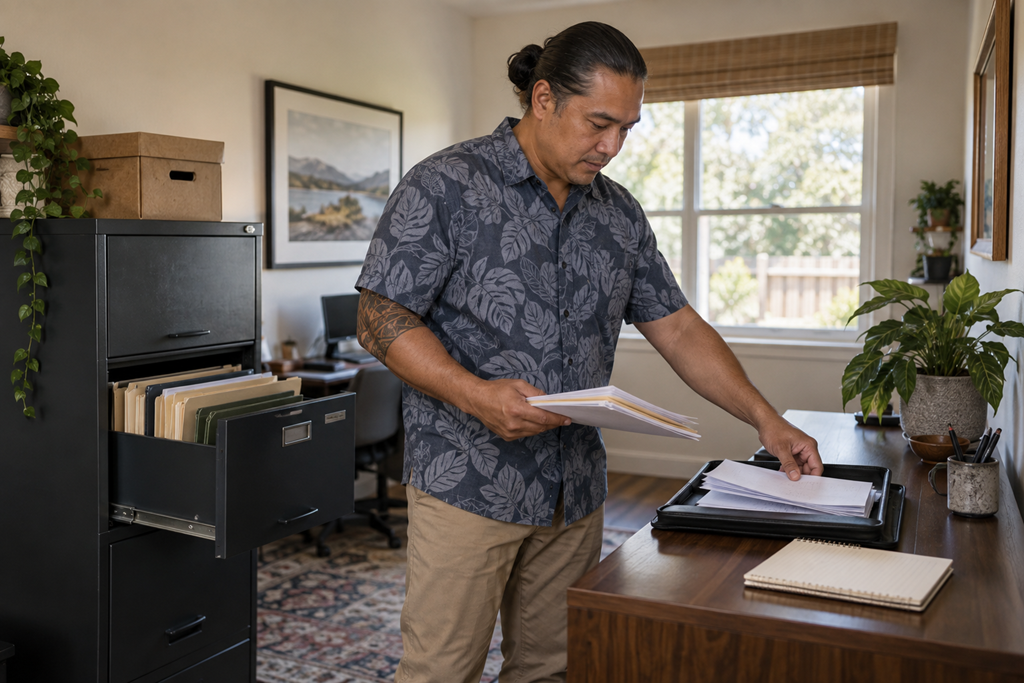
You generally do not need to empty an entire filing cabinet into a box just because you are meeting with an accountant. A smaller group of relevant records is often easier to discuss.
Depending on the purpose of the meeting, useful materials might include recent tax returns, income and expense records, bank or credit card statements connected with business bookkeeping, payroll reports, accounting reports, prior accountant correspondence, or notices you want the accountant to review.
A Sacramento small business owner might also bring information showing how the business currently keeps financial records. That could include reports from accounting software, bookkeeping summaries, or records connected with major changes in the business.
The point is not to create an exhaustive packet before you know what the accountant actually needs. The point is to give the professional enough information to understand the situation and tell you what additional records may be necessary.
Do Not Hide the Messy Parts
Incomplete records are often one of the reasons people seek accounting help.
If an account has not been reconciled, a document is missing, an expense is difficult to categorize, or you are uncertain about something in a previous record, it is usually more useful to identify that uncertainty than to try to make the paperwork look finished.
You can separate records into simple groups such as information you believe is complete, information you are unsure about, and information you know is missing.
That can give the accountant a more accurate picture of what needs attention.
Trying to reconstruct uncertain numbers from memory simply so everything appears complete can make the conversation less useful. An accountant can tell you what information matters and what documentation may be needed for your specific situation.
Write Down the Questions You Do Not Want to Forget
An accounting meeting can cover more ground than expected, especially when the accountant begins asking questions about records, prior filings, business activity, or the reason you requested help.
A short list of questions can keep the conversation centered on what matters to you.
Depending on the situation, you might want to ask:
- What additional records would you need from me?
- Is there anything in what I brought that needs clarification?
- How would you prefer that I organize future records?
- What services would be included if we work together?
- How will questions and document requests normally be handled?
- What should I expect after this meeting?
- Are there issues here that require advice from another type of professional?
The questions do not need to sound technical. Clear everyday questions can reveal a great deal about how an accountant communicates and whether the working relationship feels suitable.
Business Owners Should Bring Context Along With the Numbers
Financial records rarely tell the entire story of a small business.
If you are meeting with an accountant about a Sacramento-area business, be prepared to briefly explain how the business operates. The accountant may benefit from understanding how revenue is received, how expenses are tracked, what bookkeeping system is being used, whether payroll is involved, and whether the business has gone through meaningful operational changes.
You do not need to prepare a formal presentation.
A short explanation of how money moves through the business and how records are currently maintained can help the accountant understand what the reports in front of them actually represent.
This can be especially important when you are seeking help because the bookkeeping system has become difficult to maintain. A neat report generated from incomplete records may be less informative than an honest explanation of where the recordkeeping process started to break down.
Keep Personal and Business Information Distinguishable
If the meeting involves a business, it can help to separate business records from personal records as much as reasonably possible before the appointment.
That does not mean you need to resolve every transaction yourself.
The purpose is simply to make the source of the information easier to identify. If you are uncertain whether something belongs in one category or another, flag it rather than guessing.
The accountant can then ask the appropriate questions and explain how they would want the information handled.
This is another reason preparation does not have to equal perfection. Clearly identifying uncertainty can be more useful than presenting information as settled when it is not.
Ask How Sensitive Records Should Be Shared
Accounting records can contain personal, business, banking, payroll, and tax information.
Before sending a large collection of sensitive documents electronically, find out how the accountant prefers to receive them. A firm may use a secure client portal, an in-person exchange, or another document-sharing process.
You can also ask what information should not be sent through ordinary email and whether there are materials they would prefer you bring to the meeting rather than transmit beforehand.
Avoid including account passwords or other unnecessary login credentials with the records you prepare.
The accountant should be able to explain how their office handles documents and what they actually need from you.
You Do Not Have to Solve the Problem Before the Appointment
One of the easiest preparation mistakes is trying to do the accountant's work before meeting the accountant.
People sometimes postpone an appointment because they want to finish reorganizing months of records, correct every bookkeeping problem, understand every tax document, or answer every question first.
Some organization is useful. Delaying the conversation solely because the information is imperfect may not be.
If you can explain what you know, show what records you have, and identify what remains unclear, the accountant has something concrete to evaluate.
The first conversation can then help establish what should happen next instead of forcing you to guess beforehand.
Preparation Also Helps You Evaluate the Accountant
The meeting is not only an opportunity for the accountant to learn about your situation.
It is also a chance for you to see how the professional approaches questions, explains unfamiliar issues, requests documents, defines the services they provide, and describes future communication.
Notice whether you understand what information they are asking for and why. If something is unclear, ask for an explanation.
For Sacramento-area residents and business owners comparing accounting professionals, that communication can be an important part of determining whether a working relationship feels appropriate.
An accountant does not necessarily need every document during an introductory conversation. What matters is whether the discussion gives both sides a clearer understanding of the situation and what information would be needed to move forward.
A Useful Meeting Starts With Enough Context, Not Perfect Records
Preparing for an accountant meeting is less about creating a flawless financial package and more about making the conversation productive.
Know why you scheduled the meeting. Bring the records most closely connected with that reason. Identify missing or uncertain information instead of guessing. Write down the questions you want answered, and be ready to explain relevant personal or business context in straightforward terms.
A qualified accountant can then tell you what additional information is needed and provide guidance based on your specific circumstances. For tax, financial, legal, or accounting decisions involving your own situation, consult an appropriately qualified professional rather than relying on general educational information alone.
The goal of preparation is simple: give the accountant a clear enough starting point to understand what you are dealing with—and give yourself a better opportunity to decide whether the professional and their process are a good fit.