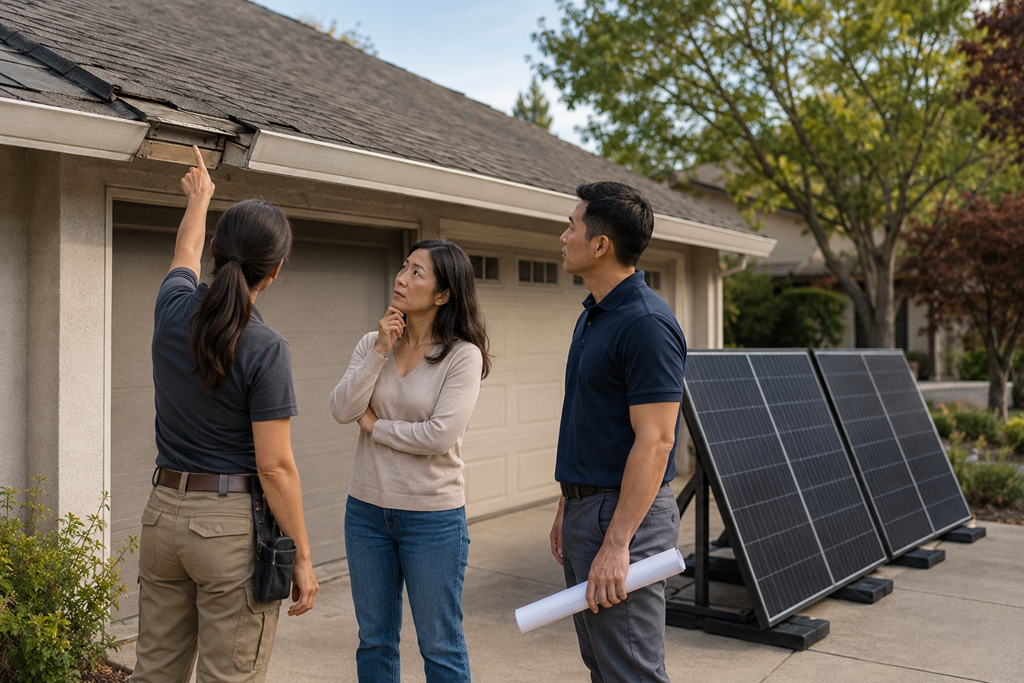
Roof condition matters before solar installation because solar panels are designed to remain in place for many years, while a worn or damaged roof may need attention much sooner. Installing a system over shingles, tiles, flashing, or decking that are already near the end of their useful life can lead to avoidable removal, reinstallation, scheduling, and coordination later.
This can be easy to overlook when most of the early conversation is about energy use, panel placement, financing, or equipment. A homeowner may be ready to move forward with solar only to discover that the roof beneath the proposed system needs repair, further evaluation, or replacement first.
The important question is not whether the roof looks perfect. It is whether its condition and expected service life make sense for the solar project being considered.
Solar Panels Depend on the Roof Beneath Them
A rooftop solar system does not replace the roof’s basic job. The roofing materials, flashing, decking, drainage components, and structural supports still need to protect the home and provide a suitable surface for the installation.
Solar mounting equipment is attached to specific areas of the roof. Once the panels are installed, reaching the roofing materials beneath them becomes more complicated. A repair that might have been relatively straightforward beforehand could later require panels or mounting components to be temporarily removed.
That does not mean every small imperfection must be corrected before solar installation. It means the roof should be evaluated carefully enough that the homeowner understands what is being installed over and what may need attention in the foreseeable future.
A Roof Does Not Have to Look Bad to Need Attention
Many roofing concerns are not obvious from the driveway. A roof can appear reasonably uniform while still having localized wear, aging flashing, previous repairs, moisture concerns, or materials that have less useful life remaining than the surrounding surface.
Sacramento-area roofs may also experience prolonged sun exposure, heat, dry debris, and seasonal rain. These conditions do not automatically mean a roof is unsuitable for solar, but they can make a condition review especially useful when the roof’s age or maintenance history is uncertain.
Visible discoloration alone may be cosmetic. On the other hand, a small lifted section, recurring leak, damaged tile, soft area, or deteriorated flashing may deserve closer attention. A qualified professional can help distinguish appearance concerns from conditions that could affect the project.
Homeowners should avoid climbing onto the roof to make this determination themselves. Photos, inspection findings, maintenance records, and professional evaluations can provide safer and more useful information.
The Roof and Solar Timelines Should Make Sense Together
One of the most helpful ways to think about this decision is to compare timelines.
Solar panels are generally planned as a long-term home improvement. If the roof is likely to require major work much sooner, installing the panels first may create an avoidable second project. The panels may need to be removed, stored, and reinstalled so roof work can be completed.
That additional process can involve:
- Coordinating separate roofing and solar crews
- Protecting and storing removed equipment
- Scheduling disconnection and reinstallation
- Clarifying responsibility for new or existing damage
- Reviewing how the work affects warranties
- Paying for labor that might have been avoided through earlier planning
The opposite misunderstanding can also occur. A homeowner may assume that solar installation automatically requires an entirely new roof, even when the existing roof is in suitable condition and has meaningful service life remaining.
The goal is not automatic replacement. The goal is to understand whether the roof and solar system can reasonably remain in place together without creating a predictable conflict.
Roofing and Solar Evaluations May Answer Different Questions
A solar professional and a roofing professional may look at the same property with different priorities.
A solar evaluation may focus on panel placement, sun exposure, mounting locations, electrical routing, system size, and whether the structure appears suitable for the proposed design.
A roofing evaluation may focus more closely on water entry, material condition, previous patches, flashing, drainage, decking, and how much useful service life the roof may have left.
Some solar companies coordinate roofing evaluations or offer both services. Others expect the homeowner to arrange a separate roof review. Neither approach is automatically better, but the responsibility should be clear before the project is approved.
A vague statement that the roof “looks fine” is less useful than knowing who examined it, what was evaluated, and whether any areas were excluded from the review.
Small Roofing Concerns Can Become Larger Project Questions
Not every roof concern means solar installation should stop. However, certain conditions are worth discussing before panels are placed over or near them.
These may include:
- A known roof leak or recurring ceiling stain
- Loose, cracked, lifted, or missing roofing materials
- Several previous patches in the proposed panel area
- Damaged or aging flashing
- Sagging, uneven, or soft-looking sections
- Drainage problems that repeatedly hold water or debris
- Uncertainty about the roof’s age or repair history
- A roof replacement that has already been recommended
The presence of one of these conditions does not establish what work is necessary. It simply gives the homeowner a reason to ask for a clearer explanation before proceeding.
The most useful evaluation should identify where the concern is, why it matters, whether it affects the proposed solar layout, and whether the recommended response is repair, replacement, monitoring, or no immediate action.
A Newer Roof Can Still Deserve a Review
Roof age is helpful, but it is not the only factor.
A relatively new roof may still have a localized installation issue, damage from a fallen branch, poor drainage around an addition, cracked materials, or a repair that was never fully resolved. A much older roof may have been carefully maintained and remain suitable for the planned project.
Homeowners can become unnecessarily focused on one number, such as the year the roof was installed. Condition, roofing material, maintenance history, previous repairs, and the location of the solar array may matter just as much.
This is why a roof review should be based on the actual property rather than a general assumption about age alone.
Questions Worth Asking Before Approving the Installation
A few direct questions can make the conversation more useful without turning the process into a technical interrogation:
- Who evaluated the roof, and what did that evaluation include?
- Is any roof repair recommended before installation, and why?
- Does the solar estimate include roofing work or only the solar system?
- If roof work is needed later, who removes and reinstalls the panels?
- How are roof penetrations and workmanship responsibilities handled?
- Will I receive photographs or written findings showing the roof areas reviewed?
Clear answers help homeowners compare providers more fairly. One estimate may appear simpler or less expensive because roof preparation, future panel removal, or responsibility for repairs has not been addressed.
Pay Attention When Responsibility Remains Unclear
Homeowners do not need every possible future situation written into a complicated explanation. They should, however, understand who is responsible for the major parts of the project.
It may be worth slowing down when:
- A known leak or roof concern is dismissed without evaluation
- The person discussing the roof cannot explain what was inspected
- Roofing work appears in the price but not in the written scope
- The solar and roofing providers give conflicting explanations
- No one can explain what happens if the roof needs work later
- The homeowner is pressured to sign before roof questions are resolved
These situations do not always indicate a serious problem. They do indicate that the project may need better coordination before a commitment is made.
The Goal Is a Well-Timed Project, Not a Perfect Roof
A roof does not need to be flawless before solar panels can be installed. It does need to be suitable for the proposed system, and the homeowner should understand any repairs, limitations, or likely future work.
For Sacramento-area homeowners, the most practical approach is to treat the roof and solar installation as connected parts of one home-improvement decision. A qualified solar professional can explain the proposed system, while a qualified roofing professional can address roof-specific concerns when a closer evaluation is appropriate.
Understanding the roof first can help prevent unclear costs, conflicting schedules, and avoidable panel removal later. More importantly, it allows the homeowner to approve the solar project with a clearer picture of what the entire property may need—not just what will be installed on top of it.