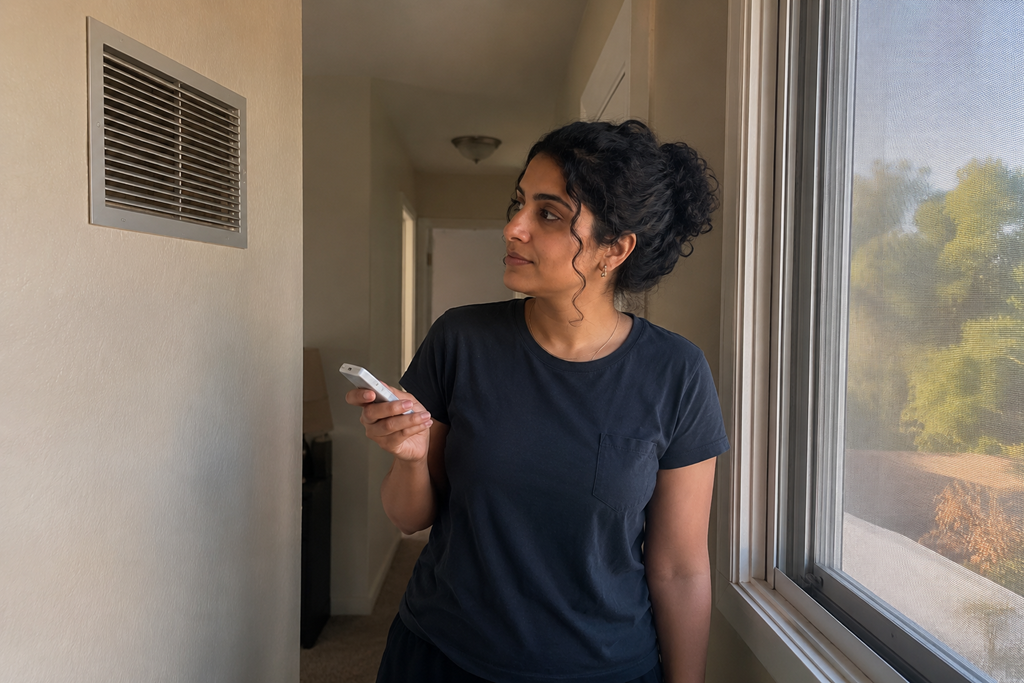
A whole house fan is not the same as air conditioning because it does not create cold air. A whole house fan moves air. Air conditioning cools and conditions indoor air.
That difference matters because the two systems solve comfort problems in different ways. A whole house fan can help move cooler outdoor air through the home and push warmer indoor air out through the attic. Air conditioning lowers the temperature inside the home even when the outdoor air is still hot.
For Sacramento-area homeowners, this distinction can affect expectations, comfort planning, energy use, and the questions worth asking before speaking with a local installer.
The Main Difference Is Cooling Versus Air Movement
Air conditioning works by cooling indoor air through a mechanical refrigeration process. It can keep a home comfortable with windows closed, even when the air outside is hotter than the air inside.
A whole house fan works differently. It pulls outdoor air into the living space through open windows and moves warm indoor air upward and out through the attic. Instead of producing cold air, it creates air exchange.
That means a whole house fan depends more heavily on outdoor conditions. It is most useful when the air outside is cooler or more comfortable than the air inside. When outdoor air is hot, smoky, dusty, or otherwise unpleasant, a whole house fan may not provide the comfort a homeowner expects.
This is why treating a whole house fan like a direct replacement for air conditioning can lead to confusion.
Why Homeowners Often Mix Them Up
It is easy to confuse the two because both can make a home feel more comfortable. From the homeowner’s point of view, the question may sound simple: “Will this help cool my house?”
The answer is yes in some situations, but not in the same way as air conditioning.
A whole house fan may make a home feel better by flushing out trapped heat and bringing in cooler outside air. That can be especially noticeable when a home holds onto heat after a warm day. But it does not lower indoor air temperature below what the outside air can support.
Air conditioning is different because it can cool the indoor air directly. It does not need open windows, and it is not relying on outdoor air to do the cooling.
The misunderstanding usually comes from using the word “cooling” too broadly. A whole house fan can help with comfort and ventilation, but it is not refrigerated cooling.
A Whole House Fan Works With the House, Not Just One Room
Another important difference is how the systems affect the home.
A window fan or portable fan may only move air in one area. A whole house fan is intended to move air through a larger portion of the home. That makes planning important. The installer may need to consider the home’s layout, attic space, venting, ceiling location, noise expectations, and how the household will use windows.
This is where a local service conversation becomes important. A homeowner does not need to become a ventilation expert, but they should understand that a whole house fan is not simply a ceiling fan with more power.
It changes airflow through the home. That is why the estimate or consultation should include more than just the fan unit itself. The conversation should help the homeowner understand how the system would fit their home, their routines, and their expectations.
Air Conditioning Can Work When Windows Stay Closed
A key practical difference is window use.
Air conditioning is designed to work with the home closed up. Windows and doors usually stay shut so the cooled air remains inside.
A whole house fan usually requires selected windows to be open so outside air can enter. Without the right airflow path, the system may not work as intended.
This creates a different kind of daily habit. A homeowner may need to think about when windows can be opened, which rooms should receive airflow, whether outdoor conditions are comfortable, and whether the household is home to manage the system.
That does not make a whole house fan complicated. It simply means the homeowner should not expect it to behave like air conditioning.
The Comfort Feeling Is Different
Air conditioning often creates a steady, controlled indoor temperature. A whole house fan creates movement and exchange.
That difference can feel significant. A home that feels stuffy, stale, or heat-trapped may feel better after warm indoor air is pulled out and outdoor air moves through. The improvement may feel fresh and immediate when conditions are right.
But if someone expects the same sealed, temperature-controlled result they get from air conditioning, they may be disappointed.
A better way to think about it is this: air conditioning changes the air temperature inside the home, while a whole house fan changes how air moves through the home.
Both can support comfort, but they are not doing the same job.
A Whole House Fan May Complement AC Instead of Replacing It
For many homeowners, the better question is not “Which one is better?” The better question is “What role would each one play?”
A whole house fan may be worth discussing as part of a broader home comfort plan. It may help reduce heat buildup, improve airflow during favorable conditions, or make certain parts of the day feel more manageable. Air conditioning may still be needed when the outdoor air is too hot or when the home needs controlled cooling.
Seeing the two systems as separate tools helps avoid unrealistic expectations. A whole house fan is not automatically a substitute for AC. It may be a useful addition depending on the home, the attic, the household’s habits, and the comfort problem the homeowner is trying to solve.
What to Ask Before Comparing Installation Options
Before comparing local whole house fan installers, Sacramento-area homeowners may want to ask a few practical questions:
“Is my home a good fit for a whole house fan?”
Not every home is equally suited for the same system. Layout, attic space, existing ventilation, ceiling location, and household routines can all affect the recommendation.
“How would this system work differently from my air conditioner?”
A clear installer should be able to explain the difference in plain language. If the explanation sounds like a whole house fan will perform exactly like AC, that is worth questioning.
“What conditions make the fan most useful?”
The answer should help the homeowner understand when the fan is likely to feel helpful and when air conditioning may still be needed.
“What should I expect day to day?”
This includes window use, sound level, timing, airflow through different rooms, and whether the system fits how the household actually lives.
“What is included in the estimate?”
The homeowner should understand whether the quote includes the fan, installation labor, attic or venting considerations, controls, cleanup, and any related work that may affect performance.
These questions are not about challenging the installer. They are about making sure the homeowner understands what they are buying.
Watch for Vague Promises
A common problem with whole house fan decisions is oversimplified language. Phrases like “cools the whole house” can be true in a casual sense but incomplete in a technical and practical sense.
A clearer explanation would describe how the fan moves air, when outdoor air needs to be cooler, how windows are used, and what role attic ventilation plays.
Homeowners should be cautious when the explanation skips over the difference between air movement and refrigerated cooling. The more specific the explanation, the easier it is to decide whether the system matches the actual comfort problem.
The Better Decision Starts With the Right Expectation
A whole house fan can be a useful home comfort upgrade, but it is not the same thing as air conditioning. It does not create cold air. It helps move air through the home when conditions support that kind of cooling strategy.
For Sacramento-area homeowners, understanding that difference can make conversations with local installers much easier. Instead of asking whether a whole house fan is “as good as AC,” it is more helpful to ask what problem it solves, when it works best, and how it would fit the specific home.
The clearer that difference is before comparing estimates, the easier it becomes to make a practical decision without expecting one system to do the job of another.