A security screen can be built from strong mesh and heavy-duty metal, but it still depends on the strength of the opening around it. If the door or window frame is loose, split, deteriorated, out of square, or poorly anchored, the screen may not close, latch, or perform as intended. That is why frame condition should be evaluated before choosing the screen itself.
This issue is easy to miss because homeowners naturally focus on the visible product. They compare mesh, frame materials, locks, finishes, and designs. The existing doorway or window opening can seem like little more than the place where the new screen will be installed.
In practice, the surrounding opening is part of the installation. A well-built screen cannot compensate for an unstable attachment surface.
A Strong Screen Still Needs a Dependable Opening
Security screens are designed to become part of an existing door or window assembly. Depending on the product and opening, the installation may rely on the jamb, exterior trim, surrounding framing, masonry, or another approved mounting surface.
Those areas need to support the screen while it is opened, closed, latched, and used repeatedly.
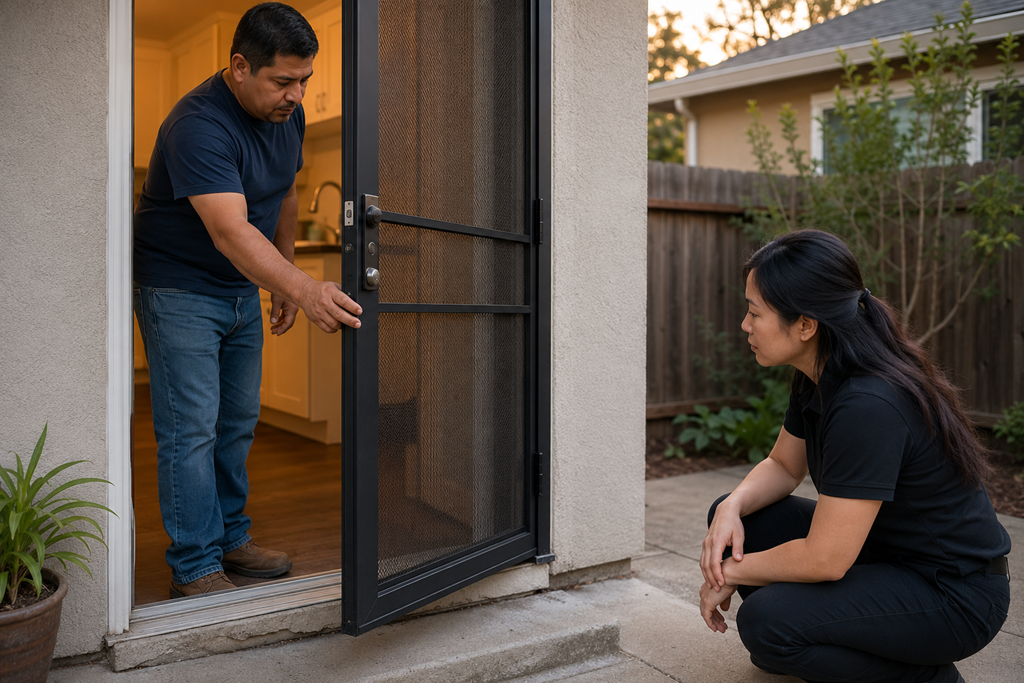
For a security door, normal movement places ongoing demands on the hinge side, latch side, header, and threshold area. A window screen may not swing like a door, but its frame still needs to remain properly positioned and securely attached.
If the underlying material moves, cracks, separates, or no longer holds hardware reliably, the performance of the entire installation can be affected.
This does not automatically mean the opening is unusable. It means the condition of the opening should be understood before the screen is selected and the installation scope is finalized.
“Frame” Can Refer to More Than One Component
One common source of confusion is the word frame.
A security screen usually has its own manufactured metal frame. The home also has an existing door frame, window frame, trim system, and surrounding structure. These components are related, but they are not interchangeable.
A company may describe its screen frame as reinforced or heavy-duty. That statement refers to the product itself. It does not necessarily say anything about the condition of the surface where the product will be attached.
A strong powder-coated frame mounted to weakened wood, loose trim, deteriorated material, or an unstable opening may still develop alignment and operating problems.
Before comparing products, Sacramento-area homeowners should understand which existing surfaces will support the installation and whether those surfaces are in suitable condition.
Correct Measurements Do Not Guarantee a Suitable Installation
A security screen can be the correct width and height and still be a poor match for the opening.
Measurements help determine whether the product can physically fit. They do not, by themselves, reveal whether the opening is square, stable, or capable of supporting the proposed attachment method.
For example, an installer may discover that:
- The hinge side moves slightly under pressure.
- The latch side has been repaired several times.
- Exterior trim is separating from the surrounding structure.
- The threshold is uneven or no longer firmly supported.
- Paint or surface repairs are hiding damaged material.
- The opening has shifted enough to affect latch alignment.
- A previous door or screen left attachment points that cannot simply be reused.
These conditions do not all require the same response. Some may need only minor preparation. Others may call for repair, reinforcement, a different mounting approach, or a different product configuration.
The important point is that sizing and structural suitability are separate questions.
Weakness Often Appears During Ordinary Use
Frame problems are not always obvious when the opening is viewed from a few feet away. They often become noticeable only when someone operates the door or checks how the parts interact.
A security door may appear properly positioned while standing open but rub, drag, shift, or resist latching when closed. A gap may look even near the top and noticeably different near the bottom. The existing trim may remain still during a visual inspection but move when pressure is placed on the opening.
Homeowners may also notice evidence around the existing entry, including recurring cracks, loose hardware, compressed wood, separated joints, uneven gaps, or a primary door that already has difficulty closing.
None of these observations proves that a security screen cannot be installed. They are reasons to ask for a closer evaluation before treating the project as a simple product purchase.
A Heavier Product Can Reveal an Existing Problem
It is reasonable to assume that choosing a stronger or heavier security screen will solve concerns about the opening. In some situations, the opposite can happen: a substantial new product makes an existing weakness more noticeable.
A heavier outward-opening security door can place more demand on the hinge-side attachment area than a lightweight screen door. Repeated opening, wind movement, door-closer tension, and everyday use can also expose movement that was already present.
That does not mean the new security door caused the original frame problem. It may simply reveal that the opening was not prepared to support that type of installation.
This is one reason a provider should evaluate the full entry rather than discussing only the screen’s material or lock.
Previous Repairs Deserve a Closer Look
Older repairs can make an opening look finished without showing what is underneath.
A section of trim may have been filled, painted, fastened again, or covered during an earlier door replacement. A repair may be completely adequate, or it may have been intended only to improve appearance. Homeowners usually cannot determine the difference from the surface alone.
Sacramento-area properties also vary in age, construction, remodeling history, sun exposure, and moisture exposure. Two openings that look similar may provide very different installation conditions.
When previous repairs are visible, ask whether the proposed attachment points will rely on the repaired area and whether the installer has accounted for its condition in the estimate.
Frame Evaluation Can Change the Project Scope
A frame review does not always lead to a larger project. It may confirm that the existing opening is suitable and that normal preparation is all that is needed.
In other cases, the evaluation may identify work that should happen before or during installation, such as correcting an alignment issue, repairing damaged material, improving an attachment surface, or coordinating with another qualified professional.
The distinction matters when comparing estimates.
One quote may include necessary preparation, while another may cover only the security screen and standard installation. The totals may appear different because the providers are not proposing the same scope.
A lower estimate is not automatically incomplete, and a higher estimate is not automatically more thorough. Homeowners should ask each provider to explain what condition they observed and what preparation their price includes.
Useful Questions to Ask Before Choosing a Screen
A few focused questions can reveal whether the provider has evaluated the opening as carefully as the product:
- Which parts of the existing opening will support the screen?
- Did you find any movement, deterioration, previous repair, or alignment concern?
- Is frame or mounting-surface preparation included in the estimate?
- Could the existing condition affect the hinge, latch, threshold, or operating clearance?
- Who would handle repairs if additional work becomes necessary?
- Would a different screen configuration work better with this opening?
The answers should be specific to the property. Be cautious when a provider recommends a product without examining the surfaces that will support it or cannot explain how an observed frame issue affects the installation.
Compare the Entire Installation, Not Just the Screen
Mesh strength, metal thickness, lock design, finish, and appearance are all reasonable comparison points. They are only part of the decision.
A useful estimate should also help the homeowner understand how the screen will connect to the home, whether the opening is ready, what preparation is included, and what could change once work begins.
This broader comparison can reduce surprises and make quotes easier to evaluate on equal terms.
The best security screen for a property is not simply the strongest product available. It is a suitable product installed into an opening that can support it and allow it to operate correctly.
Before committing to a security screen installation, make sure the provider has evaluated both sides of that equation.