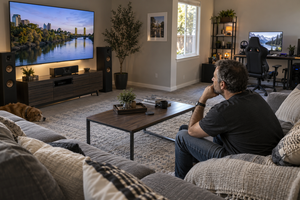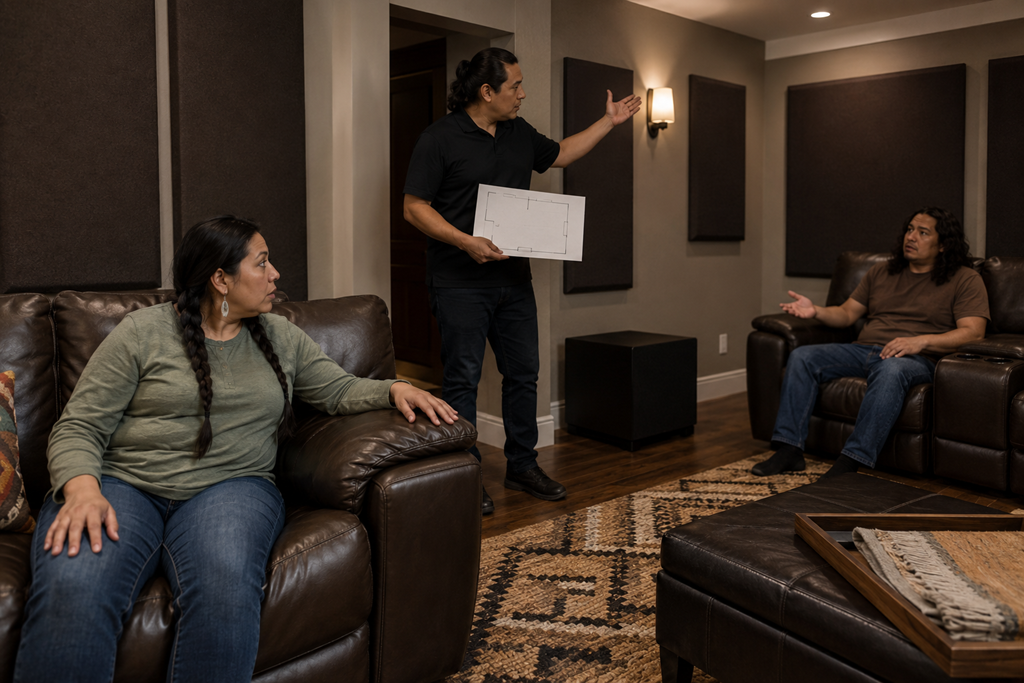
Sound quality depends on more than speakers because every part of a room affects what you actually hear. The size of the space, ceiling height, wall materials, seating distance, speaker placement, receiver settings, wiring, and even furniture can change whether a home theater sounds balanced, harsh, muddy, or uneven.
This is why two homes can use similar speakers and still end up with very different results. One room may make voices sound clear and centered, while another makes dialogue hard to understand. One setup may make bass feel full without being distracting, while another makes low sounds boom in one seat and disappear in another.
For Sacramento-area homeowners planning a home theater installation, this matters because buying better speakers is not always the same as getting better sound.
The Room Is Part Of The System
A home theater is not just a collection of equipment. It is a room, a seating layout, a sound path, and an installation plan working together.
Hard floors, large windows, open layouts, vaulted ceilings, built-in shelving, thick rugs, sofas, curtains, and wall placement can all affect how sound moves. Some surfaces reflect sound. Others absorb it. Some room shapes can make bass collect in certain corners. Others can make dialogue feel thin or distant.
That does not mean a room has to be perfect. Most real homes have tradeoffs. The point is that the room should be considered before assuming the speakers are the problem.
Speaker Placement Can Matter As Much As Speaker Quality
Good speakers can still disappoint when they are placed poorly.
A center speaker that sits too low, too far back, or inside a cabinet may make dialogue sound muffled. Surround speakers placed without regard to seating can make effects feel distracting instead of natural. A subwoofer tucked into the easiest available corner may create too much bass in one part of the room and not enough in another.
Many homeowners focus on brand, size, or wattage because those details are easy to compare. Placement is harder to judge from a product box or online listing, but it often has a major effect on the final experience.
This is one reason a qualified home theater installer may ask about seating, room shape, wall access, display location, and how the room is actually used before recommending equipment.
Settings And Calibration Are Easy To Overlook
Even when the equipment is strong and the speakers are in reasonable locations, sound can still feel off if the system is not set up correctly.
Receiver settings, speaker levels, crossover settings, audio modes, room correction, and input settings can all change what the listener hears. Sometimes a system sounds weak because the speakers are not being managed well. Sometimes voices are hard to hear because the center channel is not balanced with the rest of the system. Sometimes bass feels messy because the subwoofer is not blending smoothly with the other speakers.
This is not about turning every homeowner into a technician. It is about recognizing that installation quality includes more than mounting hardware and connecting cables.
Bigger Speakers Are Not Always The Better Answer
A common misunderstanding is that larger or more expensive speakers automatically solve sound problems.
They can help in the right situation, but they cannot fix every issue. If the room is highly reflective, bigger speakers may make harshness more noticeable. If the seating is too close or poorly positioned, upgraded speakers may still feel uneven. If the system settings are wrong, a better speaker may simply reproduce the same imbalance more clearly.
The better question is not only “Which speakers are best?” It is “What does this room need in order for the system to sound balanced from the seats people actually use?”
That shift can help Sacramento homeowners compare installation recommendations more thoughtfully.
Everyday Use Changes What “Good Sound” Means
Home theater sound is not only about loud action scenes. Many people care most about hearing dialogue clearly during movies, shows, sports, or family viewing.
A system that sounds impressive for a short demo may not feel comfortable during regular use. Bass that seems exciting at first may become tiring. Surround effects that are too noticeable may pull attention away from the screen. Bright sound may seem detailed for a few minutes but become unpleasant over time.
Good installation should support how the room will be used, not just how the equipment performs in isolation.
What To Ask Before Choosing An Installation Plan
When comparing local home theater installation options, it helps to ask questions that go beyond equipment lists.
Useful questions include:
How will the room layout affect speaker placement?
Will seating position be considered before final recommendations are made?
How will dialogue clarity be addressed?
What factors could affect bass performance in this specific room?
Will the system be adjusted after installation, not just connected?
Are there tradeoffs between a cleaner-looking installation and the best speaker position?
These questions do not require technical expertise. They help reveal whether a provider is thinking about the whole listening experience or simply installing components.
Clear Communication Is A Good Sign
A helpful installer should be able to explain why certain recommendations fit the room. The explanation should make sense in plain language.
That does not mean every detail has to be simple. Home theater systems can involve technical choices. But the homeowner should not feel pushed toward upgrades without understanding what problem those upgrades are supposed to solve.
Vague answers such as “this speaker is better,” “you need more power,” or “this package is the best” may not be enough if the room, seating, placement, and calibration have not been discussed.
Better Sound Comes From Matching The System To The Space
Sound quality depends on how the equipment, room, placement, settings, and everyday use work together.
Speakers matter, but they are only one part of the result. Before hiring a local pro or comparing home theater installation quotes, Sacramento-area homeowners can benefit from thinking about the room as part of the system. That perspective makes it easier to ask better questions, understand recommendations, and avoid assuming that better sound always starts with buying bigger speakers.