Deck railings, stairs, and boards should be checked regularly because small changes can develop gradually and may be easy to miss during normal use. A railing can begin to loosen, a stair tread can shift, or a board can soften or lift without making the entire deck look damaged. Regular attention helps Sacramento-area homeowners notice those changes early and decide whether a qualified deck professional should take a closer look.
In everyday life, these changes may show up as something that simply feels different. A familiar stair may no longer feel level underfoot. A railing may seem less steady than it once did. A chair may catch on a board that previously sat flush with the surrounding surface. None of these observations automatically explains what is wrong, but each can provide a useful reason to pay closer attention.
A Deck Can Look Fine While One Part Changes
Deck wear does not always develop evenly. One section may receive more direct sunlight, another may remain shaded, and the stairs may experience far more repeated foot traffic than the outer edges of the deck.
That uneven exposure means the overall appearance of a deck can be misleading. Most of the surface may still look consistent while one railing connection, stair tread, landing, or frequently used board begins to change.
This is one reason regular observation matters. The goal is not to search for a dramatic problem every time someone steps outside. It is to become familiar enough with the deck that a new or worsening condition is easier to recognize.
A localized concern also does not automatically mean the entire deck needs to be rebuilt. A qualified deck professional can help determine whether the change is limited to one component or connected to a broader condition.
Railings, Stairs, And Boards Experience Different Kinds Of Use
Although railings, stairs, and deck boards are part of the same structure, they do not serve the same purpose or experience the same pressures.
Railings are frequently touched, leaned against, and exposed along the outer edge of the deck. A change in how a railing feels may be more important than a cosmetic difference in its finish.
Stairs experience concentrated foot traffic. The front edges of the treads, the transition to the landing, and the areas closest to the handrail can change differently from the main deck surface. Even a small difference between neighboring steps can become noticeable during normal use.
Deck boards support furniture, planters, grills, foot traffic, and other everyday activity. Some remain exposed while others are partly covered for long periods. This can allow changes to develop beneath or beside objects without being immediately visible.
Looking at each area separately helps homeowners avoid assuming that one good-looking section represents the condition of every other part.
Regular Attention Makes Gradual Changes Easier To Recognize
Many deck concerns do not appear all at once. A gap may widen slowly. A board edge may rise a little at a time. A railing may become progressively less stable rather than suddenly failing.
Because the change is gradual, people who use the deck every day may adjust to it without realizing how different it has become. The condition begins to feel normal simply because it developed slowly.
Periodic photographs can sometimes provide useful context. A homeowner may notice that a board now sits differently from the boards beside it or that the space around a railing post has changed. These photographs do not diagnose the cause, but they can help a professional understand whether the condition appears to be progressing.
The most useful question is often not, “Does this deck look old?” It is, “What has changed since I last paid close attention?”
Cosmetic Wear And Functional Changes Are Not The Same
One common misunderstanding is that every faded, stained, or weathered area represents the same kind of concern. Appearance alone does not reveal the full condition of a railing, stair, or board.
A sun-faded board may still feel consistent with the surrounding surface. A newer-looking board may have movement, separation, or another condition that deserves evaluation. Similarly, a railing can appear visually straight while feeling less secure than expected.
The reverse misunderstanding can also create unnecessary worry. One imperfect board or worn stair does not automatically establish that the whole deck is unsafe or beyond repair.
A professional evaluation is valuable because it separates surface appearance from functional condition. It can also clarify whether a concern appears isolated, whether related areas should be reviewed, and whether repair or replacement is worth discussing.
Frequently Covered Areas Can Be Easy To Forget
Outdoor furniture, rugs, storage containers, planters, and cooking equipment can make a deck more useful, but they can also keep certain boards out of view.
A board beneath a large planter may experience different conditions from an uncovered board nearby. The area behind a storage bench may collect debris or remain shaded. Furniture legs can also hide small differences between adjoining boards.
This does not mean homeowners need to treat every object as a problem. It means that the most visible walking path is not necessarily the only area that deserves attention.
The same principle applies to stairs and railings. The most frequently used handrail may receive regular notice, while a less-used railing section near a corner or lower landing receives very little.
Sacramento-Area Exposure May Be Uneven Across The Same Deck
Sacramento-area decks may experience strong sun, extended dry periods, seasonal rain, shade from mature landscaping, and debris from nearby trees. These conditions do not affect every part of a deck equally.
A west-facing section may receive more direct afternoon sun than a covered stair landing. A board near a downspout or shaded corner may remain damp longer than the open center of the deck. Leaves and seed pods may repeatedly collect beside one railing base while the surrounding surface stays clear.
The important point is not to predict damage from weather alone. It is to recognize that two areas on the same deck can age differently because their exposure is different.
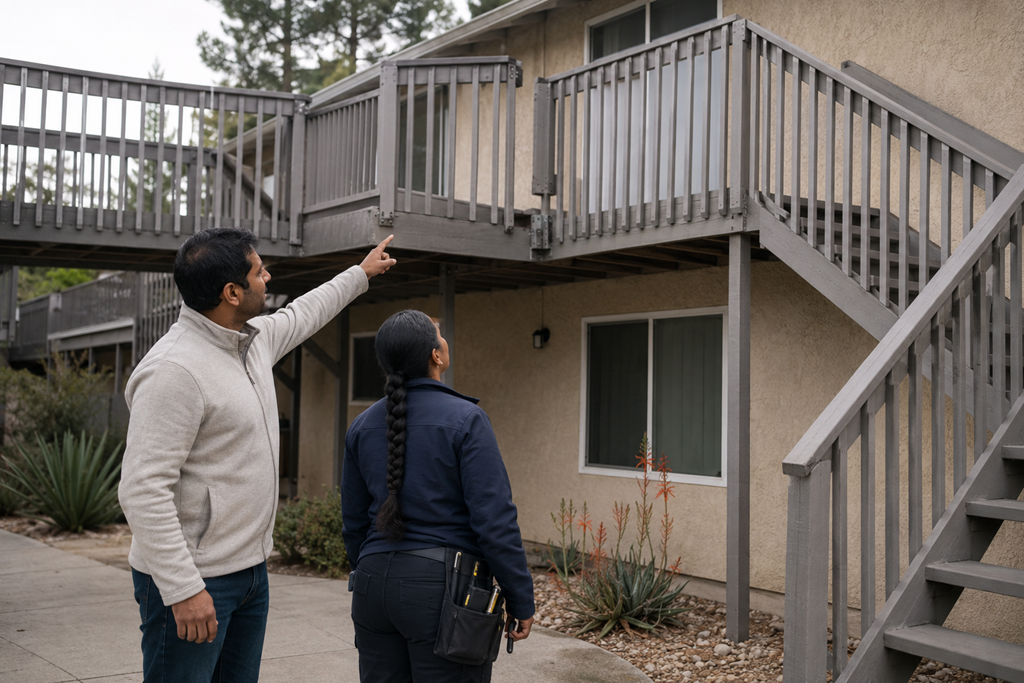
When speaking with a local deck professional, showing where a change is occurring can be more useful than describing the deck only by its overall age or appearance.
Familiarity Can Make Warning Signs Easier To Dismiss
Homeowners often postpone asking about a deck condition because the area is still usable. A stair may feel slightly different, but everyone has learned to step around it. A lifted board may be avoided without much thought. A railing may only move when someone leans against a particular section.
Workarounds can make a concern feel less important, but they do not explain why the condition changed.
Another common pattern is waiting for several visible problems before requesting an evaluation. Yet a single recurring change in a high-use area may provide enough reason to ask a qualified professional what is happening.
The purpose of an evaluation is not to assume the worst. It is to replace guesswork with a clearer understanding of the affected area.
When A Professional Evaluation May Be Worth Discussing
A professional evaluation may be appropriate when a railing feels newly unstable, a stair no longer appears even with the surrounding steps, or a board has begun to lift, sink, separate, or feel noticeably different from nearby boards.
It may also be useful when:
- The same condition appears to be getting more noticeable.
- Several nearby components are changing together.
- A frequently used stair or walking area no longer feels dependable.
- A covered or shaded area looks different after furniture or debris is moved.
- Previous repairs appear to be changing again.
- The homeowner cannot tell whether the concern is cosmetic or functional.
Homeowners do not need to determine the technical cause before contacting someone. A clear description of what changed, where it is located, and when it became noticeable gives a provider a useful starting point.
Until a concerning area has been evaluated, it is sensible not to rely on a railing, tread, or board that no longer feels stable.
Questions That Keep The Evaluation Focused
A few direct questions can make a conversation with a deck professional more useful:
- Which specific components appear to be affected?
- Does the concern look localized or connected to nearby areas?
- What observations support the recommended repair or replacement?
- Are some changes cosmetic while others affect how the deck functions?
- Could sun, shade, moisture, debris, or repeated use be contributing?
- What changes should the homeowner continue watching after the work?
Clear answers should help the homeowner understand the condition rather than simply create pressure to approve a larger project.
When comparing providers, pay attention to whether each person explains the affected areas, distinguishes observation from assumption, and describes why the proposed scope fits what was found.
Regular Checks Support Better Repair Decisions
Checking railings, stairs, and boards regularly is not about expecting a deck to remain perfect. It is about noticing when one component begins to behave differently from the rest.
A deck can remain attractive while a high-use or unevenly exposed area starts to change. Recognizing that distinction helps Sacramento-area homeowners describe concerns more accurately, ask better questions, and avoid making a repair or replacement decision based only on the deck’s overall appearance.
When something feels different, documenting the location and discussing it with a qualified deck professional can provide a clearer basis for deciding whether the area should be monitored, repaired, or evaluated more broadly.