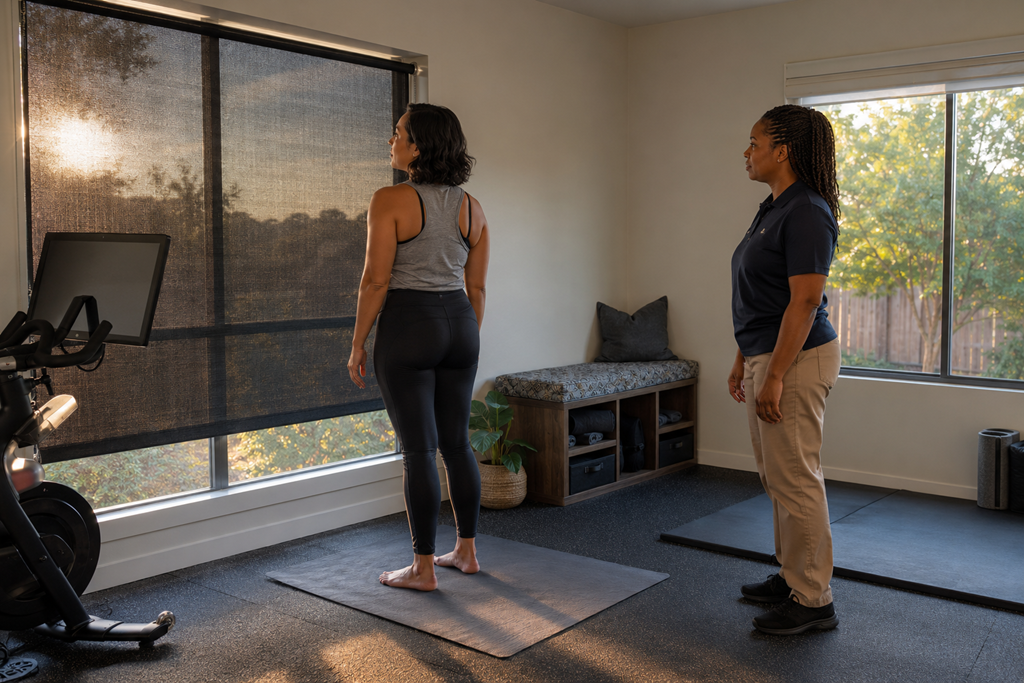
Planning solar screens around real comfort needs means starting with the rooms, windows, and times of day that actually create problems—not assuming every window needs the same treatment. A room that becomes hot, glaring, or difficult to use in the afternoon may benefit from a different approach than a shaded room that already feels comfortable and bright.
For many Sacramento-area homeowners, the decision begins when one part of the house becomes unpleasant during certain hours. Sunlight may reflect across a television, heat may collect near a desk, or a bedroom may become uncomfortable before the rest of the home does.
The temptation is to think of solar screens as a whole-house product. A more useful approach is to think of them as one possible response to specific comfort problems.
Start With the Problem, Not the Screen
Before deciding where solar screens should go, identify what you are trying to improve.
The issue may be:
- Heat building near a particular window
- Glare reaching a television or computer
- Strong sunlight affecting a seating or work area
- A room becoming difficult to use during certain hours
- A desire for more daytime privacy
- Concern about preserving natural light or the outdoor view
These concerns are related, but they are not identical. A screen that meaningfully reduces glare may also make a room feel darker. A screen that improves comfort near one window may offer little noticeable benefit on another window that rarely receives direct sun.
Starting with the actual problem gives a local solar-screen professional something more useful to evaluate than a general request to “make the house cooler.”
One Home Can Have Several Different Comfort Zones
Sun exposure does not affect every part of a home equally.
Windows may face different directions. Roof overhangs, patios, fences, neighboring structures, trees, and architectural features can also change how much sunlight reaches the glass. Even windows on the same side of a house may behave differently if one is shaded and another is fully exposed.
The way each room is used matters as well.
A bright window may be welcome in a hallway but disruptive beside a television. Afternoon sunlight may be manageable in a kitchen but uncomfortable at a home-office desk. A bedroom that becomes warm shortly before bedtime may deserve more attention than a storage room with similar exposure.
This is why planning around actual comfort needs can lead to a more selective project. The goal is not necessarily to make every window look or perform identically. It is to improve the places where sunlight is interfering with everyday use.
Pay Attention to When the Discomfort Appears
A room may feel comfortable during an estimate and become difficult to use several hours later.
Try to notice when the problem is strongest:
- Morning, midday, or late afternoon
- During a particular season or type of weather
- While watching television or using a computer
- When preparing meals or sitting at a dining table
- When sleeping, exercising, working, or caring for children
- Only when direct sunlight reaches a certain part of the room
The time pattern can be as important as the room itself.
For example, a west-facing window may create a short but intense period of glare late in the day. Another room may remain warm for hours even after the direct sunlight has moved. Those situations may lead to different conversations about screen placement, mesh options, window coverings, or other comfort improvements.
You do not need to diagnose the technical cause yourself. Simply describing what happens, where it happens, and when it happens can help a professional evaluate the situation more accurately.
Comfort Includes More Than Temperature
Solar-screen planning often begins with heat, but temperature is only part of the decision.
A homeowner may also care about:
- How clearly the yard can be seen from inside
- How much daylight remains in the room
- Whether colors and finishes appear noticeably darker
- Whether the screen changes the appearance of the exterior
- How much privacy the window provides during the day
- Whether the screen can be removed or adjusted later
These priorities can compete with one another.
A den used mostly for television may benefit from stronger glare reduction. A kitchen overlooking a garden may place greater value on brightness and visibility. A front room may involve both comfort and exterior appearance.
There is no single combination that automatically fits every room. The useful question is not simply whether solar screens work. It is whether a particular screen provides an acceptable balance for the way that particular space is used.
Whole-House Thinking Can Hide Important Differences
Installing the same screen on every window may sound simple, but simplicity does not always produce the best fit.
A uniform approach can overlook rooms that:
- Already remain shaded for much of the day
- Depend on natural light
- Have little or no noticeable glare
- Are rarely occupied during the hottest hours
- Have views the homeowner does not want to reduce
- Experience problems caused by something other than the window
This does not mean a whole-house installation is necessarily inappropriate. Some homeowners value a consistent exterior appearance or have widespread exposure concerns.
The important point is that the decision should follow an evaluation of the home rather than an assumption that every window requires the same response.
A thoughtful provider should be able to explain why specific windows are being recommended and what improvement each proposed screen is expected to provide.
Use the Room From the Position That Matters
Comfort should be evaluated from where people actually spend time.
Stand or sit at the desk where glare occurs. Look at the television from the usual seat. Notice the light near the dining table, bed, reading chair, play area, or exercise equipment. A window may look intensely bright from across the room without causing a practical problem at the place where the room is normally used.
This helps separate visible sunlight from disruptive sunlight.
Photographs taken during the problem hours can also help if the consultation occurs at a different time. Images showing the sunlight pattern, reflected glare, or affected seating area may give the provider a better understanding of what you experience.
The objective is not to create a technical record. It is to show how the room behaves during normal use.
Ask What Each Recommended Screen Is Meant to Solve
During an estimate or consultation, keep the discussion connected to your original comfort concerns.
Useful questions may include:
- Which windows appear to be contributing most to the problem?
- Why are screens being recommended for these windows?
- How could the proposed mesh affect daylight and visibility?
- Can different windows receive different screen options?
- Would it be reasonable to begin with the most affected rooms?
- How will the screens look from both inside and outside?
- Can the screens be removed if the room feels too dark?
Clear answers should help you understand the reasoning behind the recommendation.
Be cautious when every window is treated as an automatic addition without discussion of orientation, shade, room use, visibility, or the specific discomfort you described. A recommendation should connect the proposed work to conditions that can be observed in your home.
A Selective Plan Can Still Feel Complete
A well-planned project does not have to include every window.
For some homeowners, the most useful starting point may be one bedroom, a home office, and the windows near a television. Others may discover that several exposed windows create similar problems and are best considered together.
What matters is whether the proposed screens address the places where comfort is genuinely being affected.
Beginning selectively can also make it easier to observe the tradeoffs. You can see how the room feels, how much daylight remains, and whether visibility changes in a way you find acceptable before making broader decisions.
Let Everyday Use Shape the Decision
Solar screens are most useful when they are planned around the way a home actually functions.
Pay attention to the rooms that become uncomfortable, the hours when the problem appears, the activities being disrupted, and the amount of brightness or visibility you want to preserve. Then ask the provider to explain how each recommendation responds to those needs.
That approach can help Sacramento homeowners move beyond a one-size-fits-all package and toward a solar-screen plan that reflects the comfort priorities of their own home.