Artificial turf matches your maintenance goals when the upkeep it removes is the upkeep you actually want to stop doing, and the care it still requires fits the way your yard is used. For Sacramento-area homeowners, the decision is not simply “grass or no grass.” It is about whether less mowing, less watering, and fewer muddy patches are worth the routine brushing, rinsing, debris removal, pet-area attention, heat awareness, and occasional professional review that artificial turf may still need.
That distinction matters because artificial turf is often described as low-maintenance, but low-maintenance does not mean no-maintenance. A yard can look cleaner, use less water, and avoid many of the frustrations of natural grass while still needing regular care to stay comfortable, attractive, and functional.
The Real Question Is What Kind Of Maintenance You Want Less Of
Many homeowners start thinking about artificial turf because they are tired of mowing, watering, fertilizing, patching bare spots, or dealing with seasonal lawn decline. Those are reasonable reasons to consider it. If your current lawn feels like a cycle of watering, trimming, reseeding, and still not getting the look you want, artificial turf may feel like a practical alternative.
But the decision works best when you compare types of maintenance, not just the amount of maintenance. Natural grass often asks for ongoing growth management. Artificial turf asks for surface care, drainage awareness, debris removal, and occasional attention to how the yard is being used.
For example, a front yard with light foot traffic may need less routine care than a backyard used daily by kids, pets, patio furniture, and outdoor gatherings. A shaded side yard may raise different questions than a sunny open lawn. A yard with trees may collect more leaves and small debris than a clean, open space.
The right question is not, “Will I ever have to care for this again?” The better question is, “Does this kind of care fit my life better than the lawn care I have now?”
Low-Maintenance Still Has A Routine
Artificial turf can reduce or remove several common lawn tasks. There is no mowing schedule, no watering routine for growth, no reseeding, and no muddy bare spots from worn grass. For many Sacramento-area properties, that can be a major benefit.
Still, turf surfaces can collect leaves, dust, pollen, pet waste, food crumbs, small twigs, and yard debris. High-use areas may need brushing to help the fibers stay upright. Pet areas may need more frequent rinsing and odor attention. Edges near driveways, patios, walkways, and planting beds may collect dirt or organic material.
This is where expectations can get mismatched. A homeowner may picture a yard that stays perfect with almost no attention. In real life, artificial turf usually performs best when the owner is comfortable with small, regular upkeep rather than large, recurring lawn work.
That can still be a good tradeoff. It just should be understood before installation, not discovered afterward.
Your Yard Use Matters More Than The Product Label
Two homeowners can install similar turf and have very different maintenance experiences because their yards are used differently. A decorative front lawn is not the same as a backyard play space. A dog run is not the same as a quiet sitting area. A narrow walkway from the patio to the side gate is not the same as an open patch used mainly for appearance.
Before comparing artificial turf installers, it helps to think about what actually happens in the yard. Does a dog use the same corner every day? Do children drag toys across the surface? Does patio furniture sit in one place for long periods? Do leaves collect along the fence? Does the yard get heavy sun during the hottest part of the day?
These details can affect what questions you ask, what installation details matter, and what kind of upkeep you should expect. They may also affect discussions around drainage, infill, seams, edging, cooling strategies, and pet-friendly planning.
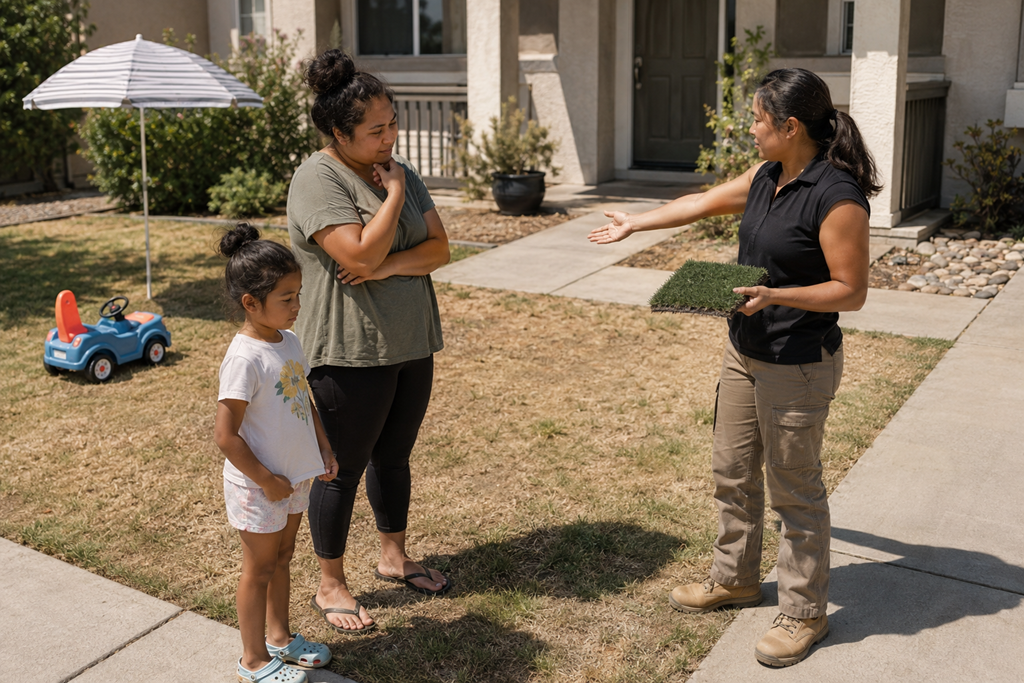
A qualified artificial turf professional should be able to talk through these practical details, not just show you a sample and describe the surface as easy to maintain.
Artificial Turf May Solve One Frustration While Creating A Different Responsibility
One helpful way to decide is to name the exact problem you are trying to solve. Are you trying to reduce water use? Avoid muddy paws? Improve curb appeal? Stop dealing with patchy grass? Create a cleaner area around a patio? Make a small yard easier to use?
Artificial turf may help with some of those goals, but the maintenance tradeoff changes depending on the goal.
If your main frustration is mowing, turf may be a strong fit. If your main frustration is pet odor, you should ask more detailed questions about drainage, cleaning routines, and product choices. If your main issue is heat in a sunny yard, you should discuss surface temperature, shade, and how the space will feel during everyday use. If your goal is a pristine look under trees, you should expect routine debris removal.
This does not mean artificial turf is the wrong choice. It means the best choice depends on whether the new responsibility is one you are willing to manage.
When Expectations Get Too Simple
Artificial turf decisions often become confusing when the conversation is reduced to one phrase: “maintenance-free.” That phrase can make homeowners skip important questions.
A better conversation is more specific. How often will debris need to be cleared? What should be done after pet use? How should high-traffic areas be cared for? What happens around edges and seams? What should the homeowner watch for after heavy use or seasonal rain? How does the installer recommend caring for the surface without damaging it?
Another common misunderstanding is assuming that all yards will age the same way. The surface in a lightly used front yard may look different over time than a backyard with pets, furniture, children, and repeated foot traffic. Installation quality, drainage, base preparation, sun exposure, and household habits can all affect the long-term experience.
The more your yard has a specific use pattern, the more important it becomes to discuss maintenance before choosing a product or approving an estimate.
Questions Worth Asking Before You Compare Estimates
You do not need to become a turf expert before speaking with local providers. But a few practical questions can help you understand whether the recommendation matches your maintenance goals.
Ask how the turf should be cared for based on your yard’s actual use, not just general product instructions. Ask what maintenance changes if you have pets, trees, patio furniture, heavy foot traffic, or a sunny exposed area. Ask how debris, dust, odors, heat, and drainage should be handled after installation. Ask what warning signs might mean the surface or base needs professional review.
It is also reasonable to ask what the installer considers normal homeowner upkeep versus work that may require a follow-up service. Clear answers can help you compare providers more fairly. Vague answers may leave you unsure what ownership will actually feel like once the project is complete.
A Better Decision Starts With An Honest Maintenance Picture
Artificial turf can be a strong fit when it replaces the lawn chores you dislike with a care routine you are more willing to keep up with. It may be especially appealing when natural grass has become hard to maintain, expensive to keep looking good, or poorly suited to how the yard is used.
But it is not a set-it-and-forget-it surface. It still needs attention, especially in yards with pets, trees, heavy use, sun exposure, or debris along edges. The key is to decide whether that kind of attention feels manageable compared with the lawn care you are trying to leave behind.
Before hiring an artificial turf installer in the Sacramento area, take a practical look at how your yard is used day to day. When your maintenance goals are specific, your questions become better, your expectations become more realistic, and your estimate conversations become easier to understand.