Keeping pool water looking clear between service visits usually comes down to protecting circulation, limiting new debris, and noticing small changes before they spread. You do not need to become your own pool technician, but you do need to avoid the everyday conditions that let dust, leaves, sunscreen, and poor water movement build up faster than your regular service schedule can correct.
For many Sacramento-area homeowners, the confusing part is that a pool can look excellent immediately after a service appointment and then appear slightly dull, dusty, or less inviting several days later. That does not always mean the service failed. Hot sun, windblown debris, nearby landscaping, frequent swimming, and changes in water movement can all affect how the pool looks between scheduled visits.
The goal is not to take over the provider’s work. It is to protect the conditions that help the water remain clear and recognize when a change deserves professional attention.
Clear Water Depends on More Than the Last Service Visit
A pool-service professional may test and adjust the water, inspect the equipment, remove debris, and confirm that circulation is working properly. What happens after the appointment still matters.
Leaves may fall into the water. Wind can carry dust and pollen across the surface. Swimmers introduce sunscreen, body oils, hair products, and other material. A pool may receive heavier use during one weekend than it normally receives over several days.
These changes can happen even when the pool is being serviced regularly.
It is helpful to think of professional pool service as part of an ongoing maintenance rhythm rather than a single appointment that keeps the water unchanged until the next visit.
Protect the Circulation Schedule Your Provider Recommends
Water movement helps filtration equipment capture debris and distribute treated water throughout the pool. When circulation is reduced, interrupted, or uneven, dust and organic material may remain in the water longer.
Follow the operating schedule recommended by your pool-service provider. Avoid turning equipment off for long periods or changing programmed settings without first understanding how the change could affect circulation.
You do not need to inspect or repair the equipment yourself. Simply becoming familiar with what normal operation looks and sounds like can be useful. A noticeable loss of water movement, an unusual equipment sound, or a section of the pool that repeatedly collects debris may be worth reporting.
That information can help the provider investigate a developing issue instead of discovering it only after the water has become visibly cloudy.
Remove Light Debris Before It Breaks Down
A few floating leaves may seem harmless, especially when the rest of the pool looks clear. The concern is what happens when debris remains in the water long enough to sink, soften, or break apart.
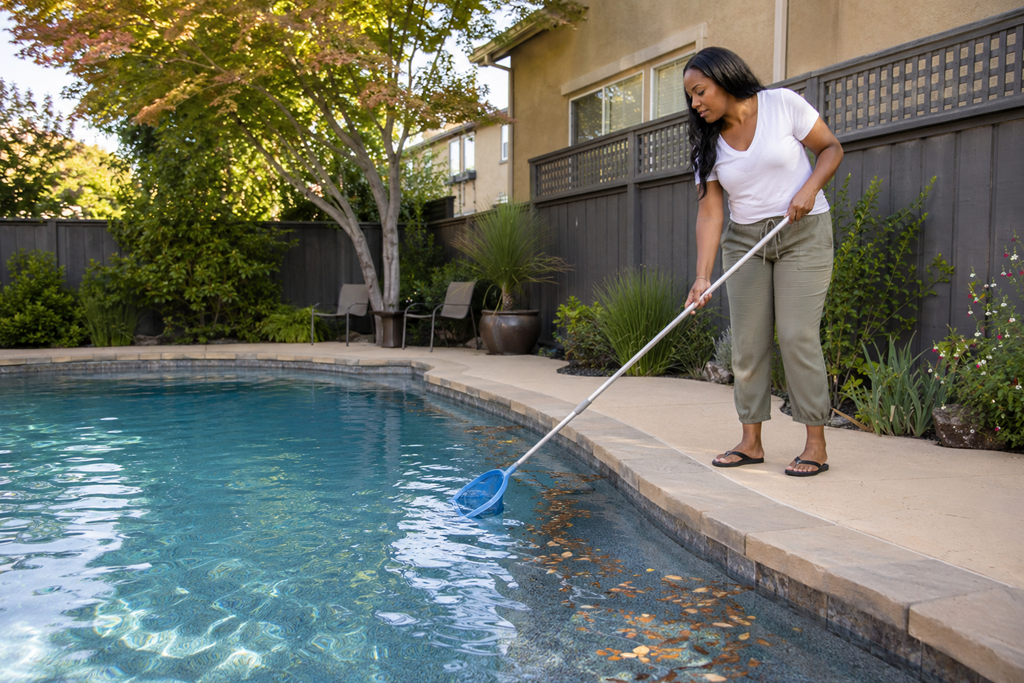
Removing light surface debris between visits can reduce the amount of material the filtration system must handle. Concentrate on visible leaves, seed pods, insects, and other items that can be safely reached from the deck.
Only handle baskets, covers, or equipment components that your provider has shown you how to manage safely. When access requires opening unfamiliar equipment, reaching into a confined space, or changing a system setting, leave it for a qualified professional.
The purpose of light homeowner maintenance is to prevent obvious buildup, not to perform the full service appointment early.
Poolside Conditions Can Affect the Water
The condition of the surrounding yard often influences what ends up in the pool.
Overhanging branches, uncovered soil, dry landscaping material, grass clippings, and unsecured outdoor items can increase the amount of debris entering the water. Windy conditions may move material into one corner faster than the skimmer can collect it.
Keeping the immediate pool area orderly can make a noticeable difference. This may include collecting loose leaves from the deck, preventing yard debris from being blown toward the water, and using a properly fitted cover when appropriate for the pool and household.
The cleaner the material surrounding the pool, the less the filtration system has to remove.
Heavy Swimming Can Change the Water Faster
A pool that receives light use during the week may respond differently after a family gathering, several children swimming, or a long afternoon of repeated use.
Sunscreen, lotions, perspiration, dirt, and fabric fibers can all enter the water. Toys and floating accessories may also interfere with normal surface movement when they remain in the pool after everyone has finished swimming.
Encouraging swimmers to rinse off first can reduce some of the material introduced into the water. Removing toys and other floating items afterward allows the surface to move freely again.
When the pool has received unusually heavy use, let the service provider know. That context may help explain why the water changed more quickly than expected and whether the normal service plan needs temporary adjustment.
Avoid Guessing With Extra Pool Chemicals
One of the easiest ways to make a small clarity concern more complicated is to begin adding products without knowing what the water actually needs.
Slightly dull water does not automatically mean that one particular chemical is low. The cause could involve circulation, filtration, debris, heavy use, equipment operation, or several conditions occurring together.
Adding products based only on appearance can make professional testing harder and may create an imbalance that was not present before. Never mix pool chemicals or combine treatments unless the product instructions and your qualified provider specifically support doing so.
When the water starts looking different, take note of what recently changed:
- Was the pool used more heavily than usual?
- Did wind or landscaping add more debris?
- Does the water appear to be moving normally?
- Is the change limited to one area or spreading?
- Did the appearance change suddenly or gradually?
These observations are often more useful to the provider than an unplanned chemical treatment.
Clear Water Is Not the Same as Properly Balanced Water
Visual clarity is reassuring, but it does not tell you everything about the water.
A pool may look clear while still needing routine testing or adjustment. Water balance cannot be judged reliably by appearance alone, and problems involving sanitation or equipment performance may begin before the water becomes cloudy.
Continue scheduled professional service even when the pool looks excellent. The purpose of regular maintenance is not only to restore visibly poor water. It is also to help prevent less visible conditions from developing into larger problems.
Know When a Change Deserves a Call
Minor surface debris after a windy afternoon may only require light cleanup. A persistent or worsening change deserves more attention.
Contact your pool-service provider when you notice:
- Cloudiness that continues to increase
- Green, yellow, or unusual discoloration
- Debris repeatedly collecting in the same area
- A noticeable reduction in water movement
- Unusual equipment noises or equipment that appears inactive
- Strong or unfamiliar odors
- Eye or skin irritation reported by swimmers
- A sudden change after chemicals or other substances entered the pool
You do not need to diagnose the cause before calling. Describe what you see, when it started, and anything unusual that happened beforehand.
Useful Questions for Your Pool-Service Provider
A brief conversation with your provider can make between-visit care much easier. Consider asking:
- What light maintenance is safe for us to handle?
- What should normal circulation look like in this pool?
- Which changes should prompt a call before the next appointment?
- Should we report heavy swimming or unusual debris conditions?
- Are any areas of the pool more likely to collect material?
- Is the current service frequency appropriate for how the pool is used?
A helpful provider should be able to explain the homeowner’s role without making the process feel overly technical.
Aim for Steady Conditions, Not Perfect Water Every Hour
Keeping pool water clear between service visits is usually less about constant chemical adjustment and more about preserving the conditions that professional service depends on.
Support the recommended circulation schedule, remove manageable surface debris, keep the surrounding area reasonably clean, and pay attention after heavy use or unusual weather. Most importantly, report meaningful changes before trying to correct an unfamiliar problem yourself.
That approach helps Sacramento-area homeowners protect their pool, communicate more clearly with their service provider, and avoid turning a small water-quality change into a larger maintenance concern.