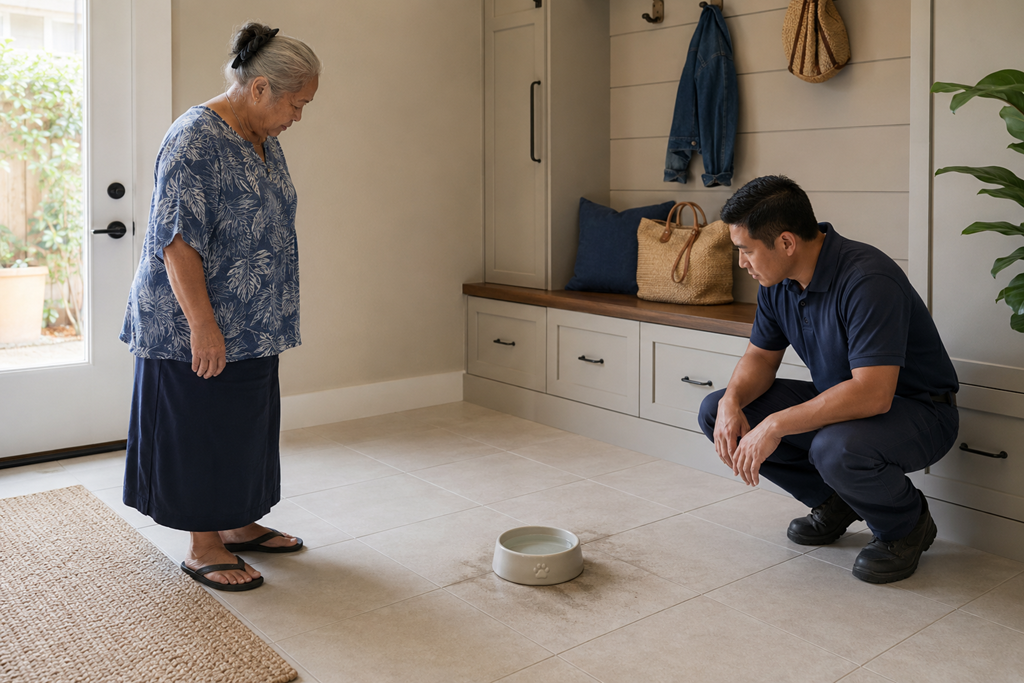
Keeping tile areas looking cleaner and easier to maintain usually depends less on cleaning more often and more on reducing the places where soil, moisture, and residue collect. Intact grout, appropriate cleaners, good drying habits, and early attention to damaged joints can make routine care simpler while helping the tile surface look more consistent between deeper cleanings.
Many homeowners experience the same frustrating pattern: the tile itself still looks smooth and serviceable, but the overall area begins to appear dull, uneven, or older than expected. The problem may be concentrated in the grout lines, along edges, near plumbing fixtures, or in the paths where people walk most often.
Recognizing where the dirty appearance begins can help you decide whether the area needs better routine care, a more thorough professional cleaning, or a conversation about grout repair.
Grout Often Determines How Clean the Entire Area Looks
Tile covers most of the visible surface, but grout creates a network of lines across it. When those lines become darker, blotchy, or inconsistent, the entire floor, shower, or backsplash can look dirty even when the tile faces are relatively clean.
The condition of the grout matters as much as its color. Grout that remains full, firm, and evenly shaped may simply be holding soil or residue. Grout with cracks, missing sections, loose material, or repeated dark patches may need more than another cleaning attempt.
This distinction is important because cleaning cannot replace missing material or correct movement beneath a tiled surface. Applying stronger products or scrubbing more aggressively may also make routine maintenance harder if the grout surface becomes rougher or more porous.
Before scheduling grout cleaning or repair, look at both the color and the physical condition of the joints. A qualified local provider should also examine the surrounding tile, corners, edges, and moisture-prone areas rather than focusing only on the darkest spot.
Cleaning Residue Can Attract More Dirt
A surface can look freshly cleaned while still holding a thin layer of product residue. This may happen when too much cleaner is used, when a product is not removed as directed, or when the cleaner is not appropriate for the tile or grout material.
The residue may create a cloudy appearance on the tile and a slightly sticky surface along the grout lines. Dust, cooking particles, tracked-in soil, and bathroom products can then cling to that film. The area appears to become dirty unusually quickly, leading to another round of heavy cleaning and another possible layer of residue.
Using more product is not always the answer. A smaller amount of an appropriate cleaner, used according to its instructions, may leave the surface easier to maintain than a heavily applied product that promises aggressive cleaning.
Material compatibility also matters. A cleaner that works well on glazed ceramic tile may not be appropriate for natural stone or another sensitive surface. When the tile material is uncertain, a grout-cleaning professional can help identify what should be tested before the entire area is treated.
Moisture Patterns Can Make Certain Areas Look Dirty Again
Showers, bathroom floors, kitchen backsplashes, and laundry areas regularly encounter moisture. These surfaces may need more attention not because the household is neglecting them, but because water repeatedly reaches the same joints and edges.
A shower wall may look clean after service while the lower grout lines begin darkening again sooner than the upper joints. Grout near a sink may remain discolored where splashes repeatedly collect. A laundry-room joint may change color near an appliance connection while the rest of the floor remains dry and consistent.
These patterns are useful clues. They can point to drying conditions, ventilation, recurring splashes, a deteriorated flexible joint, or a possible moisture source that should be examined.
Covering the area with a colorant or repeatedly cleaning the surface may improve its appearance temporarily without addressing why the same location keeps changing. When a dark area returns in one specific place, ask whether the service provider will evaluate the moisture pattern before recommending a cosmetic treatment.
High-Traffic Areas Benefit From Source Control
Grout near exterior doors, kitchen work zones, bathroom entrances, and frequently used walkways often darkens before protected areas. The difference may be especially visible when grout beneath a mat, cabinet edge, or piece of furniture remains noticeably lighter.
This does not necessarily mean the entire floor needs the same level of treatment. It may show where soil enters the room and how people naturally move through the space.
Keeping grit and outdoor dust from traveling across the floor can make maintenance more manageable. Well-placed entry mats, routine removal of loose debris, and prompt attention to spills may reduce how much material becomes embedded in the grout.
Sacramento-area homes may also experience periods when dry outdoor soil is easily tracked inside. Paying attention to the path between exterior doors and tiled areas can be more useful than repeatedly deep-cleaning an entire room that only has one heavily used traffic lane.
Consistent, Material-Appropriate Care Usually Works Better
Tile areas are often harder to maintain when they alternate between long periods of buildup and occasional aggressive cleaning. A lighter, consistent routine usually places less stress on the surfaces and prevents ordinary soil from becoming deeply established.
That does not mean every joint must be scrubbed frequently. It means removing loose debris before it becomes wet, wiping recurring splash zones, allowing moisture-prone areas to dry, and using products suited to the surface.
Cleaning tools matter as well. A tool that is overly abrasive may scratch certain tile finishes or wear the surface of the grout. A heavily soiled mop, cloth, or brush can also redistribute residue instead of removing it.
When a tile area still looks uneven after reasonable routine care, it may be time to stop changing products and determine what is actually affecting the appearance. A test area completed by a professional can sometimes reveal whether the problem is surface residue, embedded discoloration, damaged grout, or a combination of conditions.
Sealing Has a Specific Role
Grout sealing may help some cement-based grout resist moisture and staining, but it does not make grout maintenance-free. It also does not repair cracks, replace missing grout, eliminate an active moisture problem, or guarantee that the original color will remain unchanged.
Not every tile or grout installation requires the same sealing approach. Some grout products are designed differently, and natural stone may have its own care requirements.
Before accepting sealing as part of a service, ask what material is being sealed, why sealing is recommended, and what routine maintenance will still be needed afterward. A clear provider should be able to explain the limits of the treatment without presenting it as a permanent solution to every grout concern.
Know When Cleaning Has Reached Its Limit
Repeated cleaning may not be productive when the grout is cracked, crumbling, missing, or separating from the tile. The same is true when tiles appear loose, when a joint repeatedly stays damp, or when staining returns quickly in one concentrated location.
These conditions do not automatically indicate a major underlying problem, but they deserve a closer look before more cosmetic work is performed.
A grout-cleaning provider may be able to clean and restore intact joints while recommending that damaged sections be evaluated separately. In other situations, cleaning and localized repair may be included in the same project.
The important point is that the scope should match the condition. A quote for cleaning should not quietly assume that cleaning will correct physical damage, and a repair recommendation should explain why the affected joints need more than surface treatment.
Questions That Can Make an Estimate More Useful
Before hiring a Sacramento-area grout cleaning or repair provider, consider asking:
- Do the affected areas appear stained, damaged, or both?
- Will a test area be completed before the full service?
- Are corners, edges, and flexible joints included in the evaluation?
- What cleaning products are appropriate for this tile material?
- Is sealing recommended, and what will it realistically help prevent?
- Are there damaged areas that cleaning will not correct?
- How should the area be maintained after the service?
The answers can help you compare more than the total price. They can also show whether the provider has examined the reason the area is difficult to maintain or is simply offering the same treatment for every visible problem.
Easier Maintenance Begins With the Right Diagnosis
Keeping tile areas cleaner does not always require stronger chemicals, harder scrubbing, or more frequent deep cleaning. It often begins with understanding whether the appearance is being affected by ordinary soil, product residue, moisture, traffic patterns, or damaged grout.
Once the cause is clearer, routine care becomes easier to plan. You can use products that suit the surface, focus attention on the areas that collect the most soil, and avoid expecting cleaning to solve a repair problem.
When professional service is being considered, look for a Sacramento-area provider who distinguishes between cleaning, sealing, and repair and who explains how the recommended work will affect future maintenance. The goal is not merely a cleaner-looking surface on service day, but a tile area that remains more manageable afterward.