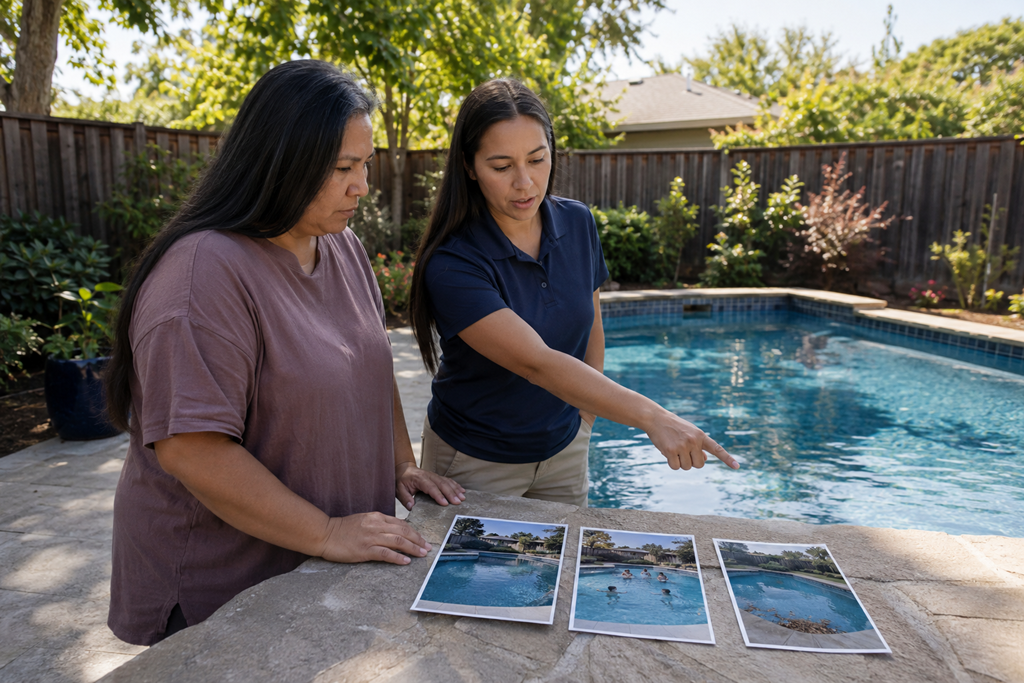
New pool owners should understand that the first summer is less about mastering every maintenance task and more about learning how their particular pool responds to heat, use, debris, and equipment settings. A pool can look clear while still needing attention, and small changes are easier to understand when you know what is normal for your water, circulation, and service routine.
Owning a pool for the first time can feel unpredictable. The water may look different after several people swim, leaves may repeatedly collect in one area, or equipment may make unfamiliar sounds. These changes do not automatically mean that something is seriously wrong. They often mean that the owner is still learning how the pool behaves under different conditions.
The most useful goal for a first summer is not perfection. It is developing a reliable sense of what is normal, what deserves closer attention, and which questions should be directed to a qualified pool professional.
The First Summer Teaches You How Your Pool Behaves
Even pools with similar shapes and equipment can behave differently. Sun exposure, surrounding trees, wind direction, pool use, water features, equipment condition, and circulation patterns can all affect what an owner notices from week to week.
During the first summer, you may begin recognizing patterns such as:
- One corner collecting more leaves than the rest of the pool
- The water level changing more noticeably during hot or windy periods
- Baskets filling faster after yard work or nearby landscaping activity
- The pool needing additional attention after gatherings or frequent swimming
- Equipment sounding or operating differently from one day to another
Recognizing a pattern is often more useful than reacting to a single isolated change. A few leaves after a windy afternoon are different from debris repeatedly remaining in the same place despite normal service. The first situation may simply reflect weather. The second may be worth mentioning to a pool professional.
You do not need to diagnose the cause yourself. Your role as a new owner is to notice what is happening and communicate it clearly.
Clear Water Is Not the Whole Picture
One of the easiest assumptions for a new pool owner to make is that clear water means the pool needs no attention.
Appearance matters, but it is only one part of pool care. Water conditions, circulation, filtration, equipment operation, and sanitation may change before the difference becomes obvious from the patio. Conversely, a temporary visual change does not always mean that the entire pool system has failed.
This is why professional water testing and routine equipment observation can be valuable even when the pool looks inviting. A qualified provider should be able to explain what is being checked, what appears normal, and what may require follow-up without relying on vague warnings.
The goal is not to become suspicious of every small change. It is to avoid using water clarity as the only measure of whether the pool is operating as expected.
Sacramento Heat and Frequent Swimming Can Change the Workload
Sacramento-area pools may experience extended sun exposure, dry conditions, wind-blown debris, and frequent use during warmer periods. These conditions can affect how quickly the pool’s needs change.
A pool that remains stable during a quiet week may behave differently after several days of swimming. Sunscreen, body oils, dirt, grass, and other material can enter the water. Hot weather and direct sun may also affect water conditions and evaporation.
That does not necessarily mean the pool was neglected or serviced incorrectly. It may simply mean that the maintenance routine needs to account for how the pool is actually being used.
When speaking with a provider, explain whether the pool is used occasionally, every day, or mainly for larger gatherings. That information can help the professional discuss appropriate expectations for visits, monitoring, and communication.
Learn the Equipment Before You Need an Urgent Answer
The equipment area can be intimidating when everything is unfamiliar. Pumps, filters, cleaners, heaters, valves, and automated controls may all be present, and new owners are not always told what each component does.
You do not need to learn how to repair the equipment. You should, however, know which major components serve your pool and what normal operation generally looks and sounds like.
Consider asking a qualified pool professional to show you:
- Which equipment supports circulation and filtration
- What equipment should normally be running
- Which sounds or visible changes deserve a service call
- Which components receive routine service
- Which problems require a separate repair appointment
- What you should avoid touching or adjusting
Electrical components and pressurized pool equipment should not be opened, disassembled, or repaired without appropriate training. A professional walkthrough should focus on recognition and communication rather than turning the homeowner into a technician.
Establishing this baseline early can make later conversations much easier. Saying that a pump suddenly sounds different is more useful than discovering months later that you never knew how it normally sounded.
Know Exactly What Routine Pool Service Covers
“Pool service” can refer to different levels of work. One provider may focus primarily on water testing and chemical treatment, while another may also include brushing, skimming, basket cleaning, filter maintenance, cleaner checks, or basic equipment observations.
This variation can create confusion when a new owner assumes that every visible or mechanical concern is included in a routine visit.
Before comparing Sacramento-area pool providers, ask for a clear explanation of the service scope. You should understand which tasks are performed regularly, which are completed only when needed, and which are billed or scheduled separately.
It is also useful to know how the provider communicates about unusual conditions. Some companies may leave a service summary, send photographs, or contact the homeowner when they notice a possible equipment issue. Others may expect the homeowner to initiate questions.
Neither approach should be assumed. Clear expectations are more important than discovering after a problem develops that each side thought the other was monitoring it.
Simple Observations Are More Useful Than Constant Adjustments
New owners sometimes respond to uncertainty by changing several things at once. They may adjust equipment settings, add products, alter run schedules, or clean components without knowing which change was necessary.
Making multiple changes can make the original issue harder to understand. It can also complicate a professional’s effort to determine what happened.
A better approach is to observe and document before experimenting. A photograph of unusual debris, a note about when the water changed, or a description of an unfamiliar sound may give a provider useful context.
You do not need an elaborate pool journal. A small collection of service records, equipment photographs, repair invoices, and notes about unusual conditions can help reveal whether something is recurring or isolated.
Misunderstandings That Make the First Summer Harder
Waiting Until the Pool Looks Bad
Some pool concerns begin before the water becomes visibly cloudy or discolored. Waiting for a dramatic visual change can make a simple question more difficult to address.
When something appears different from the pool’s usual pattern, asking for clarification is reasonable. That does not mean requesting an emergency appointment for every leaf or bubble. It means communicating before uncertainty grows.
Assuming Every Concern Is a Water-Chemistry Problem
Water appearance can be influenced by chemistry, but circulation, filtration, debris, equipment operation, and heavy use may also play a role.
A professional should evaluate the overall situation rather than automatically recommending more products based only on a brief description.
Treating All Pool Service Plans as Identical
Two quotes may use similar language while covering different tasks. A lower price may reflect a narrower service scope rather than the same work at a better value.
Compare what is included, how often certain tasks are performed, how filter care is handled, and what happens when the provider notices a repair concern.
Expecting the Pool to Behave the Same Every Week
Weather, swimming activity, landscaping, equipment conditions, and even an unusual amount of wind can change what the pool needs.
Consistency does not mean that nothing ever changes. It means there is a reliable process for noticing changes and responding appropriately.
Questions Worth Asking a Pool Professional
A first conversation with a pool provider does not need to become a technical interview. A few direct questions can reveal whether expectations are being explained clearly:
- What does normal operation look and sound like for this pool?
- What is included in each routine service visit?
- Which cleaning and filter tasks are completed separately?
- What should I watch between visits?
- How can frequent swimming, heat, or wind affect the service routine?
- How will you let me know when you notice a possible repair issue?
- Which concerns should go to a pool-service provider, and which require a repair specialist?
Useful answers should be understandable without pressure or unnecessary jargon. A provider who cannot explain the service scope clearly may also be difficult to communicate with when a problem arises.
A Good First Summer Is About Fewer Surprises
A successful first summer does not require becoming an expert or keeping the pool perfectly unchanged every day. It means learning the pool’s patterns, understanding the basic service arrangement, and knowing when an observation deserves professional attention.
The more familiar you become with normal water appearance, debris collection, equipment operation, and service communication, the easier it becomes to describe a concern without guessing at the cause.
Before hiring or continuing with a Sacramento-area pool professional, look for someone who explains what they monitor, what the homeowner should notice, and where routine service ends. That understanding can help you enjoy the pool while making better-informed decisions when maintenance or repair questions arise.