A garage door problem may be getting worse when the same issue starts happening more often, the door behaves less predictably, or small changes begin stacking together. One noisy morning may not tell you much by itself. But a door that sounds louder, moves unevenly, hesitates, reverses unexpectedly, or needs more attention than usual is worth paying attention to before the issue becomes harder to explain or compare.
For Sacramento-area homeowners, the goal is not to diagnose the door yourself or make a rushed repair decision. The goal is to notice patterns clearly enough that, when you do speak with a local garage door professional, you can describe what has changed and ask better questions.
Small Changes Often Matter More Than One Big Moment
Many garage door concerns do not begin with a dramatic failure. They often start as something easy to dismiss.
The door sounds a little different. It pauses before moving. The opener seems to strain more than it used to. One side looks slightly lower. The door closes most of the way, then reverses. These moments may seem minor because the door still works.
That is what makes the situation confusing. A garage door can continue opening and closing while still showing signs that something is wearing down, shifting, or becoming less reliable. The warning sign is not always that the door stops working. Sometimes the warning sign is that it no longer works the same way.
A Repeated Pattern Is More Important Than A Single Odd Sound
One unusual sound does not automatically mean there is a serious problem. Garage doors have many moving parts, and occasional noise can happen for different reasons. What matters is whether the sound is new, louder, more frequent, or paired with another change.
For example, a brief squeak one time may not tell you much. But grinding, scraping, popping, or banging that becomes more noticeable should be taken more seriously, especially if the door also shakes, moves unevenly, or seems slower than before.
A helpful way to think about it is this: the more repeatable the issue becomes, the less random it probably is.
When The Door Starts Acting Less Predictable
A garage door that works one day and struggles the next can be frustrating because it creates uncertainty. You may not know whether to keep using it, wait and see, or schedule an inspection.
Unpredictable behavior can show up in several everyday ways:
The door may open smoothly sometimes but hesitate other times. It may close fully one day, then reverse the next. The opener may respond inconsistently. The door may sound different depending on where it is in the opening or closing cycle.
These changes do not always point to one obvious cause, but they do suggest the issue is becoming harder to ignore. If a door’s behavior is no longer consistent, that is useful information to share when contacting a local garage door service provider.
Visible Changes Can Be Easy To Overlook
Not every garage door problem announces itself with noise. Some signs are visual.
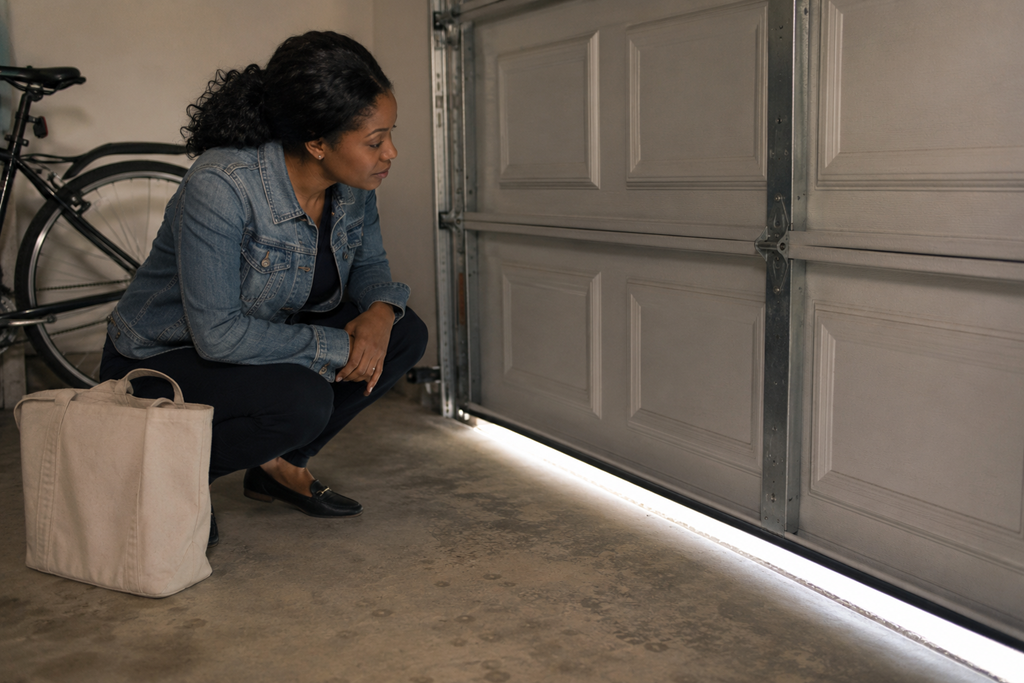
A door may appear slightly crooked. A gap may look larger on one side than the other. Panels may seem more stressed than before. Hardware may look loose, strained, or out of place. The door may not sit as evenly against the ground when closed.
These details matter because garage doors are large, heavy systems. Small visual changes can affect how the door moves, seals, and responds to the opener. That does not mean every visible change requires replacement, but it does mean the situation is worth evaluating before assuming it is only cosmetic.
The Opener May Not Be The Whole Problem
One common misunderstanding is assuming every garage door issue is an opener problem. If the remote works inconsistently or the door hesitates, it is natural to blame the opener first.
Sometimes the opener is involved. But the opener is only one part of the system. The door itself, tracks, rollers, springs, cables, sensors, weather exposure, and balance of the system can all affect how smoothly the door moves.
That is why it helps to describe the behavior instead of trying to name the cause. A homeowner does not need to say, “The opener is failing.” It is more useful to say, “The door hesitates halfway down,” or “It has started shaking more when it opens.”
Clear observations help a professional evaluate the whole system instead of focusing too narrowly on one part.
When Waiting Can Make The Decision More Complicated
Waiting is understandable. If the garage door still opens and closes, it may feel easier to put the issue aside. Many homeowners also worry that calling someone too early will lead to a larger recommendation than they expected.
But waiting too long can make the decision less clear. If several symptoms build up, it may become harder to separate a simple adjustment from broader wear. A small issue can also become more inconvenient if it affects your morning routine, parking, storage access, or household schedule.
This is especially important for homeowners who rely on the garage as a main entry point. A garage door problem is not just a house issue. It can affect how smoothly the day starts and how secure or usable the space feels.
Pay Attention To Changes In Effort, Sound, And Alignment
You do not need a technical inspection to notice basic patterns. The most useful homeowner observations usually fall into three simple categories.
First, pay attention to effort. Does the door seem slower, heavier, or more strained than before?
Second, pay attention to sound. Is the noise new, sharper, louder, or happening at the same point in the door’s movement?
Third, pay attention to alignment. Does the door look even when closed? Does it move straight? Does one side seem to lag or sit differently?
These observations are not meant to help you repair the door yourself. They help you communicate clearly before scheduling service or comparing local garage door providers.
Be Careful With Problems That Involve Springs, Cables, Or A Stuck Door
Some garage door parts can be dangerous to handle without proper training. If you notice a broken spring, loose cable, damaged track, or a door that is stuck open or closed, it is better to avoid forcing the door or trying to adjust parts yourself.
The same is true if the door feels unstable, drops quickly, hangs unevenly, or makes a sudden loud noise during operation. These are moments where a qualified professional evaluation may be the safer path.
A helpful rule is to avoid treating a heavy moving door like a simple household item. Even when the issue looks small, the system may be under tension or load.
Questions To Ask Before Scheduling Garage Door Service
When you contact a Sacramento-area garage door service provider, you do not need to sound technical. You only need to be specific.
Helpful questions may include:
What signs would suggest this is getting worse rather than staying the same?
Can the door be inspected before deciding between repair and replacement?
What parts of the system will you evaluate, beyond the opener?
Are there safety concerns with continuing to use the door before the appointment?
What information should I notice or document before you arrive?
These questions keep the conversation practical. They also help you understand whether the provider is looking at the full situation instead of jumping too quickly to one recommendation.
Clearer Details Can Lead To A Better Service Conversation
A garage door problem feels more manageable when you can describe what has changed. You do not need to know the technical cause. You only need to notice the pattern.
A door that is louder than before, moving unevenly, reversing more often, hesitating, shaking, or showing visible changes may be signaling that the issue is developing. Paying attention early can help you avoid a rushed decision later and have a clearer conversation when comparing repair options.
For Sacramento homeowners, the most useful next step is often simple: notice what changed, avoid unsafe DIY adjustments, and ask a qualified local pro to evaluate the issue before it becomes harder to explain.