Gutter guards should be installed only after the gutters themselves are clean, securely attached, properly sloped, and able to move water through the downspouts without leaking or overflowing. If you see standing water, sagging sections, separated seams, peeling fascia, rust, or recurring spillover during rain, the gutters may need cleaning, adjustment, repair, or replacement before guards are added.
This distinction is easy to miss because gutter guards and gutter repairs are often discussed during the same appointment. Guards are intended to reduce the amount of debris entering the gutter system. They are not designed to correct problems already affecting the gutters, roof edge, fascia, seams, or downspouts.
For Sacramento-area homeowners, checking the existing gutter system first can make conversations with local installers more productive and help prevent unresolved problems from being covered by a new guard system.
Guards Cannot Correct Problems Underneath Them
A gutter guard sits over or inside an existing gutter, depending on the product and installation method. It may help limit leaves, seed pods, pine needles, roof granules, and other debris, but it does not change the gutter’s underlying condition.
A guard will not straighten a sagging section, reseal a leaking corner, reconnect a loose fastener, clear a blocked downspout, or restore deteriorated fascia behind the gutter. Covering those conditions may make them less visible without making them less important.
That does not mean every gutter needs extensive work before guards are installed. It means the gutter and drainage system should be evaluated separately from the guard product.
Water Behavior Often Reveals the First Warning Signs
One of the most useful clues is how water behaves during and shortly after rainfall.
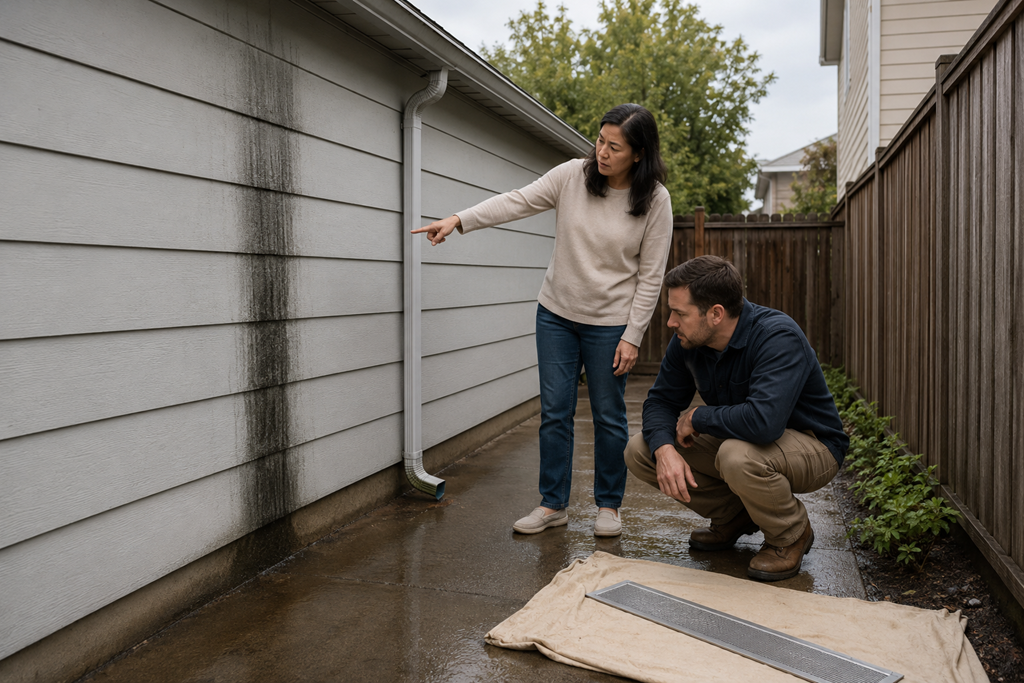
Water that spills over the front edge in one concentrated area may indicate debris, a blocked outlet, a low section, or runoff arriving faster than the gutter can carry it away. Water running behind the gutter may point to an attachment, roof-edge, flashing, or alignment concern that a guard alone will not resolve.
Standing water that remains after rainfall can also deserve attention. A small amount of moisture may not reveal much, but a visible pool that repeatedly stays in the same section can suggest restricted drainage, a low spot, or a change in the gutter’s shape.
Homeowners do not need to climb onto the roof to investigate these signs. Observations made safely from the ground, along with photos taken during rain when practical, can give a gutter professional useful information.
The Gutter’s Shape and Attachment Matter
Gutters depend on their shape and position to carry water toward the downspouts. A section that has started to dip, twist, pull away, or separate at a corner may not perform correctly even when it appears mostly clean.
Look for visible changes in the gutter line when viewing it from the ground. A noticeable dip, a widening gap between the gutter and fascia, or a corner that no longer lines up with the adjoining section may indicate that the system needs attention.
Loose attachment points matter because a guard adds another component to the existing assembly. The installer should know whether the gutter is secure enough to support the selected system and continue functioning as intended.
A Clean-Looking Gutter Can Still Have a Drainage Problem
Removing visible leaves does not always mean the entire water path is clear.
Fine debris can collect around the outlet where the gutter connects to the downspout. Material may also be lodged farther down the downspout or at another connected drainage point. In those situations, the open gutter can appear clean while water continues to back up or spill over.
Some problems also become noticeable only when water is moving through the system. This is why a visual inspection and a basic flow evaluation can reveal different information.
Before guards are installed, ask whether the provider evaluates water movement through the gutters and downspouts rather than checking only for visible debris.
Roof-Edge and Fascia Conditions Can Change the Project
The materials behind and beneath the gutter deserve attention as well.
Discoloration, peeling paint, softened areas, visible gaps, or recurring dampness along the fascia may suggest that water has been traveling where it should not. These signs do not automatically prove that major repairs are needed, but they should not be ignored when planning a guard installation.
The same is true when gutters have repeatedly pulled away from the roof edge. Reattaching a gutter to material that is already weakened may not provide a dependable result.
A qualified professional can help determine whether the concern is limited to the gutter or whether another roof-edge component should be evaluated before installation moves forward.
Separate Debris Control From Gutter Condition
Homeowners sometimes expect one product to solve several related problems at once.
Gutter guards primarily address future debris entry. Gutter cleaning addresses material already inside the system. Gutter repair addresses physical defects, attachment problems, leakage, and alignment. Replacement may be discussed when deterioration or deformation is too widespread for isolated repairs to make sense.
These services can be completed as part of the same overall project, but they are not interchangeable.
Keeping them separate in the conversation makes it easier to understand what the installer found, what work is being recommended, and what the guard system is actually expected to accomplish.
The Existing Condition May Point to Cleaning, Repair, or Replacement
A structurally sound gutter system that is securely attached and drains correctly may need only cleaning and minor preparation before guards are installed.
Localized concerns such as a leaking seam, loose attachment point, misaligned outlet, or isolated low section may be repairable. More widespread corrosion, repeated separation, extensive deformation, or ongoing failures in several areas may lead to a broader replacement discussion.
The important point is not to assume the answer before the system is evaluated. A trustworthy assessment should explain the condition in plain language and connect each recommendation to something observable.
Be cautious when a provider discusses the guard product in detail but says little about the gutters that will support it.
Questions to Ask Before Approving the Installation
A few focused questions can help clarify whether the existing system has been properly considered:
- Will the gutters and downspouts be cleaned and checked for water flow before installation?
- Did you find standing water, low sections, loose fasteners, leaking seams, or separated corners?
- Is any gutter preparation or repair included in the estimate?
- Are there roof valleys or concentrated runoff areas that require special planning?
- Will the new guards still allow reasonable access for future inspection and maintenance?
- What existing conditions would need to be corrected before the guard warranty or installation coverage applies?
Clear answers should distinguish observed problems from optional upgrades and explain how the proposed work relates to the gutter guard system.
The Estimate Should Separate Existing Work From the Guard System
An estimate that says only “install gutter guards” may not tell you whether cleaning, downspout clearing, resealing, adjustment, or attachment work is included.
Ask the provider to identify any preparation or repair work separately. This does not necessarily require a complicated document. It should simply be possible to understand what condition exists, what will be done about it, and which portion of the project relates specifically to the guards.
This separation also makes estimates from different Sacramento-area providers easier to compare. One quote may appear higher because it includes needed gutter preparation, while another may cover only the guard material and installation.
Comparing the actual scope is more useful than comparing the final totals alone.
Make Sure the Foundation of the Project Is Sound
Gutter guards can be a practical addition when they are installed over a gutter system that is secure, functional, and able to drain correctly. When existing problems are present, addressing them first helps ensure the installation begins with a dependable foundation.
Before committing, make sure the provider has evaluated more than the debris on top. Understanding the gutter’s condition, water flow, attachment, seams, downspouts, and surrounding roof-edge materials will help you make a better-informed decision about what the project should include.