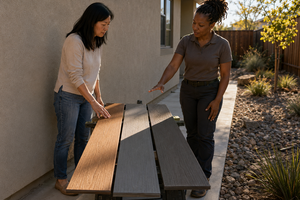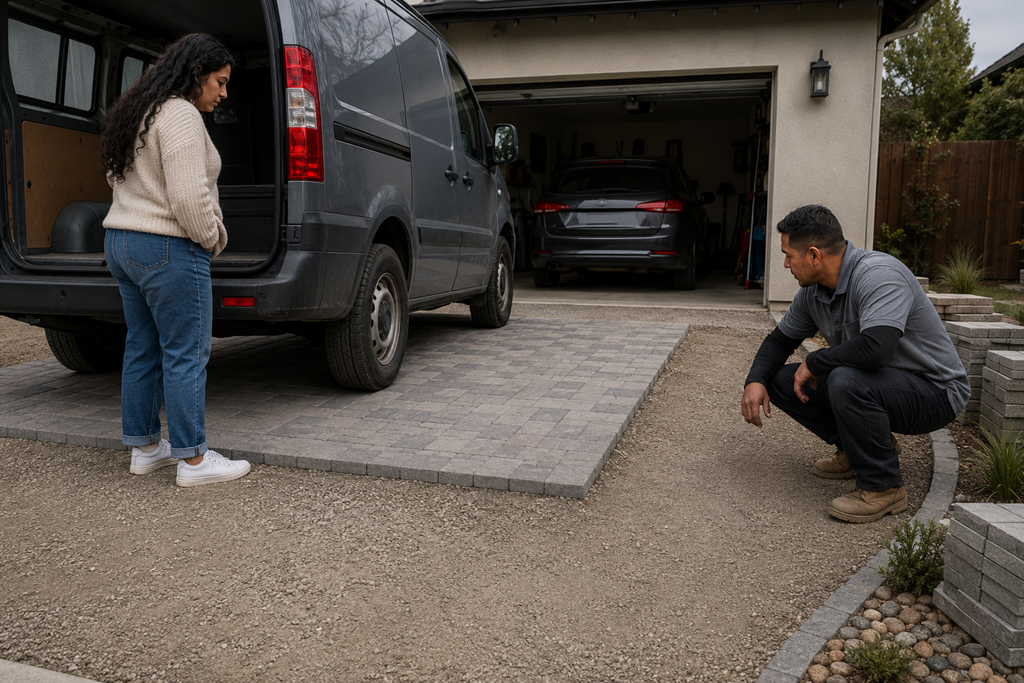
Pavers can work well for patios, walkways, and driveways, but the same paver should not automatically be treated the same way in every location. The better starting point is to ask what the surface must carry, how people or vehicles will move across it, where water will go, and how the space will be used on an ordinary day. Once those questions are clear, color and pattern become easier—and safer—to evaluate.
It is easy to begin a paver project by looking at attractive samples. A homeowner may find a color, texture, or layout that appears suitable for the entire property. The difficulty is that a patio, walkway, and driveway are not simply three places to install the same decorative surface. Each area performs a different job.
Understanding those differences can help Sacramento-area homeowners have more useful conversations with paver installation professionals and compare estimates based on more than appearance alone.
One Material May Be Asked To Do Three Different Jobs
A patio supports everyday outdoor living. It may need to accommodate dining chairs, a grill, planters, shade structures, children’s activities, or regular gatherings.
A walkway is mainly a route. Its usefulness depends on where it leads, how comfortably people can move along it, and how it connects doors, gates, driveways, yards, and other parts of the property.
A driveway repeatedly carries vehicles. It must handle tire movement, turning, parking, and the concentrated weight of cars or trucks.
These surfaces may share the same general visual style, but they do not necessarily need the same paver size, layout, preparation, edging, or surrounding clearances. The important question is not simply, “Which paver do I like?” It is, “What will this part of the property be expected to do?”
A Patio Should Be Planned Around Real Activities
An empty patio can appear much larger than it feels after furniture is added.
A dining table may fit within the measured area, yet a chair could block the route to the back door when someone pulls it out. A grill may occupy the only convenient walking path. Planters or storage boxes may gradually reduce usable space. A narrow edge around the furniture may look acceptable on a drawing but feel restrictive during a gathering.
This is why patio planning should account for movement around the objects, not only the footprint of the objects themselves.
Before focusing on the paver pattern, it can help to picture an ordinary afternoon:
- Can someone pull out a chair without blocking a doorway?
- Is there a comfortable route between the house and yard?
- Will commonly used furniture sit fully on the finished surface?
- Are grill, storage, shade, and seating areas competing for the same space?
- Could future furniture changes make the layout difficult to use?
The goal is not necessarily to build the largest possible patio. It is to create a surface that supports the activities the homeowner actually expects to happen there.
A Walkway Is Successful When The Route Makes Sense
A walkway can be beautifully installed and still feel inconvenient if it follows the wrong route.
People usually choose the most direct or comfortable path between two places. If a new walkway makes an unnecessary turn, ends short of a gate, narrows beside a planter, or leaves an awkward transition at a doorway, people may continue walking across the lawn or stepping around its edge.
Width also affects how the route feels. A walkway that seems adequate when empty may feel constrained when someone carries groceries, rolls a trash bin, pushes a stroller, walks beside another person, or approaches from an angle.
Transitions deserve particular attention. The points where a walkway meets a porch, patio, driveway, gate, or door threshold often affect daily use more than the middle of the path.
A useful planning conversation therefore goes beyond choosing a border or laying pattern. It examines who will use the route, what they may be carrying or rolling, where they naturally enter it, and whether the finished elevation will work with nearby doors and surfaces.
A Driveway Has To Be Considered As A Vehicle Surface
Driveways introduce demands that patios and walkways usually do not.
Vehicle weight is only part of the issue. Tires also turn, brake, accelerate, and repeatedly follow similar paths. The area near the street, garage entrance, parking position, or turning point may experience different movement than the rest of the driveway.
This does not mean homeowners need to make technical installation decisions themselves. It does mean that a driveway proposal should be evaluated as a complete vehicle-surface plan rather than as a large decorative patio.
A useful estimate should make it reasonably clear how the proposed pavers, underlying preparation, edges, transitions, and intended vehicle use fit together. A professional may also need to understand whether the driveway will regularly serve passenger vehicles, larger trucks, trailers, recreational equipment, or other heavier loads.
When an estimate emphasizes the paver style but says little about the intended use of the driveway, that is a reasonable point to ask about before comparing it with another proposal.
The Paver Is Only The Visible Part Of The Project
Homeowners naturally pay the most attention to the pavers because that is what they will see. However, the finished surface also depends on what supports it and what keeps its edges in place.
The preparation beneath a pedestrian walkway may differ from what is appropriate beneath a driveway. Existing soil conditions, elevation changes, adjoining concrete, tree roots, drainage patterns, and the intended load can all influence how a professional approaches the project.
This is one reason two estimates using similar-looking pavers may describe different scopes of work. The difference may not be visible in the sample, but it can affect how the finished area is expected to perform.
Rather than assuming that every proposal includes the same preparation, homeowners can ask each provider to explain what is included beneath and around the visible pavers. The explanation should be understandable without requiring the homeowner to become a construction expert.
Drainage Connects All Three Areas
Patios, walkways, and driveways all change how water moves across a property.
The important issue is not simply whether water can pass through a particular joint or paver system. Homeowners should also consider where water arrives from, how the finished surface will be sloped, and where runoff is expected to go after leaving the paved area.
A patio near the house should not be considered separately from roof runoff, doors, nearby planting areas, and other surfaces. A walkway may cross an existing drainage route. A driveway can receive water from the street, roof, side yard, or adjacent hardscape.
Sacramento’s long dry periods can make drainage easy to overlook during planning. Seasonal rain may reveal how several parts of a property interact in ways that were not obvious when the ground was dry.
A paver installation professional should be able to discuss the planned surface in relation to the surrounding property rather than treating it as an isolated rectangle.
Matching Everything Is Not Always The Best Goal
Some homeowners want the patio, walkway, and driveway to look unified. That can be a reasonable design preference, but visual unity does not require every part of the project to be identical.
The areas may use related colors with different paver sizes, laying patterns, borders, or surface details. A design can feel coordinated while still responding to different loads, movement patterns, and spatial needs.
Insisting on one exact treatment everywhere can sometimes make the more demanding area dictate unnecessary choices for the rest of the property. The opposite can also happen: a paver selected mainly for a quiet patio may be assumed suitable for a driveway without enough discussion of how the driveway will be built and used.
A coordinated plan should connect the areas visually without pretending that they perform the same function.
Samples Are More Useful When Viewed In Their Intended Locations
A paver sample seen in a showroom, photograph, or small display may look different beside the actual house.
Sun exposure can affect how light or dark the surface appears. Nearby stucco, siding, roofing, fencing, concrete, and landscaping can change how the color is perceived. Texture may also feel different when considered for a large driveway instead of a small patio border.
Viewing samples outdoors is helpful, but homeowners can learn even more by placing them near the intended areas and considering the full setting.
For a patio, look beyond the sample toward the doors, furniture, and yard. For a walkway, consider the route and its transitions. For a driveway, step back and think about the scale of the surface, vehicle paths, garage entrance, and adjoining street or apron.
The sample should support the larger decision rather than become the decision by itself.
Questions That Can Make An Estimate More Informative
Before comparing paver installation estimates, Sacramento-area homeowners may find it useful to ask:
- How does the proposed design reflect the way this specific area will be used?
- Are the patio, walkway, and driveway being prepared differently where needed?
- How will the finished surfaces connect with doors, gates, concrete, landscaping, and the garage?
- Where is water expected to move during seasonal rain?
- What parts of the preparation, edging, cleanup, and restoration are included?
- Are there assumptions about vehicles, furniture, foot traffic, or future use that should be discussed?
The strongest answers are usually specific to the property. Vague assurances that the same method “works everywhere” may not explain enough to support an informed comparison.
Think About The Finished Experience, Not Just The Finished Pattern
Pavers should be evaluated as working surfaces first and decorative materials second.
A successful patio makes ordinary outdoor activities easier. A successful walkway creates a natural, comfortable route. A successful driveway supports repeated vehicle use while fitting the surrounding property. Each surface can still be attractive, but its appearance should be considered alongside its actual role.
Before hiring a local paver installation professional, describe how each area will be used and ask how the proposed scope responds to those differences. That conversation can reveal more about a project than comparing colors or price totals alone.