Choosing deck materials is not simply a matter of picking the color or price you like best. The right choice depends on how the deck will be used, how much sun and weather it receives, how much upkeep you are willing to handle, and what the existing structure or project design can reasonably support. A material that looks appealing in a sample may feel very different after years of heat, foot traffic, seasonal rain, furniture movement, and routine cleaning.
This is why the decision can become confusing so quickly. Wood, composite decking, PVC products, and other options may all look suitable when viewed individually. The meaningful differences often appear only after you consider where the deck will be located, what will happen on it, and what kind of maintenance you realistically want to manage.
For Sacramento-area homeowners, the goal is not to identify one universally superior material. It is to find the material whose tradeoffs make the most sense for the property, the project, and the way the finished deck will be used.
Begin With the Deck’s Everyday Purpose
A material choice becomes easier when you start with what the deck needs to do.
A quiet platform used mainly for two chairs may face different demands than a large outdoor dining area. A deck used by children, pets, frequent guests, heavy planters, or rolling furniture may need different surface characteristics than a lightly used decorative space.
Think about the ordinary moments that will happen there:
- Will people regularly walk on the surface with bare feet?
- Will the deck receive intense afternoon sun?
- Will dining chairs or furniture be moved frequently?
- Will leaves, pollen, moisture, or planter runoff collect in certain areas?
- Is the homeowner comfortable with periodic cleaning, sealing, staining, or refinishing?
These questions are more useful than asking which material is “best.” They connect the material to the actual conditions it will face.
Every Material Exchanges One Kind of Benefit for Another
Most deck materials involve tradeoffs. A feature that appeals to one homeowner may be an inconvenience to another.
Natural wood is often chosen for its familiar appearance, grain, and traditional feel. Depending on the species and finish, however, maintaining that appearance may require periodic care. Weathering, surface wear, splinters, staining, or changes in color may also become part of the ownership experience.
Composite decking may reduce some of the recurring refinishing associated with natural wood, but that does not mean it is maintenance-free. Cleaning needs, surface temperature, scratching, fading, color variation, and product-specific installation requirements can still matter.
PVC and other synthetic options may offer different moisture, weight, appearance, and maintenance characteristics. They can also feel or look different from natural wood, especially across larger surfaces.
The important question is not whether a material has disadvantages. Every option does. The better question is whether its disadvantages are ones you are prepared to accept.
A Small Sample Does Not Show the Whole Experience
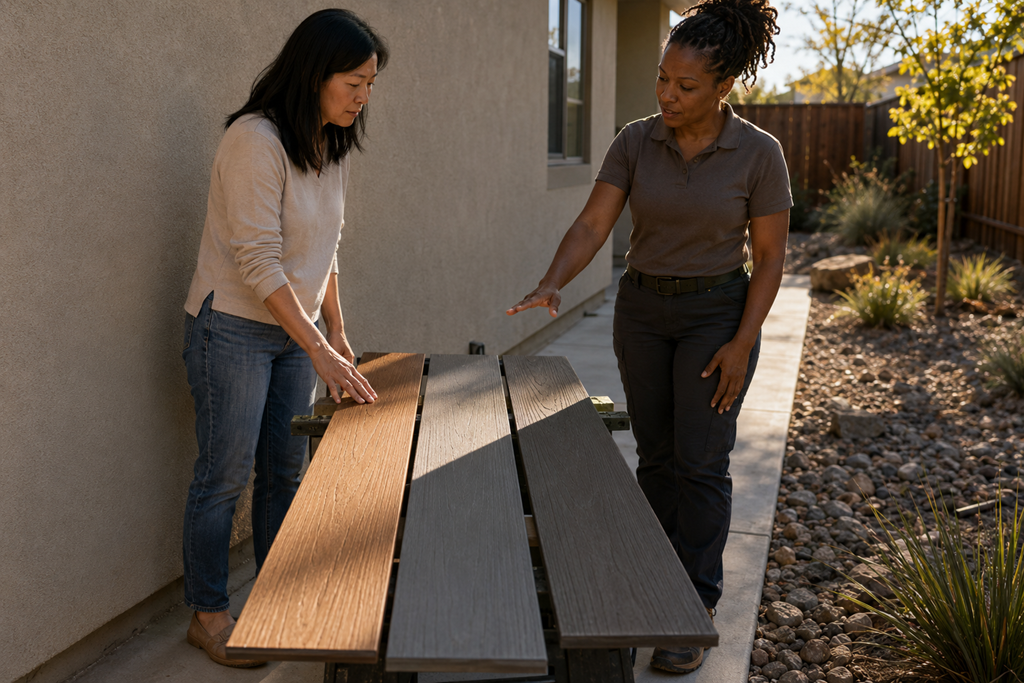
Deck materials are frequently selected from short sample boards or small color pieces. Those samples can be useful, but they do not reveal everything.
A color that appears subtle indoors may look brighter across an entire deck in direct sunlight. A texture that feels comfortable when touched briefly may feel different under bare feet. A dark board may also respond differently to strong sun than a lighter option.
When possible, ask to see longer boards, completed installations, or larger sample areas under natural light. Look at the material from several angles and at different distances. Consider how it works with the home’s exterior rather than judging it as an isolated object.
It can also be helpful to ask how the appearance is expected to change. Some homeowners welcome natural weathering. Others want the surface to stay as close as possible to its original color. Neither preference is wrong, but it should be discussed before the project begins.
Sacramento Sun and Seasonal Rain Can Affect the Decision
Sacramento-area decks may experience strong sun, extended dry periods, heat, and seasonal rain. Exposure can vary significantly even on the same property.
One part of a deck may remain shaded by the home while another receives direct afternoon sun. A section beneath a tree may collect leaves and organic debris. An area beside a planter or roof edge may encounter more moisture than the open center of the deck.
These differences can affect how a surface feels, how quickly it dries, how often it needs cleaning, and how its appearance changes over time.
A qualified deck professional should be able to explain how the proposed material fits the property’s actual exposure. Be cautious when material recommendations are made without discussing sun direction, drainage, shade, nearby landscaping, or how the deck will be used.
The Existing Structure May Limit the Available Options
Material selection is not only an appearance decision. It may also depend on the condition and design of the supporting structure.
This is especially important when repairing, resurfacing, or expanding an existing deck. The visible boards may be only one part of the project. Framing condition, board spacing, attachment methods, stair construction, railings, and product installation requirements may influence whether a particular material can be used appropriately.
A homeowner should not assume that new boards can simply be placed over every existing deck structure. The supporting components may need to be evaluated before a reliable recommendation or estimate can be made.
When comparing providers, ask whether the existing structure will be inspected and how its condition could change the material recommendation or project scope.
The Board Price Is Not the Entire Project Cost
It is easy to compare materials by looking at the price of an individual board. That number does not necessarily represent the complete cost of the finished deck.
The project may also include:
- Removal and disposal of existing materials
- Repairs or changes to the supporting structure
- Fasteners and attachment systems
- Railings, stairs, fascia, trim, or borders
- Additional labor required by a particular product
- Cleaning, finishing, or future maintenance
A lower-cost board can be part of a higher-cost project if it requires more labor or supporting work. A more expensive material may still involve additional components that are not included in the initial price discussion.
To make estimates easier to compare, ask each provider to describe the complete proposed scope. Two quotes that use different materials, fastening systems, railing plans, or assumptions about the existing structure are not directly comparable.
Maintenance-Free Is Usually an Unhelpful Expectation
Homeowners sometimes choose a material after hearing that it requires “no maintenance.” That phrase can create unrealistic expectations.
Outdoor surfaces are exposed to dust, pollen, leaves, spills, furniture movement, moisture, and normal wear. Even materials that do not need routine staining or sealing may still need cleaning and occasional attention.
Ask what ordinary care is recommended, what substances should be avoided, and how stains, scratches, damaged boards, or surface wear are usually addressed. The answers should be specific to the proposed product rather than based on broad statements about an entire material category.
The most suitable choice is often the one whose upkeep fits the homeowner’s actual habits—not the one described with the most appealing maintenance claim.
Repairability Can Matter Years After Installation
Material selection often focuses on how the deck will look when completed. It is also worth asking what happens if one area is damaged later.
Some boards may be easier to replace individually than others. Certain colors, profiles, or product lines may change or become unavailable over time. A replacement board may not perfectly match an older surface that has experienced years of sunlight and weather.
This does not automatically make one material better than another. It simply means repair expectations should be part of the original decision.
Ask how isolated damage is typically handled and whether the provider recommends keeping a small amount of matching material after the project is completed.
Questions That Can Make Material Comparisons More Useful
Before approving a material, consider asking a local deck professional:
- Why does this material fit this particular property and deck use?
- How might it feel in direct afternoon sun?
- What routine care does the manufacturer recommend?
- How does its appearance typically change with exposure?
- Can individual boards be repaired or replaced?
- Does the existing structure need modification to support it?
- Which railings, trim pieces, fasteners, and stairs are included in the estimate?
- Are there material-specific limitations the homeowner should understand?
Clear answers should explain both advantages and tradeoffs. A provider who discusses only benefits may not be giving you enough information to make a well-informed choice.
Watch for Recommendations That Feel Too Simple
Material selection deserves more than a quick statement that one product is always superior.
Potential warning signs include a provider who recommends a material without asking how the deck will be used, dismisses maintenance questions, avoids discussing surface heat or weathering, or gives a quote without explaining the included components.
Pressure to choose immediately can also make comparison harder. Colors, product lines, and pricing may vary, but homeowners should still understand what they are agreeing to and why the recommended material fits their project.
A thoughtful recommendation should connect the product to the property—not merely to what the provider prefers to install.
Choose the Tradeoffs You Can Live With
The right deck material is not necessarily the cheapest, the newest, or the one requiring the least advertised maintenance. It is the option that best matches the deck’s use, exposure, appearance goals, maintenance expectations, supporting structure, and complete project budget.
Before selecting a material, compare more than samples. Ask how the product will perform in the specific location, what care it will require, and what the estimate includes beyond the visible boards.
That conversation can help Sacramento-area homeowners move beyond surface-level comparisons and choose a material with expectations they can realistically maintain.