Solar screens can be worth considering for a hot room when direct sun through one or more windows is a major part of the problem. The key is to think about the room's actual sun exposure, not just its temperature. A room can feel hot because of afternoon glare and solar heat at the glass, but it can also feel hot because of poor insulation, limited airflow, duct issues, or heat from the roof. Solar screens are most useful when the window itself is clearly contributing to the discomfort.
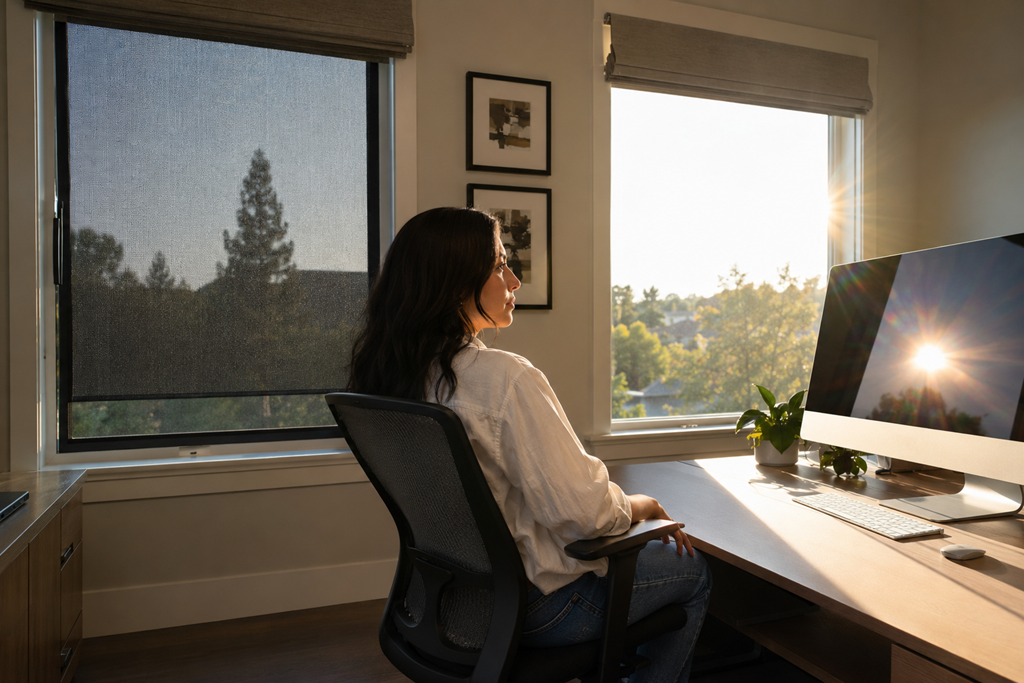
The problem often becomes noticeable in a room that feels comfortable in the morning but difficult to use later in the day. A bedroom may stay warm into the evening. A home office may become uncomfortable when sunlight reaches the desk. A television room may develop glare at the same time the seating area begins to feel hotter.
Those patterns can provide more useful information than simply knowing that the room is warm.
Start With the Window, Not Just the Room Temperature
A hot room does not automatically mean solar screens are the right answer. The first question is whether sunlight entering through the windows appears to be a meaningful source of the heat.
Look at what happens during the part of the day when the problem is strongest. Direct sun may create a bright patch across the floor, heat the furniture near the window, produce glare on screens, or make the area immediately around the glass noticeably less comfortable.
A room that becomes hot at roughly the same time direct sunlight reaches its windows may be a reasonable candidate for a solar-screen discussion. The connection is less certain when the room remains equally uncomfortable regardless of whether the windows are receiving sun.
This distinction matters because solar screens are intended to reduce the effect of sunlight at the window. They are not a general solution for every cause of an overheated room.
A Hot Room May Have More Than One Cause
Several conditions can contribute to the same room feeling warmer than the rest of a home.
The window may be part of the problem, but so may limited air movement, an insulation issue, an exposed ceiling or roof area, an equipment problem, or the room’s location within the home. Upstairs rooms, converted spaces, additions, and rooms located far from the main heating and cooling equipment may behave differently from nearby areas.
That does not necessarily rule out solar screens. It means the screens should be considered as one possible part of the response rather than being expected to correct every source of discomfort.
A useful question is not simply, “Will solar screens make this room cooler?” A better question is, “How much of this room’s problem appears to be coming through the windows?”
A local professional should be able to discuss that question without promising that one product will solve conditions it cannot control.
Sun Direction Can Change the Decision
Two rooms in the same Sacramento-area home can have very different solar-screen needs.
A window that receives strong, direct afternoon sun may affect a room more than a similar window protected by a porch, mature tree, neighboring structure, or deep roof overhang. Even windows along the same wall can experience different exposure depending on shading and the surrounding property.
This is why the decision should be based on actual conditions rather than window count alone.
Notice when direct light reaches the room, how long it remains, and which parts of the room are affected. A brief period of mild sunlight may not justify the same response as several hours of glare and concentrated heat across a frequently used area.
The goal is to understand the exposure pattern before discussing materials, coverage, or installation.
Comfort, Glare, Daylight, and Visibility Are Connected
Solar screens can change more than the amount of sunlight reaching a room.
Depending on the screen material and the window conditions, the room may appear less bright. Outdoor views may look darker or slightly less distinct. The difference may be welcome in a room with severe glare, but it may feel unnecessary in a room where daylight and backyard visibility are especially important.
That tradeoff is easy to overlook when the entire decision is framed around temperature.
Think about how the room is actually used. Reduced glare may be highly valuable in a home office, media room, or bedroom where direct light interferes with normal activities. In a kitchen or family room where the outdoor view is a major feature, visibility may carry more weight.
The right balance is personal. A screen that feels appropriate on one window may feel too dark on another, even within the same home.
One Hot Room Does Not Require a Whole-House Answer
Homeowners sometimes assume that considering solar screens means covering every window. That approach can make the decision feel larger and more expensive than it needs to be.
A selective installation may be more appropriate when the problem is limited to one room, one side of the home, or a small group of windows receiving the strongest sun.
Windows that remain shaded for most of the day may provide little benefit compared with windows receiving direct exposure. Covering them anyway could reduce daylight or visibility without meaningfully addressing the original problem.
Thinking window by window also makes it easier to evaluate the results. You can connect the proposed screen to a specific source of glare or heat instead of treating every opening as though it performs the same way.
A provider should be willing to explain why each recommended window is included.
Notice the Room’s Pattern Before Requesting an Estimate
You do not need technical measurements to prepare for a solar-screen conversation. A few practical observations can help a professional understand what you are experiencing.
Consider:
- What time the room becomes uncomfortable
- Which windows receive direct sunlight at that time
- Whether glare, heat, or both are affecting the room
- Which seating, work, sleeping, or viewing areas are involved
- How important natural light and outdoor visibility are in that space
- Whether the room remains hot after direct sun has moved away
Photos taken when the problem is happening may also be more informative than describing the room during a shaded part of the day.
These observations help keep the discussion focused on the real problem rather than immediately moving to product choices.
A Sample Can Reveal More Than a Material Description
Screen density, color, window size, existing glass, exterior shade, and interior lighting can all affect how a solar screen looks from inside a room.
For that reason, it may be difficult to judge the result from a small material swatch alone. A sample can show texture and color, but it may not demonstrate how a full window will affect daylight, glare, or the view.
When possible, ask how the proposed material can be evaluated under conditions similar to those in the problem room. A larger sample or temporary panel may make the tradeoffs easier to understand.
The goal is not to find the darkest screen available. It is to find an option that addresses the room’s actual exposure without creating a new problem.
Clear Recommendations Should Connect Back to the Room
A useful solar-screen estimate should involve more than a count of windows and a price.
The provider should ask where the discomfort occurs, when the sun reaches the room, and what the homeowner hopes to improve. Recommendations should distinguish between heavily exposed windows and those that receive substantial shade.
It is also reasonable to ask:
- Why is this screen material being recommended for this room?
- How might it affect the view from inside?
- Will all proposed windows receive similar exposure?
- Could the most affected windows be addressed selectively?
- What limitations should I understand before deciding?
Be cautious when every window is presented as having the same need without discussion of sun direction, room use, shade, or visibility.
Judge the Screen by the Problem It Is Supposed to Solve
Solar screens make the most sense for a hot room when the evidence points back to direct window exposure. They may reduce an important source of discomfort, especially when heat and glare appear at predictable times and in specific areas.
They are less likely to provide a complete answer when the room remains hot without direct sun or when other conditions appear to be playing a major role.
Before comparing estimates, identify the window, time of day, and activity most affected. That gives you a practical standard for evaluating recommendations and helps you avoid paying for coverage that does not connect to the problem you are trying to solve.