Tree coverage can strongly influence which gutter guard approach makes sense because trees affect more than the total amount of debris that reaches a roof. Leaf shape, pine needles, seed pods, blossoms, small twigs, roof valleys, wind direction, and how close branches sit to the home can all change where material collects and how water moves toward the gutters. For Sacramento-area homeowners, the better question is not simply whether the property has trees, but what those trees regularly send onto each section of the roof.
This issue often becomes noticeable when one gutter section stays relatively clear while another corner repeatedly collects material. A homeowner may see clean gutters along the front of the house but recurring buildup near a rear roof valley, shaded side yard, or branch-covered garage. That uneven pattern is important because the same gutter guard may perform differently from one roof section to another.
Tree Coverage Is a Debris Map, Not a Yes-or-No Condition
A home does not need to be surrounded by trees for tree-related debris to affect its gutters. One mature tree positioned near a roof valley can create more concentrated buildup than several trees located farther away.
The type of tree also matters. Broad leaves may land on top of a guard and temporarily cover part of its surface. Thin needles can settle into small openings or form dense layers with other debris. Blossoms, seed pods, bark fragments, and fine organic material may behave differently from full-size leaves.
This means that two properties with similar amounts of shade may still have very different gutter conditions. Even two sides of the same home can experience different debris patterns.
A useful evaluation looks at:
- What material is falling
- Where it lands on the roof
- Whether it stays dry or forms a damp layer
- How roof slopes and valleys move it
- Which gutter sections receive the heaviest concentration
The goal is not to identify a product that handles “trees” in general. It is to understand the actual debris pattern affecting the property.
Debris Type Can Matter as Much as Debris Volume
Homeowners often focus on how much material reaches the gutters. The size and texture of that material can be equally important.
Large, dry leaves may slide away, blow off, or remain spread across a guard. Fine needles and small seed material can settle into narrower spaces. Blossoms and broken-down organic debris may combine with dust and roof granules, creating a thinner layer that is less noticeable from the ground.
A gutter guard that handles broad leaves reasonably well may still require attention when exposed to fine needles or compact organic material. Conversely, a design intended to limit very small debris may behave differently when large leaves repeatedly cover its water-entry surface.
No single debris description tells the whole story. A provider who asks only whether the property has leaves may be overlooking the details that affect performance and maintenance expectations.
Roof Valleys Can Concentrate What the Trees Drop
Tree debris rarely lands evenly across an entire roof. Roof shape influences where it travels after it falls.
A roof valley can direct water, leaves, needles, and seed pods toward one relatively small section of gutter. A long straight gutter run may look almost empty while the corner below the valley receives repeated surges of material.
Wind can create similar concentration points. Debris from a nearby canopy may pass over one roof slope and settle behind a dormer, beside a chimney, near a wall transition, or along a sheltered edge. The tree does not have to hang directly over the problem area.
This is why a ground-level glance at the easiest-to-see gutter section may not reveal the property’s most demanding condition. The areas that collect the most debris should influence the discussion about guard design, drainage capacity, and future access.
Distance From the Roof Does Not Tell the Whole Story
Branches touching or hanging directly above a roof are an obvious source of debris, but trees several feet away can still affect the gutters.
Wind may carry lightweight leaves, needles, blossoms, and seed material across a yard. Nearby properties may also contribute debris, especially when rooflines sit close together. Material can travel farther than homeowners expect before settling into a roof valley or sheltered gutter corner.
Branch distance therefore provides only part of the picture. The direction of prevailing wind around the home, the height of surrounding trees, nearby structures, and the shape of the roof can all influence where material eventually collects.
A provider should be willing to evaluate the debris that is actually present rather than relying only on how close the nearest trunk or branch appears to be.
Heavy Shade Can Change How Debris Behaves
Tree coverage can also affect how quickly collected material dries.
Debris sitting in an open, sunny location may behave differently from similar material resting in a shaded roof valley. In a shaded area, leaves and fine organic matter may remain damp longer after rain or morning moisture. Material that stays damp may flatten, cling together, or form a layer across part of a guard.
This does not automatically mean a shaded home needs a particular product. It means shade should be included in the evaluation rather than treated as a separate landscaping detail.
Sacramento-area properties can experience long dry stretches followed by seasonal rain. A guard may appear clear during dry conditions but respond differently when accumulated debris becomes wet and water begins moving through the same concentrated area.
A Clean-Looking Guard Can Still Need Maintenance
Gutter guards are sometimes discussed as though installation removes the need to think about the gutters again. Tree coverage makes that expectation especially risky.
A guard may reduce the amount of larger material entering the gutter while still allowing debris to collect on top, along roof valleys, behind raised edges, or near downspout outlets. Fine material may also enter gradually, depending on the guard design and surrounding conditions.
The maintenance question is therefore not only, “Will leaves get inside?”
It is also:
- Can debris collect on the surface?
- Can the most affected areas be inspected safely?
- How will roof valleys be handled?
- What happens when wet debris reaches a concentrated corner?
- Will sections remain accessible if cleaning or adjustment becomes necessary?
A realistic recommendation should explain what the guard is expected to reduce and what occasional attention may still be needed.
Tree Trimming May Change the Pattern Without Eliminating It
Reducing direct branch overhang may lower the amount of material falling onto a roof, but trimming does not necessarily remove every tree-related gutter concern.
Leaves and needles can continue to travel through the air. Other trees may contribute debris. A roof valley may continue concentrating whatever material does arrive. Trimming may also change how sun and wind reach a roof section, which can alter rather than completely eliminate the existing pattern.
Tree work and gutter guard installation should be treated as separate property decisions. A qualified tree professional can evaluate tree health and appropriate trimming, while a gutter professional can assess roof drainage and debris conditions.
A recommendation should not depend on the assumption that all nearby trees will remain unchanged. Trees grow, surrounding landscaping changes, and neighboring vegetation may still affect the roof.
The Same Home May Need More Than One Conversation
Not every gutter section has to present the same challenge.
The front of a house may receive mostly broad leaves from a street-facing tree. A side roof may collect fine needles. A rear addition may sit beneath seed-producing branches, while another section remains almost completely open.
This does not necessarily mean different products must be installed throughout the home. It does mean the provider should explain how the proposed system is expected to handle the most difficult areas—not merely the easiest sections.
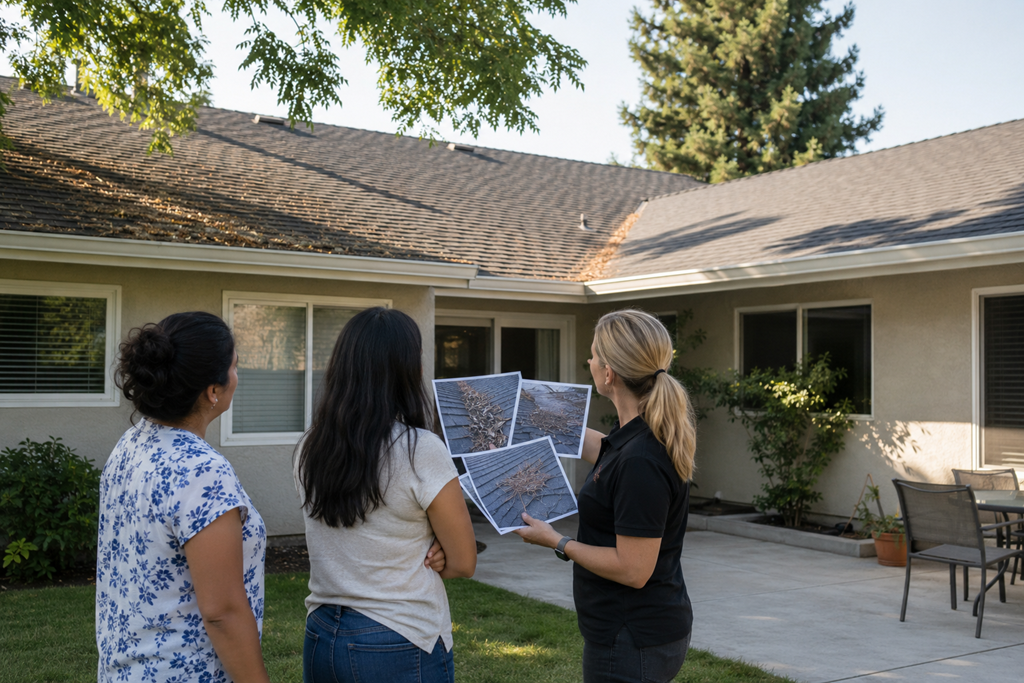
A thoughtful estimate should connect the recommendation to visible property conditions. When a provider can explain why a certain roof valley, corner, or tree-facing section deserves attention, the homeowner has more useful information for comparing options.
Questions That Can Improve the Evaluation
Before choosing a gutter guard system, Sacramento-area homeowners can ask a few focused questions:
- What types of debris do you see on this roof?
- Which gutter sections are likely to receive the greatest concentration?
- How could the roof valleys affect water and debris movement?
- What maintenance may still be needed with the proposed guard?
- How will the most tree-covered sections remain accessible?
- Is the recommendation based on the whole roof or only the visible gutter run?
Clear answers should relate directly to the property. Vague promises that a product blocks everything or requires no future attention may not reflect the realities of a tree-covered roof.
The Most Useful Comparison Is Property-Specific
Product descriptions can help homeowners understand broad differences between gutter guard designs, but they cannot fully describe how a system will behave on a particular home.
Tree species, debris size, canopy position, roof geometry, shade, wind, and drainage concentration all work together. Looking at only one factor can make the decision seem simpler than it really is.
When comparing local gutter guard providers, homeowners can pay attention to how thoroughly each provider observes the property before making a recommendation. A provider who studies several roof sections, asks about recurring trouble spots, and explains future maintenance expectations is offering more decision-useful information than someone who recommends the same solution without discussing the surrounding trees.
A Better Decision Starts With the Debris You Actually Have
Tree coverage should not automatically push a homeowner toward or away from gutter guards. It should shape the questions asked before installation.
The most useful recommendation considers what the trees release, where the material travels, which roof areas concentrate it, and what level of future maintenance remains realistic. By focusing on those property-specific conditions, Sacramento-area homeowners can compare gutter guard options with clearer expectations and have a more productive conversation with a qualified local professional.