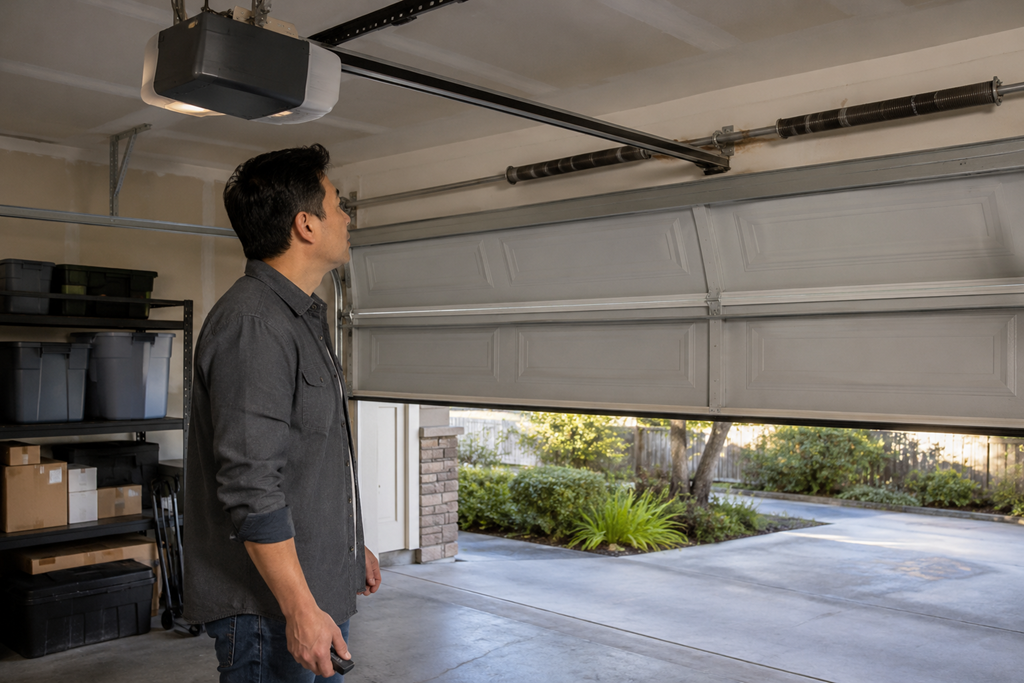
Garage door springs help carry the weight of the door so it can open and close smoothly. When they are working properly, most homeowners barely notice them. When something is wrong, the door may feel unusually heavy, move unevenly, stop opening fully, or make a sharp noise that seems to come from the upper part of the garage door system.
For Sacramento-area homeowners, the most important thing to understand is this: garage door springs are not simple convenience parts. They are tension-loaded components that affect how the entire door operates. If a spring is worn, broken, mismatched, or poorly adjusted, the door can become harder to use and more difficult to evaluate without the right training.
This does not mean every garage door issue is automatically a spring problem. It does mean that springs are one of the first things worth asking about when a door suddenly feels heavier, louder, less balanced, or less reliable than usual.
Why Springs Matter More Than They Appear To
A garage door can look simple from the outside. It moves up, moves down, and seems like one large panel system. But the door itself is heavy, and the opener is not meant to do all the lifting by itself. Springs help offset that weight so the opener, tracks, rollers, and cables can work together more smoothly.
That is why spring problems can show up in ways that feel confusing. A homeowner may first notice the opener straining, the door stopping partway, or one side of the door looking slightly uneven. The opener may seem like the obvious problem, but the underlying issue may involve spring tension or balance.
This is one reason garage door estimates can feel unclear if the conversation jumps straight to a repair recommendation. A helpful local pro should be able to explain whether the springs are part of the concern, how they inspected the system, and why a repair or replacement is being recommended.
What A Spring Problem Can Feel Like At Home
Spring issues often become noticeable during ordinary routines. You may be leaving for work, taking out the trash, parking at night, or trying to close the garage before going inside. The door may not feel dangerous in the moment, but something about it feels different.
Common signs homeowners often describe include:
- the door suddenly feeling much heavier than before
- the opener sounding like it is working harder
- the door rising a few inches and stopping
- one side of the door appearing slightly higher or lower
- a loud snap or bang from the garage area
- visible separation in a spring above the door
- cables appearing loose or out of place near the sides of the door
These signs do not prove the exact cause by themselves. They are useful clues. The goal is not to diagnose the system alone, but to recognize when the issue is worth discussing with a qualified garage door professional.
Springs Are Easy To Misunderstand
One common misunderstanding is thinking the opener is responsible for lifting the full weight of the garage door. In reality, the opener works best when the door is already properly balanced. If the springs are not helping the door correctly, the opener may struggle or stop even if the opener itself is not the root issue.
Another misunderstanding is assuming a spring is fine because the door still moves. A garage door can sometimes operate even when the system is under extra strain. That does not mean the door is balanced or that the opener is working under normal conditions.
Homeowners may also underestimate how much tension is involved. Springs may look like ordinary metal coils, but they are designed to store force. That is why spring adjustment and replacement are not the same as tightening a loose cabinet hinge or replacing a simple household part. For safety, spring concerns are best handled through professional evaluation rather than DIY experimenting.
Why One Broken Part Can Affect The Whole Door
Garage doors rely on connected parts. Springs, cables, drums, hinges, rollers, tracks, and the opener all interact. When one part changes, the rest of the system may show symptoms.
For example, a spring issue may cause the opener to work harder. A balance problem may cause the door to move unevenly. A cable may look loose because the spring system is no longer supporting the door the way it should. This can make the first visible symptom misleading.
That is why a useful repair conversation should not focus only on the most obvious complaint. If a Sacramento homeowner says, “The opener will not lift the door,” the next question should usually be about the full door system, not just the motor on the ceiling.
What To Ask Before Scheduling A Garage Door Spring Repair
You do not need to know technical spring details before contacting a local garage door company. But it helps to ask practical questions that make the recommendation easier to understand.
Helpful questions include:
- “Will you inspect the door balance as part of the visit?”
- “Can you explain whether the spring is broken, worn, or mismatched?”
- “Are both springs being evaluated, or only the one that looks damaged?”
- “Will the estimate explain parts, labor, and any related repairs separately?”
- “Is the opener being affected by the spring issue?”
- “What should I avoid using until the door is inspected?”
These questions keep the conversation focused on clarity. They also help you compare providers by how well they explain the issue, not just by how quickly they name a price.
When The Estimate Feels Confusing
Garage door spring estimates can vary because the needed repair may depend on the type of spring system, the size and weight of the door, the condition of related parts, and whether other components were affected. That does not mean the explanation should be vague.
A clear estimate should help you understand what is being replaced, why it matters, and whether anything else is being recommended because of wear, safety, balance, or performance concerns. If the explanation feels rushed or unclear, it is reasonable to pause and ask for the reasoning in plain language.
A trustworthy conversation should not make you feel pressured or embarrassed for asking basic questions. Most homeowners do not think about garage door springs until something stops working. A good local service provider should expect that and be willing to explain the issue without turning the conversation into a technical lecture.
The Bigger Decision Is Not Just Repair Or Wait
When a garage door spring problem appears, the decision is often less about whether the door is annoying and more about how the system is functioning. A door that is heavy, uneven, or difficult to lift may affect daily access, vehicle use, home security habits, and the reliability of the opener.
Waiting can also make the situation harder to interpret later. If the opener keeps struggling, other parts may begin showing symptoms too. That can make it less obvious where the problem started.
At the same time, homeowners should not feel pushed into broad upgrades without a clear reason. The most helpful path is to understand what the spring issue is, how it affects the door, and whether related parts truly need attention.
A Clearer Way To Think About Garage Door Springs
Garage door springs are not just hidden hardware. They are part of what makes the door manageable, balanced, and predictable. When they stop doing their job well, the symptoms may appear as opener trouble, uneven movement, unusual noise, or a door that suddenly feels heavier than expected.
For Sacramento-area homeowners, the practical takeaway is simple: do not try to solve spring issues by guesswork. Notice what changed, avoid forcing the door, and ask a qualified local garage door professional to explain the spring system in plain terms before agreeing to a repair.
Understanding the role of springs can help you ask better questions, compare recommendations more carefully, and feel better prepared before scheduling garage door service.