Sun exposure can change how exterior paint looks, wears, and ages. For Sacramento-area homeowners, this often shows up as fading, chalking, peeling, dryness, or uneven color from one side of the home to another. It does not always mean the paint was poor quality or that the entire home has failed at the same rate.
The main point is simple: exterior paint does not age evenly when some parts of a home receive more direct sunlight than others.
That matters before hiring a house painting professional because sun exposure can affect preparation, product recommendations, color expectations, and how a painting estimate is explained.
When One Side Of The House Looks Older Than The Rest
Many homeowners first notice the issue because one wall, trim area, or section of siding looks more worn than the others. The front of the home may still look acceptable, while a side wall, garage face, fascia board, or door trim looks faded and tired.
That uneven appearance can be confusing. It may feel like the paint should be aging the same everywhere, especially if the whole exterior was painted at the same time.
But exterior paint is constantly responding to its environment. Areas with stronger sunlight, heat, and exposure can lose color faster, dry out more quickly, or show surface wear sooner than shaded areas. A protected porch wall may still look smooth while a sunny side wall starts to look dull or chalky.
This is why a painting estimate may not be only about changing the color. It may also involve looking at where the paint is wearing, why it is wearing there, and whether certain sections need more preparation than others.
Fading Is Often The First Sign Homeowners Notice
Fading is one of the most common sun-related paint concerns. A color that once looked rich can slowly appear flatter, lighter, or less even. This may be more noticeable with deeper colors, bold trim choices, or areas that receive long stretches of direct sun.
Fading can make a home look older even when the paint is not peeling badly. It can also make touch-ups more difficult because the original paint color may no longer match the weathered surface.
This is where homeowners can misunderstand the problem. If the issue is only seen as a color problem, the conversation may stay focused on choosing a better-looking shade. But the more useful question is often: how is the existing paint aging under sun exposure, and what should be expected from the next paint job?
A good exterior paint conversation should include appearance, surface condition, preparation, and realistic expectations.
Sun Exposure Can Affect More Than Color
Sunlight can affect the paint surface in several visible ways. The color may fade. The finish may look dull. The surface may feel powdery or chalky. Edges of peeling paint may become more noticeable around trim, siding seams, or heavily exposed areas.
These details matter because they can change what a house painter needs to evaluate before recommending a repaint.
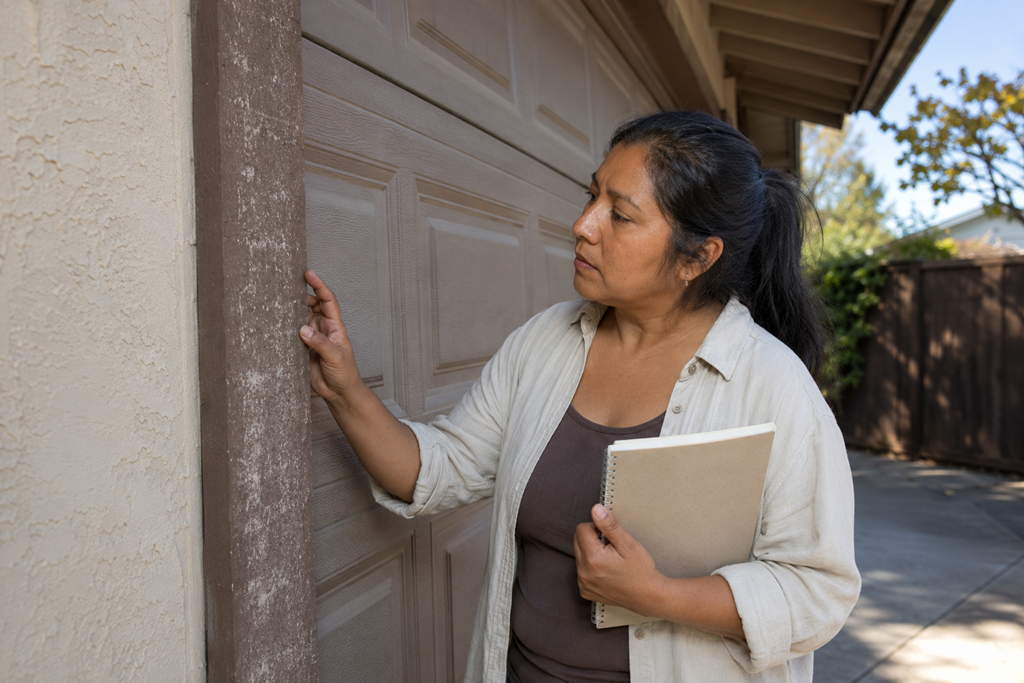
For example, a sun-exposed wall that looks chalky may need a different preparation conversation than a shaded wall that still feels firm and smooth. A sunny garage door or entry trim may show wear sooner than siding under an overhang. A south- or west-facing area may look more weathered than a section protected by trees, rooflines, or neighboring structures.
The homeowner does not need to diagnose the surface. But noticing the pattern can lead to better questions during an estimate.
Color Choice Should Be Discussed With Exposure In Mind
Choosing an exterior paint color is not only about what looks good on a small sample. The way a color appears in bright sun can be very different from how it looks in shade.
A color that seems subtle indoors or on a small card may look much brighter outside. A dark color may create a striking contrast, but it may also show fading or surface changes more noticeably over time in highly exposed areas. Trim colors can also age differently from body colors depending on the material, exposure, and finish.
This does not mean Sacramento homeowners should avoid certain colors altogether. It means color should be part of a practical conversation, not just a style choice.
Before settling on a color, it can be helpful to ask how that color may look on the sunniest parts of the home, whether the finish is appropriate for the surface, and what kind of maintenance expectations come with that choice.
Why Preparation Matters On Sun-Worn Surfaces
Sun exposure often reveals the importance of preparation. Paint is not just a surface color. It depends on what is underneath it.
If old paint is chalky, peeling, brittle, or poorly bonded, simply covering it with a new coat may not solve the underlying issue. The new paint may look better at first, but the worn surface underneath still matters.
This is why exterior painting estimates can vary. One provider may discuss surface washing, scraping, sanding, priming, caulking, or other preparation details more clearly than another. Another may focus mostly on the number of coats or the final color.
For homeowners, the goal is not to become a painting expert. The goal is to understand that a careful estimate should explain how the sun-worn areas will be handled before new paint is applied.
What To Ask Before Comparing Exterior Painting Estimates
When sun exposure is part of the concern, homeowners can ask a few simple questions before choosing a provider:
- Which areas of the home appear most affected by sun exposure?
- Are the faded or chalky sections only cosmetic, or do they need extra preparation?
- Will trim, siding, doors, and garage surfaces be handled differently if they show different wear?
- How might the color choice look on the sunniest parts of the home?
- What should I expect to age first after the project is finished?
These questions can make estimate conversations clearer. They also help homeowners compare more than just price.
A lower estimate may not always include the same level of preparation or explanation. A higher estimate may or may not be justified. The important thing is whether the scope of work clearly addresses the actual condition of the home.
Common Misunderstandings About Sun And Exterior Paint
One common misunderstanding is assuming that fading means the entire home needs the exact same amount of work. In reality, different surfaces may be in different condition.
Another misunderstanding is thinking that a new color alone will fix the problem. A fresh color can improve appearance, but preparation and product choice still matter.
Some homeowners also assume that if paint is not peeling badly, there is nothing to discuss. But fading, chalking, dryness, and uneven wear can still be useful signs to bring up during an estimate.
The opposite can also happen. A homeowner may see one badly worn area and assume the whole exterior is failing. A qualified painting professional can help explain whether the issue appears widespread or concentrated in the most exposed sections.
A Better Way To Look At Sun-Worn Paint
Sun exposure is not just a cosmetic issue. It is a clue about how the home’s exterior is aging.
For Sacramento-area homeowners, the most helpful mindset is to look for patterns. Which side looks most faded? Which trim boards look driest? Which walls still look protected? Where does the paint look uneven, chalky, or brittle?
Those observations can make a painting consultation more productive. They can also help homeowners understand why estimates may include different preparation details, paint recommendations, or expectations for different parts of the home.
Exterior paint is meant to protect and improve the appearance of a home, but it works hardest where the sun, heat, and weather are most direct. Seeing that pattern clearly can help homeowners ask better questions before choosing a house painting provider.
The Practical Takeaway For Sacramento Homeowners
Sun exposure can cause exterior paint to fade, dry, chalk, peel, or age unevenly. Before hiring a local house painting professional, it helps to understand that the sunniest parts of the home may need more attention than shaded areas.
When homeowners notice where the paint is wearing and ask how those areas will be prepared, they are in a better position to compare estimates, understand recommendations, and make a more informed painting decision.