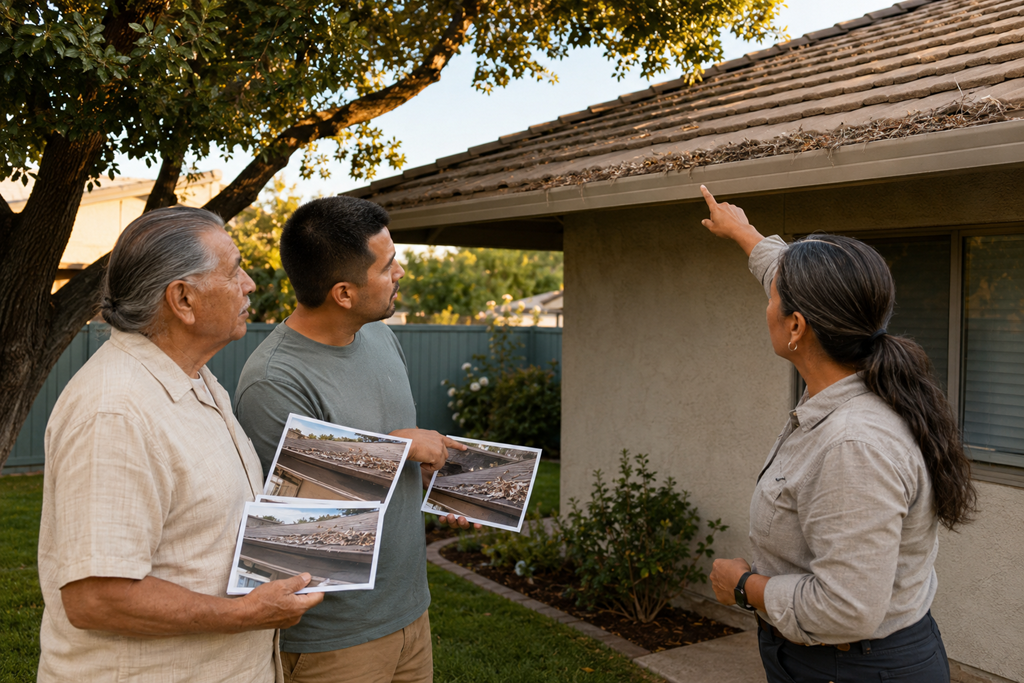
Roof debris does more than make a roof look untidy. Leaves, seed pods, small branches, and other material can shade parts of the surface, slow drying after moisture reaches the roof, and create uneven exposure between covered and uncovered areas. The concern is usually not one leaf or a brief layer of dust, but debris that stays in place, gathers near drainage points, or repeatedly returns in the same area.
This can be confusing for homeowners because sunlight and debris do not affect every part of a roof in the same way. One section may receive direct afternoon sun, another may remain shaded by a tree, and a third may be covered by a compact layer of organic material. Even though all three sections belong to the same roof, they may dry, discolor, and age differently.
Debris Creates Small Zones With Different Conditions
A clear roof surface receives whatever sun, heat, wind, and moisture the surrounding environment provides. When debris covers part of that surface, it changes those conditions in a localized area.
A loose dry leaf that blows away later in the day may have little practical significance. A compacted group of leaves and seed pods that remains in a roof valley or beside a drainage outlet may deserve more attention because it can keep the underlying area shaded and interfere with normal drying.
This does not automatically mean the covered section has been damaged. It means the area has been experiencing different conditions from the exposed roofing around it.
That distinction can help homeowners avoid two common reactions: assuming every piece of debris is an emergency or dismissing all debris because the roof otherwise looks intact.
Sacramento’s Dry Conditions Do Not Make Debris Irrelevant
Sacramento-area homeowners often notice roof debris during long stretches of sun and dry weather. It may seem reasonable to assume that dry leaves cannot cause a concern when rain is not falling.
However, debris can remain lodged in one location until moisture eventually arrives from rain, morning condensation, irrigation overspray, or another source. Organic material can also break into smaller particles that settle into roof valleys, gaps, drainage areas, and textured surfaces.
Sun exposure may dry the open parts of the roof quickly while a covered area remains shaded longer. The difference may be temporary, but repeated accumulation in the same location can create a continuing pattern.
The useful question is therefore not simply, “Is the debris dry today?” It is, “Where is it sitting, how long does it tend to remain there, and what happens when the roof becomes wet?”
Location Often Matters More Than Total Volume
A roof does not need to be buried in leaves before debris becomes worth discussing. A relatively small accumulation can matter more when it sits in a place that already receives limited sun or plays an important role in moving water away from the roof.
Areas that may deserve closer professional attention include:
- Roof valleys where two slopes meet
- Drainage outlets on low-slope roof sections
- Areas beneath overhanging branches
- Transitions between different roof levels
- Edges where wind repeatedly collects leaves and seed pods
- Sections that remain visibly damp longer than the surrounding surface
By contrast, a light scattering of loose material across a broad, dry, unobstructed section may present a different situation.
This is why photographs alone do not always tell the full story. Two roofs with similar amounts of visible debris may have very different concerns depending on roof design, material, drainage, shade, slope, and existing condition.
Sun Exposure Is Not Simply Good Or Bad
It is easy to think of sunlight as either protecting the roof by drying it or harming the roof through heat and exposure. In reality, both ideas are incomplete.
Roofing materials are designed to withstand outdoor exposure, but heat and sunlight still contribute to normal aging over time. At the same time, direct sun can help exposed areas dry after moisture reaches them.
Debris changes that balance. It may shield one small area from direct sun while allowing moisture and organic residue to remain there longer. Meanwhile, the uncovered roofing around it continues receiving full exposure.
Once debris is removed, the previously covered area may initially look darker, lighter, dirtier, or less dry than the surrounding surface. That difference does not by itself prove that the roof has deteriorated. It may reflect moisture, residue, staining, or simply unequal exposure.
A qualified professional should be able to explain whether a visible difference appears cosmetic, cleaning-related, drainage-related, or more appropriate for a roofing evaluation.
Uneven Appearance Does Not Always Mean Uneven Damage
Homeowners sometimes become concerned after noticing a sharply defined patch beneath a pile of leaves. The covered section may look different from the rest of the roof, especially when viewed immediately after rain or debris removal.
Visible contrast is useful information, but it is not a diagnosis.
The appearance may come from:
- One area drying more slowly
- Fine organic material remaining on the surface
- Dirt collecting beneath compacted debris
- Different amounts of sunlight reaching adjacent sections
- Preexisting differences in roof material or surface condition
A roof-cleaning provider should not rely solely on dramatic wording or a quick visual impression. The provider should explain what can actually be observed, what remains uncertain, and whether cleaning is expected to address the concern.
When the condition of the roofing material itself is unclear, a roofing professional may be more appropriate than assuming cleaning alone is the answer.
Repeated Accumulation Is More Informative Than A One-Time Mess
A roof may collect debris after wind, pruning, seasonal shedding, or nearby landscaping work. A temporary layer does not necessarily indicate an ongoing problem.
Repeated accumulation in the same location provides more useful information.
For example, one roof corner may continually collect seed pods because of nearby branches and prevailing airflow. A low section may gather leaves beside an outlet whenever material falls from an overhanging tree. An area that receives less sun may also take longer to dry each time moisture reaches it.
The pattern can matter more than the isolated event.
Before scheduling roof cleaning, it can be helpful to describe whether the debris appeared suddenly or regularly returns. That information may help a provider discuss not only visible removal but also why the area keeps collecting material.
Observe The Pattern Without Climbing Onto The Roof
Homeowners do not need to walk on the roof to gather useful information. Roof surfaces can be slippery, fragile, steep, or difficult to access safely.
Observations from the ground, an upper-floor window, or a secure balcony may still reveal:
- Whether debris is scattered or compacted
- Whether it sits in full sun or persistent shade
- Whether it gathers beside a drainage point
- Whether one area remains darker after surrounding sections dry
- Whether nearby branches repeatedly drop material onto the same section
Photographs taken from a safe location can also help show how the area changes over time. A provider can then determine whether an on-site evaluation is needed and what type of professional should examine it.
The goal is not for the homeowner to diagnose the roof. It is to provide enough context for a more focused conversation.
Questions That Keep A Roof-Cleaning Estimate Focused
When speaking with a Sacramento-area roof-cleaning provider, a few direct questions can make the discussion more useful:
- Does the debris appear loose, compacted, or lodged near drainage?
- Is the visible difference likely to be moisture, residue, staining, or a roofing concern?
- How does the proposed cleaning method fit this particular roof material?
- Can the area be evaluated without aggressive brushing, scraping, or unnecessary surface pressure?
- Should any section be reviewed by a roofer before cleaning begins?
- Does the provider expect the uneven appearance to change immediately, gradually, or possibly remain visible?
Clear answers should connect the recommended service to the actual location and condition of the debris. A vague claim that every roof needs the same treatment may be a reason to seek another opinion.
The Practical Takeaway
Roof debris affects more than appearance because it can change how sunlight, air, and moisture reach specific parts of the roof. That does not mean every leaf pile represents damage or that every color difference requires cleaning.
The most useful factors are where the debris sits, whether it repeatedly returns, how the area dries, and whether the provider can clearly distinguish a cleaning concern from a possible roofing concern.
For Sacramento homeowners, understanding those differences can make it easier to describe the issue, compare recommendations, and choose the appropriate professional without making assumptions based only on how much debris is visible.