Weak airflow usually means your HVAC system is moving less air than expected through one or more vents. Before calling an HVAC company, it helps to notice where the weak airflow is happening, whether it is affecting the whole home or only certain rooms, and whether anything simple may be blocking or restricting air movement.
That does not mean you need to diagnose the system yourself. It means you can give a local HVAC professional better information when you call, which can make the conversation clearer and help you understand what kind of visit may be needed.
For Sacramento-area homeowners and renters, weak airflow can be especially frustrating because it often shows up when comfort already matters. A room may stay warm even though the system is running. A hallway vent may barely push air. One bedroom may feel different from the rest of the house. The system may sound normal, but the home still does not feel right.
The main thing to remember is this: weak airflow is a symptom, not a complete diagnosis.
Weak Airflow Is Not Always The Same Problem
Many people describe weak airflow as “the AC not working,” but those are not always the same issue. A system can be cooling air but not moving enough of it. It can also be moving air normally but failing to cool properly. Sometimes both problems happen together.
That distinction matters when you call for help.
If the air feels cool but barely comes out of the vents, the conversation may focus more on airflow restriction, fan performance, duct issues, return airflow, or filter problems. If plenty of air is coming out but it is not cool, the concern may point in a different direction. A good HVAC technician can evaluate the system, but your description helps them understand what you are experiencing.
Instead of saying only, “My AC is not working,” it may be more useful to say, “The system turns on, but the airflow from several vents feels weak,” or, “One room has much less airflow than the others.”
Notice Whether The Problem Is In One Room Or The Whole Home
One of the most helpful things to check before calling is whether weak airflow is happening throughout the home or only in specific areas.
If every vent seems weak, the issue may involve the system as a whole, the air filter, the blower, return airflow, duct restrictions, or another larger airflow concern. If only one or two rooms are affected, the issue may be more localized. That could involve a closed or blocked vent, a duct connection, room layout, sun exposure, or the way air is being distributed.
You do not need to inspect ducts or open equipment. Just pay attention to the pattern.
Walk through the home and compare rooms. Is the airflow weak upstairs but stronger downstairs? Is one bedroom noticeably different? Is the issue worse at the far end of the home? Does the airflow feel different after doors are closed?
These observations help turn a vague complaint into a clearer service conversation.
Look For Simple Airflow Restrictions First
Some weak airflow concerns come from things around the home rather than a failed HVAC part. Before scheduling a visit, it is worth looking for simple restrictions that may be easy to describe or correct safely.
A vent may be partly closed. Furniture may be pushed over a supply register. A rug may cover a floor vent. Curtains may hang over a wall vent. Storage items may be blocking a return grille. A filter may be visibly dirty or overdue for replacement.
These are not advanced HVAC repairs. They are basic visibility checks.
Return vents are especially easy to overlook. Supply vents push conditioned air into rooms, while return vents pull air back toward the system. If a return grille is blocked by furniture or household storage, the system may struggle to circulate air well. The equipment may still run, but the home may not feel properly balanced.
If you find something obvious, adjust the obstruction and see whether airflow improves. If the problem remains, that is useful information to share with a technician.
The Air Filter Can Affect More Than Air Quality
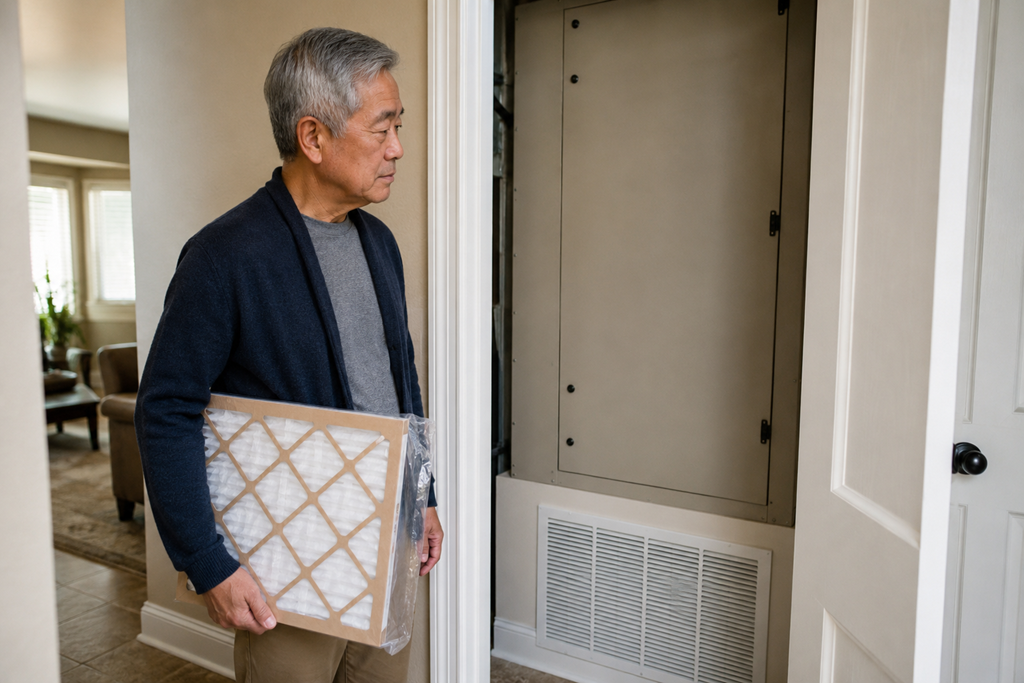
Many people think of the HVAC filter only as an air quality item, but it can also affect airflow. When a filter is heavily clogged, the system may have a harder time moving air through it.
This does not mean every weak airflow problem is caused by the filter. It also does not mean you should keep changing filters and hoping the issue disappears. But it is one of the simplest things to check before calling.
If the filter looks dirty, bent, damp, crushed, or packed with dust, mention that when you contact an HVAC professional. If you replace it and airflow still feels weak, that tells you the problem may need a closer evaluation.
It is also worth noting whether the issue started soon after a filter change. Sometimes homeowners install a filter that does not fit well or choose one that is not a good match for their system. A technician can help explain whether the filter type, fit, or setup may be affecting airflow.
Weak Airflow Can Feel Like A Cooling Problem
Weak airflow often becomes noticeable because the home does not cool evenly. One room may stay warm. The system may run longer. A thermostat may be set lower than usual, but the comfort problem remains.
That is why homeowners sometimes respond by repeatedly adjusting the thermostat. The problem is that changing the thermostat does not always solve poor air movement. If the system cannot move enough air, lowering the temperature setting may only make it run longer without fixing the underlying issue.
This is a common misunderstanding. The thermostat tells the system what temperature you want. It does not, by itself, correct airflow restrictions, duct concerns, blower problems, or room-by-room imbalance.
Before calling, notice whether the system seems to run longer than usual, whether airflow feels weak right away, or whether certain rooms never catch up. Those details can help the service conversation stay focused.
Pay Attention To Recent Changes Around The Home
Weak airflow may appear after something changes, even if the change does not seem directly connected to the HVAC system.
New furniture placement can block vents. A recent home project may change how air moves through a room. Closed interior doors can affect circulation. A replaced filter may not fit the same way as the old one. Storage may have been placed near a return grille. In some homes, seasonal use patterns can also reveal airflow differences that were less noticeable before.
Sacramento-area homes can also have rooms that feel different because of sun exposure, layout, insulation, or older duct design. Those factors do not automatically mean the HVAC system is failing, but they can affect what you experience from room to room.
When you call, it helps to mention whether the problem is new, gradual, seasonal, or tied to a recent change.
Know When A Professional Evaluation Makes Sense
Some airflow problems are not visible from inside the room. Duct leakage, disconnected ducts, blower issues, dirty internal components, improper system settings, or equipment problems may require professional evaluation.
A homeowner can notice weak airflow, compare rooms, check visible vents, and look at the filter. But deeper inspection should be handled by a qualified HVAC professional.
Calling for service may make sense when airflow remains weak after obvious obstructions are removed, when several rooms are affected, when the system runs but comfort does not improve, when airflow changes suddenly, or when the issue returns after basic corrections.
It is also worth seeking professional help if you notice unusual sounds, burning smells, ice on equipment, water where it should not be, or the system short cycling. Those signs should not be treated as normal airflow quirks.
The goal is not to panic. The goal is to avoid guessing when the issue may require trained evaluation.
Questions Worth Asking When You Call
When contacting an HVAC company, clear questions can help you understand what kind of appointment you are scheduling.
You might ask:
“Can the visit evaluate both airflow and cooling performance?”
“Will the technician check whether the issue is system-wide or room-specific?”
“Could the filter, return airflow, or duct layout be part of the evaluation?”
“What information should I have ready before the appointment?”
“Will I receive an explanation of what was checked before any repair is recommended?”
These questions are simple, but they help set expectations. They also help you avoid a rushed conversation where the issue is reduced to “AC not working” before anyone understands what you are noticing.
The Most Useful Thing To Have Ready
Before calling, the most useful information is not a diagnosis. It is a clear description.
Try to know:
Where the airflow feels weak.
Whether the issue affects one room, several rooms, or the whole home.
Whether the air coming out feels cool, warm, or inconsistent.
Whether the system runs longer than usual.
Whether anything changed recently around vents, filters, furniture, doors, or home use.
Whether you noticed unusual sounds, smells, moisture, or ice.
This gives the HVAC professional a better starting point and helps you feel more prepared during the conversation.
A Clearer Way To Think About Weak Airflow
Weak airflow can be confusing because it sits between comfort, equipment performance, room layout, and everyday home habits. It may be simple. It may require service. It may be part of a larger system issue. The first step is not to guess the cause, but to understand the pattern.
Before calling about weak airflow, check what you can safely observe: the affected rooms, visible vents, return grilles, filter condition, and recent changes around the home. Then contact a qualified HVAC professional with a clear description of what you noticed.
That helps you ask better questions, compare service communication more thoughtfully, and make a more informed HVAC decision before scheduling repairs or accepting recommendations.