When you notice water damage, the first step is not to start tearing out materials or scrubbing the area. First, make sure everyone is safe, avoid any space where water may be near electricity or a weakened ceiling, and identify whether the water is still entering. If you can stop a simple source safely, do so; otherwise, keep your distance and contact the appropriate qualified professional.
Finding water on a floor, beneath a cabinet, or spreading across a ceiling can create an immediate urge to grab towels and start cleaning. That reaction is understandable. However, visible water is only one part of the situation. The source, the materials affected, and any nearby electrical or structural concerns may matter more than how large the puddle appears.
The first few decisions should help prevent additional exposure and make the situation easier to explain when you contact a Sacramento-area restoration provider or another qualified professional.
Pause Before Entering or Touching the Area
Before walking into the wet area, look at the surroundings from a safe location.
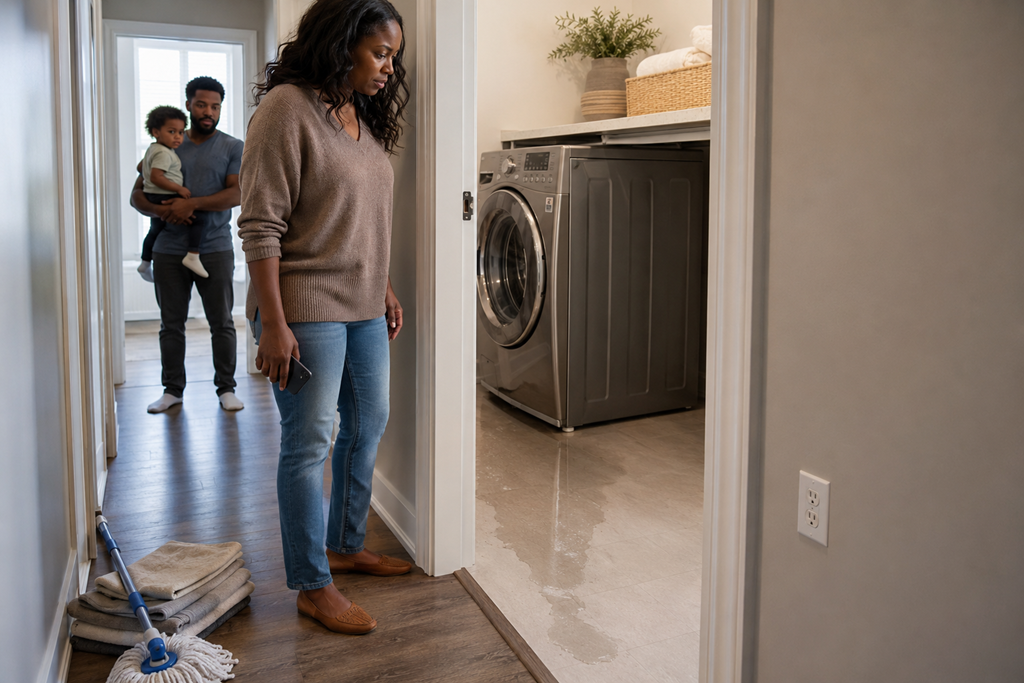
Water near outlets, appliances, electrical panels, extension cords, light fixtures, or exposed wiring should be treated cautiously. The same is true when a ceiling appears swollen, bowed, cracked, or unusually soft. Do not stand beneath a visibly weakened ceiling or enter a space where electrical hazards may be present.
Water from a toilet overflow, drain backup, outdoor flooding, or another potentially contaminated source also requires more caution than a small amount of clean water from a known supply line.
If you notice sparking, smoke, a collapsing surface, or another immediate threat, leave the area and contact emergency services or the appropriate utility rather than attempting to inspect the damage yourself.
The important distinction is simple: cleaning the floor is not the first priority when the surrounding area may be unsafe.
Find Out Whether Water Is Still Entering
Once there is no immediate danger, try to determine whether the problem is active or whether you are seeing the aftermath of an earlier leak.
A steady drip, running appliance connection, overflowing fixture, or water continuing to spread suggests that the source has not stopped. A stain that feels dry or a puddle that is no longer growing may indicate an intermittent or earlier problem, but it should not automatically be assumed to be resolved.
If the source is obvious and can be stopped without entering a hazardous area or performing a repair, taking that simple step may limit additional damage. Examples might include turning off a clearly identified fixture or discontinuing use of an appliance that appears to be leaking.
Do not remove electrical covers, open walls, climb onto a wet roof, dismantle plumbing, or attempt an unfamiliar shutoff procedure. When the source is unclear or unsafe to approach, contact the professional most closely connected to the suspected problem.
The Source Helps Determine Who to Call
“Water damage” describes the result, but it does not always identify the underlying service needed.
A plumber may be needed when the source appears to be a pipe, fixture, water heater, or appliance supply connection. A roofing professional may be appropriate when water enters during rain near the roofline. An HVAC provider may need to evaluate a condensate or equipment-related issue.
A damage restoration provider generally focuses on evaluating affected areas, managing moisture, removing damaged materials when necessary, and explaining the restoration process. An electrician or another specialist may also be appropriate when water has reached electrical components.
Some situations require more than one provider. A plumber might stop the leak while a restoration company evaluates the flooring, walls, cabinets, or other materials that became wet.
Understanding this difference can help Sacramento-area homeowners and renters avoid calling one company while assuming it will automatically handle every part of the problem.
Document What You Can See From a Safe Position
After immediate safety concerns and active water entry have been addressed, take photographs or a short video of the visible conditions.
Capture the suspected source, the path the water followed, and the surrounding materials. Wider photographs can show the relationship between rooms or fixtures, while closer photographs can show staining, swelling, lifted flooring, or other visible changes.
Do not delay an urgent safety response simply to document the area. Documentation is useful, but it should come after protecting people and addressing active hazards.
Keep notes about when the water was first noticed, whether it appeared suddenly or gradually, and whether it followed appliance use, plumbing activity, rainfall, or another event. These observations can help a provider understand what may need to be inspected.
Renters should also notify the property owner or property manager according to their rental procedures. Homeowners may wish to review their insurance policy or contact their insurer for guidance without assuming that a particular type of damage will be covered.
A Small Wet Area Can Still Be Unclear
One of the easiest mistakes is judging the situation only by the amount of visible water.
A large puddle from a quickly corrected spill may be less complicated than a small stain caused by water repeatedly entering behind a wall. Flooring, drywall, insulation, cabinet bases, subfloors, and other materials can hold moisture beyond what is immediately visible.
This does not mean every small mark requires extensive restoration. It means the visible surface alone may not provide enough information to decide that nothing else needs attention.
A qualified provider should be able to explain what areas appear affected, what additional evaluation may be appropriate, and why a particular service is being recommended.
Avoid Making the Damage Harder to Evaluate
In the rush to make the room look normal again, people sometimes discard damaged materials, paint over stains, pull up flooring, or run household equipment without first understanding the source and conditions.
These actions can make it harder to document what happened or determine how far the water traveled. Some equipment may also be inappropriate when electrical safety or contaminated water is a concern.
It is reasonable to move unaffected belongings away from a safe, accessible area or place a container beneath a minor drip when doing so presents no risk. More disruptive work should generally wait until the source and affected materials are better understood.
The goal is not to leave the property unprotected. It is to avoid turning an uncertain problem into an improvised repair project.
Questions to Ask a Damage Restoration Provider
When contacting a Sacramento-area restoration company, a few focused questions can help you understand what happens next:
- What information do you need before arriving?
- Do you evaluate whether moisture may have reached concealed materials?
- What immediate work are you recommending, and why?
- Will the source of the water need to be repaired by another provider?
- How will the affected areas, proposed work, and charges be documented?
- Are there any parts of the property that should remain unoccupied until they are evaluated?
Clear answers should help you understand the proposed scope rather than pressure you into approving work you do not understand.
Start With Safety, the Source, and Clear Information
The first response to water damage does not need to involve complicated repairs. Begin by keeping people away from possible electrical, structural, or contamination hazards. Determine whether water is still entering, stop a simple source only when it is safe, and document what you can see.
From there, contact the provider suited to the suspected source and ask how the affected materials will be evaluated. Taking these steps can help you have a more useful conversation with local professionals and make decisions based on the actual condition of the property rather than the size of the visible puddle.