A noisy garage door is not always a sign of a major problem, but it is also not something to dismiss automatically. Some garage doors make occasional sounds because of age, movement, weather exposure, or normal use. The concern starts when the sound is new, louder than usual, repeated, uneven, or paired with changes in how the door moves.
For Sacramento-area homeowners, a noisy garage door can be easy to tune out. It may happen while leaving for work, bringing groceries inside, or opening the garage after a long day. Because the door still moves, the sound can feel like a minor annoyance instead of a service concern.
The better way to think about garage door noise is this: the sound may be a clue. It does not always mean the door is unsafe or about to fail, but it can signal that something deserves attention before the problem becomes harder to explain, compare, or repair.
The Sound Is Often The First Thing Homeowners Notice
Garage doors are large moving systems. When they open and close, several parts are working together at the same time. That is why a change in sound can be meaningful even when the door still appears to function.
A homeowner may notice a scraping sound, a sharp pop, a repeated squeak, a rattling vibration, or a heavy grinding noise. Sometimes the sound only happens at one point in the door’s movement. Other times, it gets worse gradually until it becomes part of the background.
That is where confusion starts. If the door opens and closes, it can seem reasonable to wait. But function alone does not tell the whole story. A door can still move while a part is worn, loose, strained, out of alignment, or nearing the point where professional evaluation would be useful.
Not Every Noise Means The Same Thing
One of the most common misunderstandings is assuming all garage door noise has the same cause. A soft squeak is different from a sudden bang. A mild vibration is different from grinding. A brief sound during cold or damp weather is different from a sound that happens every time the door moves.
This does not mean homeowners need to diagnose the issue themselves. In fact, garage doors involve tension, weight, and moving hardware that should not be treated casually. The useful step is not trying to identify every part. It is paying attention to the pattern so you can describe the concern clearly when speaking with a garage door service professional.
Helpful details may include whether the sound is new, whether it happens while opening or closing, whether it comes from one side, whether the door shakes, whether the opener seems to strain, or whether the sound has changed over time.
Those observations can make a service conversation more productive without turning the homeowner into the technician.
Why Ignoring The Noise Can Make The Decision Harder Later
A noisy garage door may seem like something that can wait because it does not always interrupt daily life right away. The problem is that waiting can make the eventual decision less clear.
When a sound has been happening for months, it may be harder to remember when it started or what changed. If the door begins moving unevenly, sticking, or stopping unexpectedly, the conversation may shift from a simple evaluation to a more urgent repair discussion. That can make it harder to compare options, ask questions, or understand whether a repair or replacement recommendation makes sense.
Addressing the noise earlier does not mean assuming the worst. It simply gives the homeowner more room to ask what is happening, what can wait, what should not be delayed, and what the estimate actually includes.
That matters because garage door service decisions often involve more than the immediate sound. The age of the door, opener condition, spring condition, track alignment, hardware wear, and overall movement can all affect what a local pro recommends.
A Quiet Door Is Not The Only Goal
It is easy to think the goal is simply to make the noise stop. But the better question is whether the door is moving properly and safely.
A quiet garage door that still has an underlying issue is not ideal. A noisy garage door that only needs a minor adjustment may not be a major concern. The sound matters because it draws attention to how the system is working.
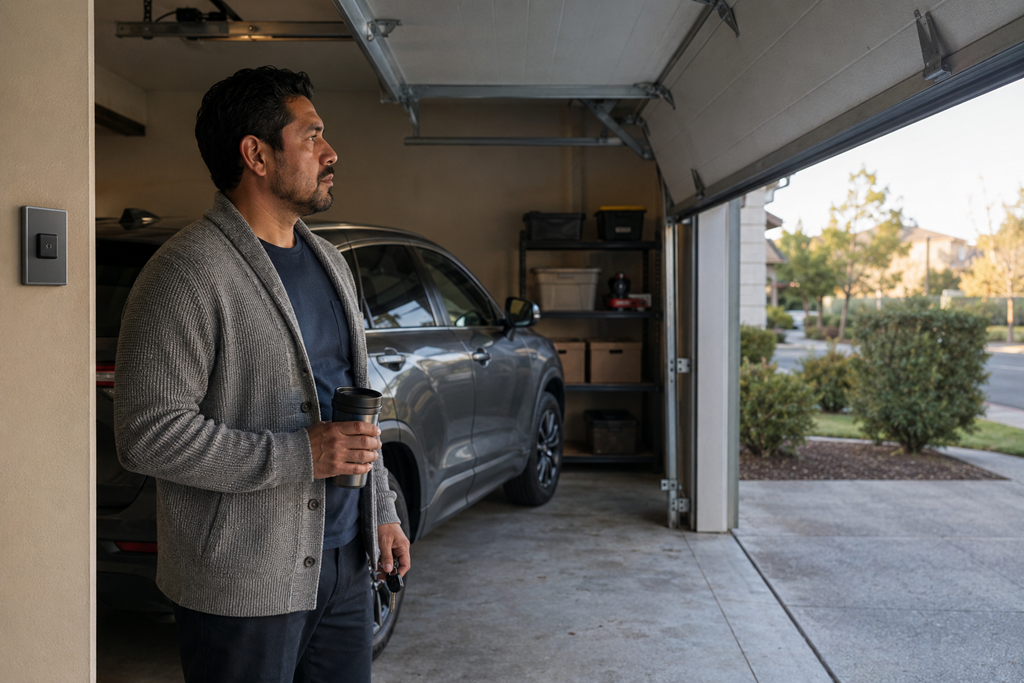
This is especially important for homeowners who use the garage as a main entry point. Many Sacramento families come and go through the garage multiple times a day. When the door is part of the household routine, small changes can be easy to normalize.
The sound may be more than an irritation. It may be the door’s way of showing that something about the movement, balance, or hardware should be reviewed.
When The Noise Comes With Other Warning Signs
Noise is more concerning when it appears with other changes. A door that jerks, shakes, closes unevenly, reverses unexpectedly, strains at the opener, or leaves a visible gap may deserve more attention than a door that only squeaks occasionally.
The same is true when a sound suddenly becomes louder or sharper. A new noise after a bump, recent service, heavy use, or a change in how the door feels should not be brushed aside just because the door still opens.
This is where a qualified garage door service provider can help separate normal wear from something that needs repair. The homeowner does not need to know the answer before calling. The goal is to know when the situation is worth asking about.
Questions Worth Asking Before Scheduling Service
When contacting a local garage door service provider, a few plain-language questions can help make the conversation clearer:
“Based on the sound I’m describing, what types of issues would you typically check first?”
“Is this something that should be evaluated soon, or is it reasonable to monitor for a short time?”
“Will the appointment include checking the door movement, opener behavior, hardware, and overall balance?”
“If a repair is recommended, will the estimate explain the cause of the noise and the parts involved?”
“Are there signs that would suggest repair may not be the best long-term option?”
These questions are not about challenging the professional. They help the homeowner understand the reasoning behind the recommendation and avoid agreeing to work without knowing what problem is being addressed.
The Real Issue Is Not Panic — It Is Paying Attention
A noisy garage door does not need to create fear. Many noises have ordinary explanations. But ignoring the sound completely can remove the chance to catch a small concern while the decision still feels manageable.
The practical middle ground is to notice the pattern, avoid risky DIY adjustments, and ask a qualified local pro to evaluate the door when the sound is new, persistent, sharp, worsening, or connected to changes in movement.
For Sacramento-area homeowners, that approach supports a better service decision. Instead of waiting until the door stops working or rushing into a repair without context, you can describe what you noticed, ask clearer questions, and understand whether the noise points to a simple issue, a developing concern, or a larger garage door decision.
A noisy garage door is not always an emergency. But it is often worth listening to.