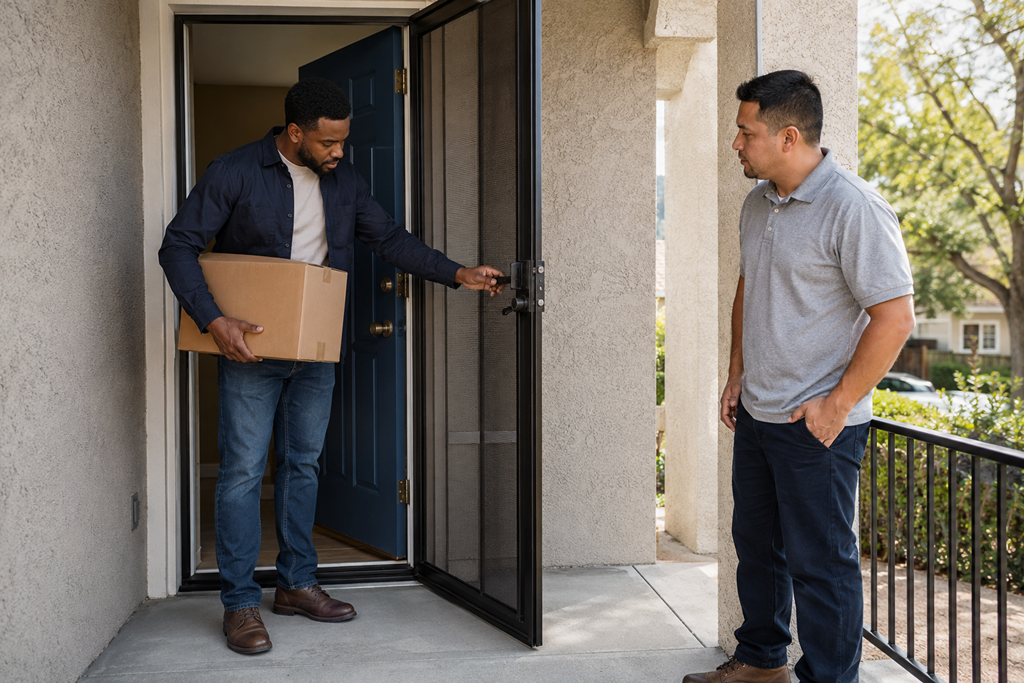
Adding security screens to a home is not simply a matter of choosing the strongest-looking mesh. The screen, frame, hardware, opening, and way your household uses that opening all have to work together. Before comparing products or quotes, Sacramento-area homeowners should understand where screens will be installed, what they should allow you to do each day, and what existing conditions may affect the installation.
Many homeowners begin considering security screens because they want fresh air, greater separation from the outdoors, or a more substantial barrier than a standard insect screen. Those are reasonable goals, but the installation can become disappointing when the product is selected before the opening and daily routine are fully evaluated.
The most useful first step is to think of a security screen as part of an operating system rather than a panel added to a door or window. The surrounding frame, handles, locks, tracks, hinges, trim, wall surfaces, and available clearance can all influence how well the finished installation works.
A Security Screen Is Different From a Standard Insect Screen
A standard insect screen is primarily intended to keep insects out while allowing air to pass through. A security screen is generally built as a more substantial assembly, often combining stronger mesh, a rigid frame, dedicated hardware, and a locking or release system.
That does not mean every product provides the same level of performance. Terms such as security mesh, reinforced screen, protective screen, and security screen may be used differently by different manufacturers and installers.
Before focusing on a product name, ask the provider to explain what the complete system includes. The answer should cover more than the mesh itself. It should also address the frame, attachment method, hinges or tracks, locking points, release features, and the condition of the structure supporting the installation.
A strong screen material cannot compensate for an unsuitable frame, poorly matched hardware, or an opening that does not allow the system to operate correctly.
Start With the Openings You Actually Want to Use
Security screens can be considered for front entries, side doors, patio openings, and certain windows. Each opening creates a different planning problem.
A hinged entry screen must work with the primary door, porch, walkway, handles, railing, columns, and normal traffic through the entrance. A sliding patio screen must fit the track and leave enough usable passage when open. A window screen must match the window type and should not interfere with normal operation, cleaning, or any release function the household may need.
This is why a whole-home conversation should not automatically lead to the same screen system being placed on every opening.
One entry may need frequent access for packages, pets, bicycles, or mobility equipment. Another may rarely be opened but receive strong afternoon sun. A bedroom window may have different operating needs from a small bathroom window or a kitchen opening above a counter.
The right questions begin with how each opening functions, not with how many screens can be sold as one package.
Daily Use Can Reveal Problems That Measurements Miss
An opening can measure correctly and still feel awkward after installation.
Consider how people naturally approach the door or window. Notice which hand reaches for the latch, whether another door must be held open at the same time, and whether the screen narrows a frequently used path. Think about what regularly passes through the opening, including packages, laundry baskets, strollers, pet leashes, gardening supplies, or rolling equipment.
For a door-mounted system, the screen’s swing direction may affect porch clearance and the amount of standing room available between the security screen and the primary door. Handle placement can also influence whether both doors can be operated comfortably in sequence.
For a sliding screen, the fully open width may matter more than the total size of the doorway. A large patio opening can still provide a relatively narrow passage when one panel remains fixed.
These issues are easier to address before installation than after the screen has been manufactured or attached.
The Existing Frame May Change the Installation Plan
Security screens depend on the condition and shape of the opening around them.
Painted wood can split, soften, separate, or become uneven. Stucco edges may not provide a consistent mounting surface. A patio track may be worn, bent, shallow, or obstructed. Older openings may no longer be square even when they appear normal from several feet away.
These conditions do not automatically mean a security screen cannot be installed. They do mean the provider should evaluate what will support the system and explain whether preparation or repair is needed first.
A useful assessment should look at the entire perimeter of the opening rather than taking only a quick width-and-height measurement. The provider may need to consider the jamb, sill, trim, surrounding wall material, threshold, drainage path, and available space for hardware.
When existing damage is discovered, ask whether it affects appearance, operation, attachment strength, or all three. That distinction can help you understand whether the issue is minor preparation or a separate repair that should be addressed before the screen is installed.
Airflow, Light, and Visibility Are Part of the Choice
Many Sacramento-area homeowners consider security screens because they want to open a door or window during warm weather without leaving the opening completely unobstructed.
The amount of airflow and visibility a screen provides can vary. Mesh density, wire thickness, viewing angle, lighting, screen color, and the distance between the screen and the person looking through it can all change the experience.
A screen that appears nearly transparent in a showroom sample may look different when installed in front of a shaded entry. A darker or denser screen may reduce glare from one direction while making an interior space feel dimmer from another.
Ask to view realistic samples in conditions similar to the intended opening. When possible, look through the material from both inside and outside. Consider daytime visibility, interior privacy expectations, natural light, and whether the opening is primarily used for ventilation or for seeing approaching visitors.
The goal is not to find a screen that maximizes every feature. It is to understand which tradeoffs matter most for that particular opening.
Security Claims Should Be Explained Clearly
Security screens should not be described with vague promises or absolute guarantees.
A provider should be able to explain what makes the proposed system different from an ordinary screen and how the components work together. Depending on the product, that explanation may include the mesh construction, frame design, locking arrangement, hinges, tracks, fasteners, release mechanism, or testing information supplied by the manufacturer.
Ask what is included in statements such as reinforced, heavy-duty, tamper-resistant, or security-rated. These phrases are more useful when connected to a specific product feature or documented standard than when used as general sales language.
It is also reasonable to ask about limitations. No screen should be treated as a replacement for sensible door and window practices, maintained locks, or attention to the condition of the surrounding structure.
A provider who discusses both capabilities and limitations is giving you more useful information than one who relies on dramatic demonstrations or broad promises.
Emergency Access Should Not Be an Afterthought
Some windows or doors may be important exit routes for the household. A security screen should not be added without discussing how that opening will continue to function when quick access is needed.
Ask the installer whether a release feature is appropriate for the opening and how household members would operate it. The explanation should be understandable without requiring specialized tools or a complicated sequence.
Also ask what maintenance or inspection keeps the release and locking components operating properly. Hardware that is rarely used can still become difficult to operate if it is ignored.
The provider should evaluate each opening individually rather than assuming that a permanently fixed screen is appropriate everywhere.
One Screen Type May Not Suit the Entire Home
Buying one matching product for every opening may sound simple, but consistent appearance does not always require identical construction.
A front entry may need a hinged system with comfortable handle placement. A patio opening may need a sliding configuration that preserves enough passage space. A window exposed to strong sun may create different visibility concerns from one beneath a shaded porch.
The better comparison is not simply between products. It is between complete solutions for particular openings.
A provider should be able to explain why a proposed configuration fits each location. When every opening receives the same recommendation without discussion of use, access, frame condition, or surrounding space, the proposal may be based more on convenience than on the home’s actual needs.
Questions Worth Asking During an Estimate
A productive estimate should help you understand the finished installation rather than only provide a price.
What parts of the opening will support the security screen?
This helps reveal whether the existing jamb, trim, wall surface, or track needs preparation.
How will this screen affect the usable opening?
Ask about the remaining passage width, swing area, handle clearance, and access to the primary door or window.
What is included besides the mesh?
The provider should identify the frame, locks, hinges, tracks, fasteners, release features, finishing work, and other included components.
How will airflow and visibility change?
Ask to see the proposed material from realistic viewing distances and lighting angles.
Can the screen be released where emergency access may be needed?
Have the provider demonstrate the intended operation and explain any maintenance requirements.
What happens if the opening needs repair or adjustment?
The quote should distinguish between included preparation and separate work that could change the scope.
How should the screen be cleaned and maintained?
Understanding routine care can help prevent damage to the mesh, finish, tracks, locks, and release mechanisms.
A Clear Quote Should Describe the Complete Installation
A quote for security screen installation should identify the openings being covered and the type of system proposed for each one. It should also explain the major hardware, finish, preparation work, and any conditions that are excluded from the price.
Pay attention to vague descriptions such as standard installation when the opening has unusual trim, visible frame damage, limited clearance, or a worn track. Ask what the provider considers standard and what circumstances could lead to additional work.
When comparing quotes, make sure the proposals cover similar components. One price may include frame preparation, upgraded hardware, finish work, or a release feature that another leaves out.
The lowest total does not necessarily represent the same installation. A clear scope makes differences easier to understand before you commit.
The Best Decision Starts With the Opening, Not the Sample
Security screens can support ventilation, visibility, and a stronger exterior barrier, but those benefits depend on how the complete system fits the home.
Before choosing a product, identify which openings matter most, how they are used, what surrounds them, and what the screen must allow the household to continue doing. Then ask the provider to connect the proposed mesh, frame, hardware, and installation method to those real conditions.
That approach gives Sacramento-area homeowners a better basis for comparing recommendations and recognizing whether an estimate reflects the home itself rather than a one-size-fits-all product.