Solar screens can make sun-facing rooms feel more usable by reducing glare and some of the solar heat reaching the glass, but they also change how much daylight, outside view, and airflow a window provides. Before adding them, Sacramento-area homeowners should compare those tradeoffs window by window rather than assuming the same screen belongs on every opening.
The decision often begins with a familiar problem: a room becomes uncomfortable during part of the day, furniture sits in harsh sunlight, or reflected glare makes it difficult to watch television or work at a computer. Solar screens may help, but the best choice depends on what is happening at each window and how that room is used.
Solar Screens Address Sun Exposure, Not Every Comfort Problem
A solar screen is a woven exterior screen designed to limit some of the sunlight reaching a window. By reducing direct sun before it passes through the glass, the screen may help lessen glare and reduce the amount of solar heat entering a room.
That does not mean every warm room needs solar screens. Heat may also come from inadequate insulation, air leakage, aging windows, limited ventilation, or other conditions that a screen will not correct.
Before requesting an estimate, identify when the discomfort occurs and which windows receive the strongest exposure. A room that feels warm only during late afternoon may need a different approach than one that stays uncomfortable throughout the day.
This distinction helps a provider evaluate the actual problem instead of simply recommending screens for the entire home.
The Benefits Come With Visible Tradeoffs
Solar screens are meant to filter sunlight, so they naturally change the appearance of a window.
Depending on the screen material, color, and weave, you may notice:
- Less glare during bright parts of the day
- A darker appearance inside the room
- Reduced visibility through the window
- A different exterior appearance
- Some reduction in airflow through an open window
These changes are not necessarily disadvantages. A darker room may feel more comfortable, and reduced visibility may provide a welcome sense of privacy during daylight hours. The important point is that the results should match how you use the room.
A screen that works well on a television-room window may feel too dark on a kitchen window where natural light is important. A denser screen may help with an intense afternoon exposure but feel unnecessary on a shaded bedroom window.
Each Window Should Be Considered Separately
It is easy to think of solar screens as a whole-house product, but the need often varies across the property.
Some windows may already receive shade from roof overhangs, patio covers, trees, neighboring structures, or the shape of the home. Others may receive direct sunlight for hours. The rooms behind those windows may also serve very different purposes.
Consider the difference between:
- A west-facing family room used during the afternoon
- A bedroom that receives limited direct sunlight
- A kitchen where daylight and color visibility matter
- A home office affected by screen glare
- A street-facing room where daytime privacy is important
Using the same screen material on every window may create a uniform exterior appearance, but it may not produce the most useful result inside. Selective installation can sometimes address the most troublesome exposures while preserving daylight and views elsewhere.
A qualified installer should be able to explain why particular windows are being recommended rather than treating every opening the same.
Daylight Can Change More Than Expected
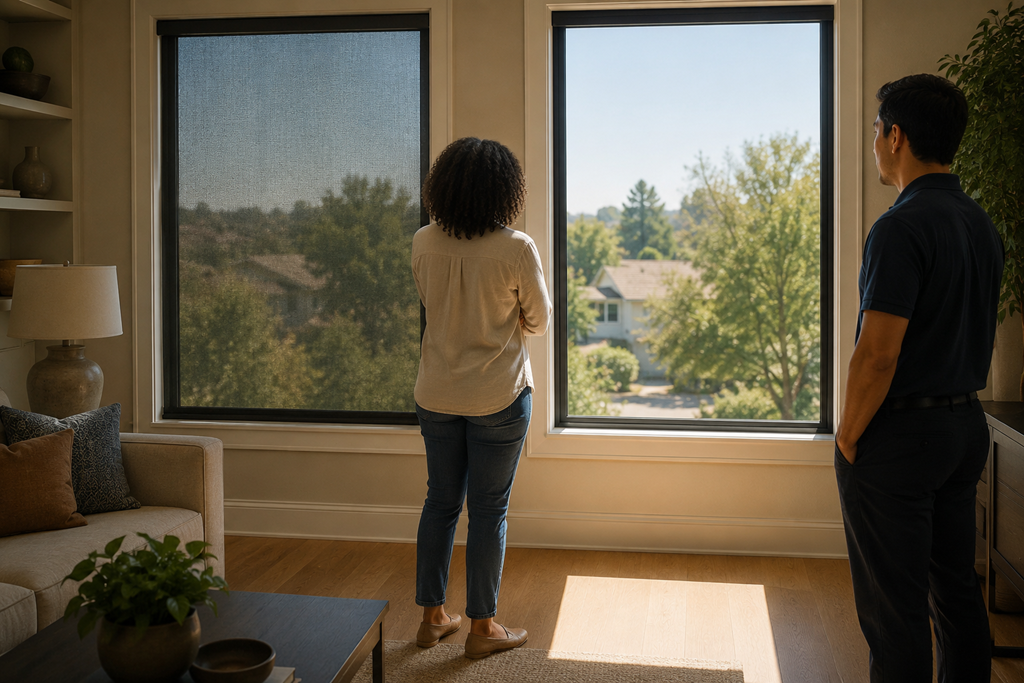
Small screen samples are helpful, but they do not always show how an entire room will feel once a full window is covered.
A material that appears only slightly darker in your hand can noticeably change the light level when it spans a large opening. Wall colors, flooring, furniture, and the number of other windows in the room can all affect the result.
Before committing to a screen material, ask whether a larger sample or temporary panel can be viewed against the actual window. Look at it from inside and outside during the part of the day when sunlight is strongest.
Pay particular attention in rooms where you read, prepare food, work with colors, grow indoor plants, or rely heavily on natural light. The goal is not simply to block the greatest amount of sun. It is to find a useful balance between comfort and the room’s everyday function.
Views and Privacy Work Differently During the Day and at Night
Solar screens can make it more difficult to see into a home during bright daytime conditions, especially when the exterior is brighter than the interior. That can create a greater sense of privacy.
However, they should not be treated as permanent privacy screens. When interior lights are on after dark, visibility conditions can change.
The view looking outward may also become less clear. Some homeowners barely notice the difference, while others find that a screen interrupts a view they regularly enjoy.
This is another reason to test the material on the actual window. Look through it from normal seating and standing positions rather than evaluating it only from a few inches away.
Airflow Should Be Evaluated Separately
A solar screen can reduce sunlight while still allowing air to pass through, but any mesh placed over an opening can affect airflow.
The difference may matter in homes where windows are frequently opened for evening ventilation or cross-breezes. A denser weave that provides greater sun control may also feel more restrictive when the window is open.
When comparing options, ask how the proposed screen may affect ventilation. If airflow is important, consider testing the material while the window is open and observing curtain movement or the strength of the breeze from several feet inside the room.
Heat reduction through shading and comfort from moving air are related, but they are not the same thing. A screen that improves one may alter the other.
Window Operation and Access Still Need to Work
Solar screens should fit the window without interfering with its normal operation.
The installer may need to account for:
- Sliding, casement, awning, or double-hung window movement
- Crank handles, locks, and latches
- Existing window screens
- Exterior trim and mounting surfaces
- Access for glass cleaning
- Removal for maintenance
- Required emergency escape openings
Do not assume that a screen can simply be attached wherever it fits. The attachment method should suit the window construction and allow necessary access without damaging the surrounding frame.
Ask the provider to demonstrate how the window will open, lock, and be cleaned after the screen is installed. For removable screens, find out whether removal requires tools and whether the panels can be handled and stored safely.
Appearance Should Be Viewed From Outside Too
Solar screens can change the visual balance of a home, particularly when only some windows are covered or when the screen color contrasts with the frame.
Viewing a sample from the sidewalk, driveway, patio, and yard can help you understand how the finished installation may look. Notice whether the screen frame aligns with the window trim and whether selective coverage appears intentional.
Homeowners who live in a managed community may also want to confirm whether exterior appearance guidelines apply before choosing a screen color or installation style.
A visually consistent installation does not necessarily require covering every window. Matching frames and thoughtful placement can often create a coordinated appearance while focusing the project on the windows that need help.
A Useful Estimate Should Explain the Recommendation
A solar-screen estimate should include more than the number and size of the windows.
The provider should be able to explain the proposed material, frame, mounting method, and intended result. You should understand which windows are included, whether the screens are fixed or removable, and how repairs or unusual window conditions would be handled.
Helpful questions include:
- Which windows appear to have the strongest sun exposure?
- Why is this screen material being recommended?
- How might it change daylight, views, privacy, and airflow?
- Can I see a larger sample on one of my windows?
- How will the screens be attached and removed?
- Will the windows still open, lock, and clean normally?
- Are frame preparation or minor repairs included in the estimate?
- What care will the screens require?
Clear answers make it easier to compare providers and determine whether their recommendations reflect your home rather than a standard package.
Be Cautious of One-Size-Fits-All Promises
A recommendation deserves a closer look when a provider proposes the same solution for every window without discussing exposure, room use, airflow, or appearance.
Other reasons to pause include vague descriptions of the screen material, promises that the screens will solve every heat problem, or an estimate that does not explain how the panels will be mounted and maintained.
A thoughtful provider should be willing to discuss limitations as well as benefits. Solar screens can be a useful comfort upgrade, but their value depends on choosing the right windows and accepting the changes that come with filtering sunlight.
The Best Result Is a Deliberate Balance
Before adding solar screens, focus on the rooms and windows where strong sunlight is creating a specific problem. Then compare how each option may affect heat, glare, daylight, views, privacy, ventilation, window operation, and exterior appearance.
For many Sacramento-area homeowners, the most suitable project is not automatically the darkest screen or the greatest number of covered windows. It is the combination that improves the most troublesome exposures while preserving the parts of the home they still want to enjoy.