A wet area may look like it is drying on the surface while moisture remains trapped underneath flooring, behind baseboards, inside wall cavities, or beneath cabinets. Before assuming time and airflow will solve the problem, it helps to understand that visible dryness is not always the same as complete drying, especially after a leak, overflow, or water intrusion.
This situation is easy to misread. A floor may no longer feel wet. A ceiling stain may stop spreading. A wall may look normal again after a few hours. Those changes can feel reassuring, but they do not always reveal what is happening inside or beneath the affected materials.
The important question is not simply whether the surface looks better. It is whether water reached places that are difficult to see, touch, or ventilate.
Surface Drying Can Create a False Sense of Resolution
Water that remains on top of tile, sealed concrete, or another nonporous surface may sometimes be removed without affecting surrounding materials. The situation becomes less predictable when water reaches seams, edges, joints, porous finishes, carpet padding, drywall, insulation, wood, or enclosed spaces.
The exposed surface receives the most air and often dries first. Moisture underneath may have much less airflow and fewer ways to escape.
Warm or dry conditions can make the top layer feel normal relatively quickly. In a Sacramento-area property, that visible improvement may lead a homeowner, renter, or business owner to assume the entire area has recovered. The surface may be dry while nearby materials are still holding moisture.
That does not mean every spill requires restoration work. It means the appearance of the surface alone may not provide enough information to make that decision.
The Source and Path of the Water Matter
A small amount of clean water that stayed on an easily dried surface is different from water that traveled beneath flooring, entered a wall, soaked into cabinetry, or came from an uncertain source.
Water rarely remains perfectly contained once it reaches an absorbent material or an open seam. It may move sideways, collect beneath finishes, or follow gaps that are not visible from the room.
This is one reason the visibly wet area may not represent the full affected area. The original puddle may have been small, while the path beneath the surface is wider.
When thinking about whether an area is likely to dry without professional help, consider questions such as:
- Where did the water begin?
- How long could it have been present before it was noticed?
- Did it reach flooring edges, baseboards, cabinets, carpet, drywall, or insulation?
- Is the source completely stopped?
- Could water have entered an adjoining room or enclosed space?
These questions are more useful than relying only on whether the area feels dry today.
Some Materials Hide Moisture Better Than Others
Different building materials respond to water in different ways.
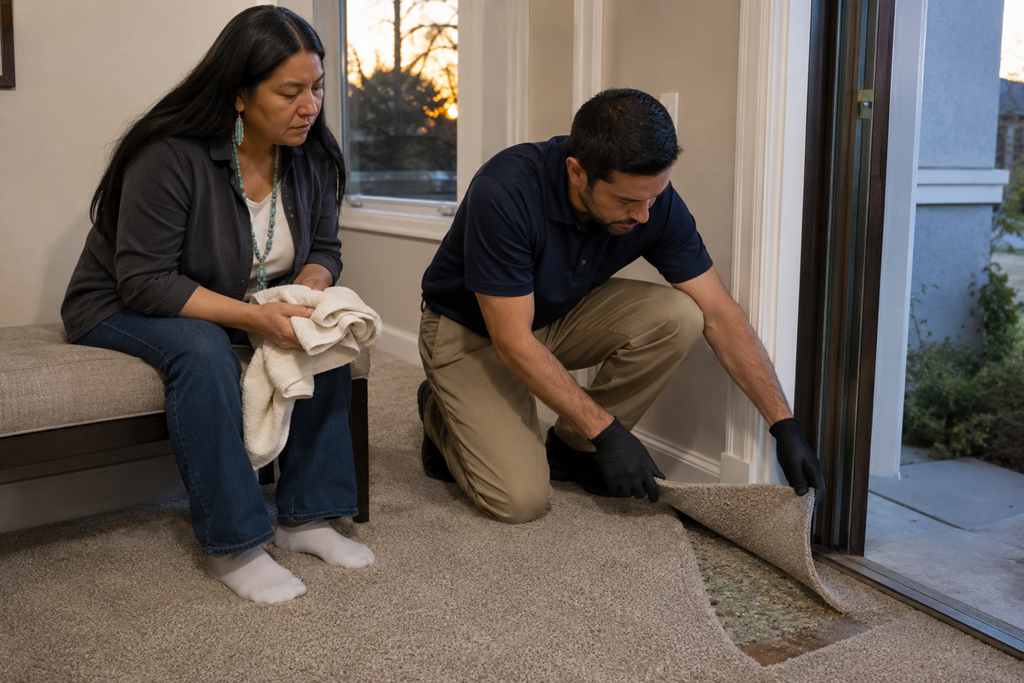
A tile surface may appear unaffected while moisture remains in grout lines, beneath loose sections, or along the wall edge. Laminate or wood flooring may look acceptable at first and later develop raised seams, discoloration, or changes in shape. Carpet fibers can feel dry even when the padding below remains damp.
Baseboards and painted walls may also conceal moisture. Paint can remain intact while the material behind it absorbs water. Cabinet interiors, toe-kick spaces, and wall cavities can receive very little airflow even when the surrounding room feels dry.
Because these materials are layered, visual inspection has limits. A restoration professional may use moisture-detection equipment and knowledge of how water travels through building materials to determine whether drying is actually complete.
The value of an evaluation is not simply finding something wrong. It is distinguishing between an area that is recovering normally and one that may need additional drying, monitoring, removal, or repair.
Waiting Can Make the Situation Harder to Interpret
Waiting does not always cause serious damage, but it can make the original extent of the water intrusion more difficult to understand.
Water marks may fade. Surfaces may partially dry. Furniture or stored items may be moved back into place. A smell may appear and disappear depending on temperature and airflow. These changes can create uncertainty about whether the issue is resolved or temporarily hidden.
Delayed signs can include:
- A persistent damp or stale odor
- Swelling along flooring seams or cabinet edges
- Soft, peeling, bubbling, or discolored finishes
- Baseboards separating from the wall
- Recurring stains after the surface seemed dry
- A room feeling noticeably more humid than surrounding areas
One sign alone does not identify the cause. However, changes like these are useful information to share when speaking with a qualified damage restoration provider.
Household Fans Do Not Confirm That Drying Is Complete
Fans, open windows, and household dehumidifiers may improve airflow around an exposed surface. They do not confirm what is happening behind a wall, below flooring, inside insulation, or underneath built-in cabinets.
There is also a difference between making an area feel more comfortable and managing a water-damaged building assembly. Professional drying may involve evaluating the affected materials, measuring moisture in multiple locations, adjusting equipment placement, and checking progress over time.
This does not mean a homeowner should never use ordinary airflow after a minor spill. It means airflow should not be treated as proof that hidden areas are dry.
Avoid entering or handling an affected area when water may involve electrical components, sewage, chemicals, structural instability, or another safety concern. Those situations are better evaluated by qualified professionals.
A Good Evaluation Should Explain What Is Being Checked
When comparing Sacramento-area damage restoration providers, look for explanations that connect the visible wet area to the materials around it.
A useful evaluation should make it easier to understand:
- Which materials may have been affected
- How the provider plans to verify moisture conditions
- Whether drying, monitoring, removal, or repair is being discussed
- Which parts of the property appear unaffected
- What could change the proposed scope or estimate
Be cautious when communication is based entirely on appearance. Statements such as “it looks dry” or “it should be fine” are less useful when they are not supported by an explanation of what was inspected.
At the same time, a professional evaluation should not automatically turn every wet spot into a large restoration project. The provider should be able to explain why a particular area does or does not need additional attention.
Questions Worth Asking Before Approving Restoration Work
A few focused questions can help you understand the recommendation without turning the conversation into a technical interview:
- How will you determine whether moisture remains beneath or behind the visible surface?
- What areas will be checked beyond the original wet spot?
- Which materials may be dried in place, and which might require removal?
- How will you confirm that the drying process is complete?
- What parts of the proposed work could change after the area is evaluated further?
Clear answers can make it easier to compare providers and recognize whether the proposed work matches the actual conditions.
Visible Dryness Is Only One Part of the Decision
A wet area does not always require extensive restoration, but it should not be considered fully dry based only on how the surface looks or feels.
The source of the water, the materials involved, the amount of time it was present, and the places it may have traveled all affect what happens next. When water could have reached enclosed or absorbent materials, a qualified evaluation can help determine whether waiting is reasonable or whether additional drying and restoration should be discussed.
For Sacramento-area property owners and renters, the goal is not to assume the worst. It is to make the decision using better information than the surface alone can provide.