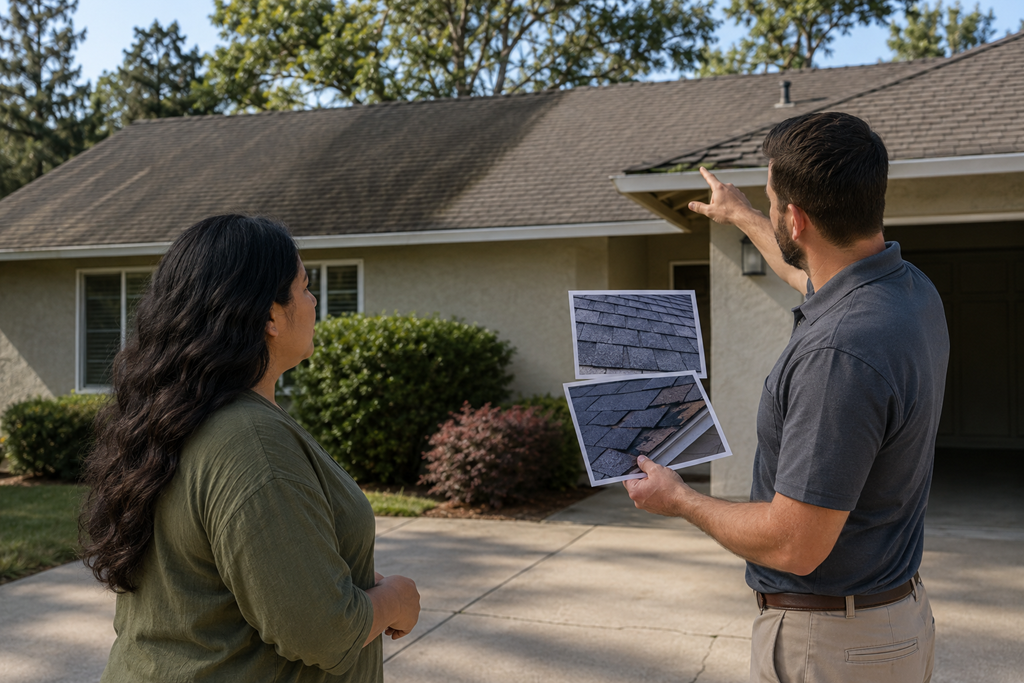
Before considering roof cleaning, it helps to know that the service is not only about making a roof look better. The right approach depends on the roofing material, the type of buildup, the roof’s condition, and whether the visible problem is truly surface-level. A careful evaluation should come before anyone recommends a cleaning method, treatment, or price.
Roof discoloration can be frustrating because it is often easy to see but difficult to interpret from the ground. A homeowner may notice dark streaks, moss-like growth, leaves collecting in a roof valley, or one section that looks noticeably different from the rest. The natural reaction is to assume the roof simply needs to be washed.
Sometimes cleaning is an appropriate service to discuss. In other situations, the appearance may be connected to drainage, shade, damaged materials, accumulated debris, or another condition that should be evaluated separately.
A Dirty-Looking Roof Does Not Always Have One Simple Cause
Dark areas and visible buildup can develop for several reasons. Dust, organic growth, leaves, branches, moisture, and normal aging can all affect how a roof looks.
Different conditions may also appear similar from a distance. What looks like surface staining could be concentrated debris, material deterioration, or uneven weather exposure. A roof may even have more than one issue at the same time.
This is why a provider should do more than glance at the roof and immediately recommend a standard treatment. The first question should be what is causing the visible change and whether cleaning is likely to address it.
The Roofing Material Should Shape the Cleaning Approach
Roofing materials do not all respond to cleaning in the same way. Asphalt shingles, concrete or clay tiles, metal roofing, and other surfaces can have different limitations, protective finishes, and areas of vulnerability.
A method that is appropriate for one material may be too aggressive or ineffective for another. Water pressure, cleaning products, roof access, drainage, and the condition of the surface can all affect the service recommendation.
Sacramento-area homeowners do not need to understand every technical detail. They should, however, expect a provider to explain why the proposed method fits their particular roof rather than offering the same process for every property.
More Pressure Does Not Necessarily Mean Better Cleaning
One common misunderstanding is that stronger water pressure automatically produces a better result. Aggressive cleaning may be unsuitable for certain roofing materials and can create concerns when the surface is already worn, loose, cracked, or vulnerable.
A professional recommendation should focus on removing or treating the unwanted buildup while respecting the condition of the roof. The goal is not simply to make the surface look different as quickly as possible.
Before scheduling service, ask how the provider controls pressure, selects cleaning products, and reduces the chance of affecting roofing materials, gutters, siding, landscaping, or nearby surfaces.
Cleaning, Treatment, and Repair Are Different Services
The terms cleaning and treatment are sometimes used as though they mean the same thing. A cleaning service may focus on removing visible debris or buildup. A treatment may be intended to address organic growth or slow its return. Neither service repairs damaged roofing materials or corrects an active leak.
This distinction matters because a cleaner appearance does not necessarily mean the roof’s underlying condition has changed.
When a provider notices loose materials, damaged flashing, drainage concerns, soft areas, or possible water intrusion, those findings may need to be discussed separately. A reputable conversation should make clear which concerns are included in the roof-cleaning scope and which are not.
The Estimate Should Explain More Than the Final Price
A roof-cleaning estimate is easier to evaluate when it describes the work being proposed. A single price without a clear scope makes it difficult to compare providers or understand what will happen on the property.
Useful details may include:
- The areas of the roof included in the service
- The type of cleaning or treatment being proposed
- How the method fits the roofing material
- Whether gutters or roof valleys are included
- How runoff and nearby landscaping will be managed
- Whether the provider expects immediate or gradual visual changes
- What is excluded from the quoted service
The estimate should also explain what happens if the provider discovers a condition that makes the original cleaning plan inappropriate.
Immediate Visual Perfection May Not Be a Realistic Expectation
Some homeowners expect every stain or discolored section to disappear immediately. That may not be realistic for every roof, material, or treatment.
Certain buildup may be removed during the service, while some treatments may work gradually. Older roofing materials can also retain uneven coloring even after surface growth or debris has been addressed.
A provider should explain the expected visual result before the work begins. This includes areas that may remain discolored, conditions that cleaning cannot correct, and whether follow-up treatment may be discussed.
Clear expectations help prevent a homeowner from assuming that an imperfect appearance automatically means the service failed.
A Few Questions Can Reveal How Carefully the Service Is Being Planned
Before hiring a roof-cleaning provider, consider asking:
- What appears to be causing the discoloration or buildup?
- Why is this cleaning method appropriate for my roofing material?
- Is any part of the roof showing signs that cleaning may not address?
- What precautions will be used around gutters, siding, plants, and runoff areas?
- What should I realistically expect the roof to look like afterward?
- What is included and excluded from the estimate?
The usefulness of the answers matters more than the number of questions. Look for explanations that are specific to the property rather than vague assurances that one method works for every roof.
Rushed Recommendations Deserve a Closer Look
A provider should be able to explain the proposed service without relying on pressure or dramatic warnings.
Be cautious when someone recommends immediate work without discussing the roofing material, cannot explain the cleaning method, guarantees a like-new appearance, dismisses questions about runoff or surrounding surfaces, or avoids separating cleaning concerns from possible repairs.
These signs do not automatically prove that a provider is unqualified. They do suggest that the homeowner may need more information before committing.
The Best First Step Is Understanding What the Roof Actually Needs
Roof cleaning can improve the appearance of a property and address certain types of surface buildup, but it should not begin with the assumption that every dark area needs the same treatment.
A useful provider conversation connects the visible condition to the roofing material, explains the recommended method, identifies the limits of the service, and sets realistic expectations. That gives Sacramento-area homeowners a stronger basis for comparing estimates and deciding whether cleaning, treatment, inspection, or a separate repair discussion makes the most sense.