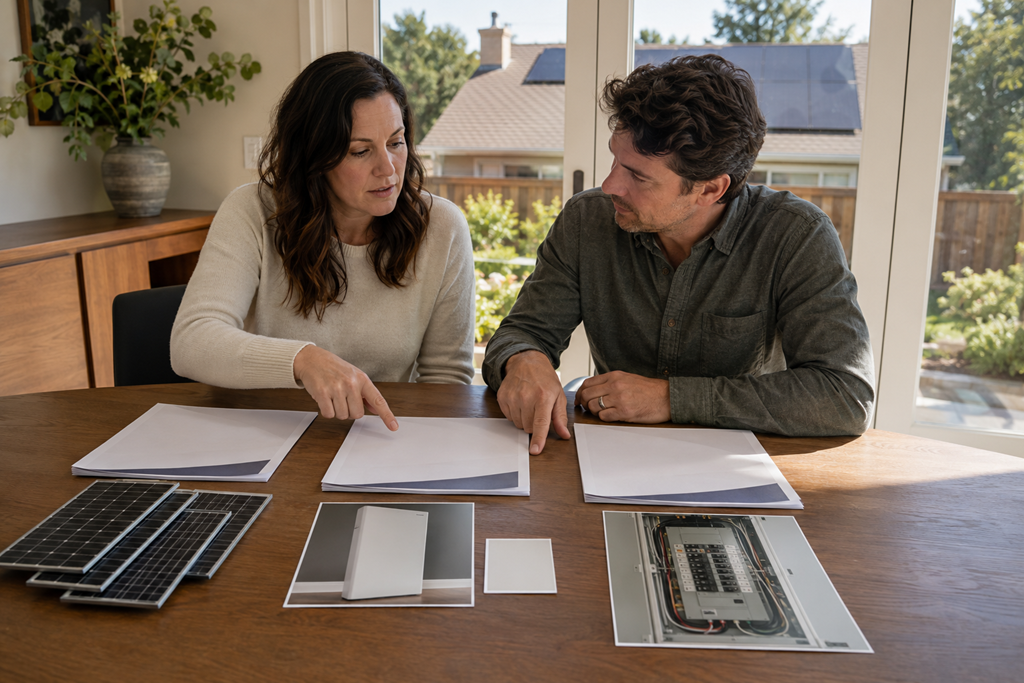
Before comparing solar proposals, first make sure each company is actually describing the same project. A lower total can look attractive, but the comparison may be misleading if one proposal uses different equipment, assumes a different amount of energy production, leaves out electrical work, or explains warranties and payment terms less clearly. The goal is not to find the most impressive-looking packet. It is to understand what each provider is offering, what is included, and what could change after you move forward.
Solar proposals often arrive in different formats. One may be highly detailed, another may emphasize projected savings, and another may focus mainly on the monthly payment. That can make Sacramento-area homeowners feel as though they are comparing three completely different products, even when each company is discussing solar for the same property.
A useful comparison begins by looking past the presentation and identifying the assumptions underneath it.
Make Sure Every Proposal Addresses the Same Goal
Two solar proposals may not be designed to accomplish the same thing.
One provider may recommend a system intended to cover most of the household’s recent electricity use. Another may design around a smaller portion of that use. A third may include anticipated changes, such as adding an electric vehicle, replacing a gas appliance, installing a pool, or expanding the home.
Before comparing totals, look for the basic goal behind each design:
- What electricity-use information did the provider review?
- What portion of that usage is the proposed system intended to address?
- Did the provider account for expected changes in household energy use?
- Is battery storage included, optional, or not discussed?
- Are the proposals based on similar roof areas and panel layouts?
A proposal for a smaller system will usually look less expensive than a proposal for a larger one. That does not automatically make it a better value. It may simply be offering less capacity.
The Total Price Does Not Show the Entire Scope
The largest number on the proposal is easy to compare, but it may not tell you everything the provider expects to do.
A solar project can involve more than placing panels on a roof. Depending on the property and the proposed design, the scope may address electrical equipment, roof access, conduit placement, monitoring equipment, battery storage, permits, utility coordination, inspections, cleanup, or other project details.
Review what each provider says is included in the quoted amount. Also look for language describing work that is excluded, treated as optional, or subject to further evaluation.
A lower proposal may be perfectly reasonable. It may also leave certain responsibilities outside the quoted scope. Those differences are easier to evaluate when they are identified before signing rather than after the project begins.
Identify the Exact Equipment Being Proposed
Broad terms such as “high-efficiency panels” or “premium inverter” do not provide enough detail for a meaningful comparison.
Each proposal should make it possible to identify the major equipment being offered, including the panel manufacturer and model, inverter type, monitoring equipment, and battery system when applicable.
The purpose is not to become a solar equipment expert. It is to confirm that the providers are not quoting noticeably different system components while presenting their totals as though the offers are equivalent.
Equipment differences may affect:
- System design
- Available roof space
- Monitoring features
- Warranty coverage
- Replacement options
- How the system responds to shade or changing sunlight
When equipment descriptions are vague, ask the provider to clarify them in writing. Clear identification makes it easier to review the proposal later and reduces the chance of comparing one defined system with another that remains largely unspecified.
Treat Production Estimates as Projections
Solar proposals commonly include an estimate of how much electricity the system may produce. That estimate can be useful, but it is still based on assumptions.
Roof direction, roof angle, nearby trees, seasonal shade, panel placement, equipment characteristics, weather patterns, and the provider’s modeling approach can all influence the projection.
Sacramento’s strong sun exposure may make solar worth discussing for many properties, but sunlight alone does not make every design or production estimate interchangeable.
When two proposals show noticeably different production projections, ask why. The difference may come from system size, panel location, shade assumptions, equipment selection, or the way each provider modeled the property.
A larger estimate should not be accepted simply because it looks more favorable. The provider should be able to explain what supports it.
Separate Cash Price, Financing, and Incentive Assumptions
A proposal’s payment section can make comparison especially difficult.
One proposal may emphasize the cash price. Another may feature a financed monthly payment. A third may show a projected figure that assumes the homeowner qualifies for and applies a particular incentive or financial benefit.
These numbers should not be treated as though they represent the same thing.
When financing is involved, look for a clear explanation of the amount being financed, payment structure, term, interest rate, possible fees, and any assumptions about future payments. When incentives are shown, confirm whether they are included as a price reduction, presented as a possible benefit, or used to calculate an estimated payment.
A solar provider can explain the proposal’s payment structure, but personal tax and financial questions should be discussed with an appropriately qualified professional.
The most useful comparison keeps the equipment and project price separate from the way the purchase may be funded.
Look for Property Conditions That Could Change the Project
Some parts of the property may require additional review before the final scope is known.
These can include:
- The condition and remaining useful life of the roof
- Limited roof space or complex roof sections
- Trees or structures that create shade
- The location and condition of electrical equipment
- Long distances between equipment locations
- Access limitations around the home
- Plans for future roofing, remodeling, or electrical work
A proposal does not necessarily need to solve every unrelated property issue. It should, however, explain which conditions have already been considered and which ones could lead to additional work or cost.
Be cautious when a provider gives a highly specific final-looking proposal without adequately reviewing important parts of the property.
Read Warranty and Service Language as Separate Subjects
The word “warranty” may refer to several different types of coverage.
Solar panels, inverters, batteries, workmanship, roof penetrations, monitoring equipment, and estimated system performance may each have separate terms. Those terms may come from different companies and may not last for the same period.
Look for clear answers to questions such as:
- Which coverage comes from the equipment manufacturer?
- Which coverage comes directly from the installer?
- What workmanship is covered?
- Who handles service requests after installation?
- Are labor, replacement equipment, and diagnostic visits treated differently?
- What happens if monitoring shows that the system is not operating as expected?
A long warranty period can sound reassuring, but the service process matters too. Homeowners should understand who they would contact and what the provider is actually responsible for addressing.
Notice How Clearly Each Company Explains Its Proposal
The proposal itself offers an early look at how the company communicates.
Formatting does not need to be elaborate. The important question is whether the provider can explain the project in understandable terms and respond directly when something is unclear.
Warning signs may include:
- Equipment that is not clearly identified
- Large differences between verbal promises and written details
- Estimated benefits presented without explaining assumptions
- Important exclusions hidden in dense language
- Questions answered with pressure rather than information
- Repeated reluctance to provide clarifications in writing
- A push to sign before the homeowner has reviewed competing proposals
A knowledgeable provider should be able to explain why a particular system was recommended without making the homeowner feel rushed or embarrassed for asking questions.
Questions That Make Proposals Easier to Compare
A few focused questions can reveal whether the offers are truly comparable:
- What system goal did you use when creating this proposal?
- What major equipment is included by manufacturer and model?
- What work is included in the quoted price?
- What property conditions could lead to added work?
- What assumptions support the production estimate?
- Which warranties come from the installer, and which come from manufacturers?
- Who would handle service or performance concerns after installation?
- Which figures are firm, and which are estimates or assumptions?
The value of these questions is not just in the answers. It is also in how clearly and consistently each provider responds.
Build the Comparison Around Consistent Categories
Instead of placing three proposal totals next to one another and choosing the lowest, compare each offer using the same categories.
Consider the system goal, proposed size, equipment, projected production, included work, possible exclusions, payment structure, warranty coverage, service responsibility, and unresolved property questions.
This makes it easier to see why proposals differ.
One company may offer the lowest price but leave electrical work unresolved. Another may quote more equipment than the household needs. A third may offer a well-defined scope at a higher initial price. The differences become more understandable when the comparison is based on substance rather than a single headline figure.
A Better Proposal Is One You Can Understand
Comparing solar proposals is not simply about finding the lowest price, the highest production estimate, or the smallest projected payment. It is about determining which provider has presented a clearly defined project that fits the property and the homeowner’s goals.
Before committing, make sure you understand what is being installed, what the proposal assumes, which work is included, what could change, how payment figures were calculated, and who will remain responsible after installation.
A proposal that can be reviewed and explained clearly gives you a stronger basis for making an informed Sacramento-area home service decision.