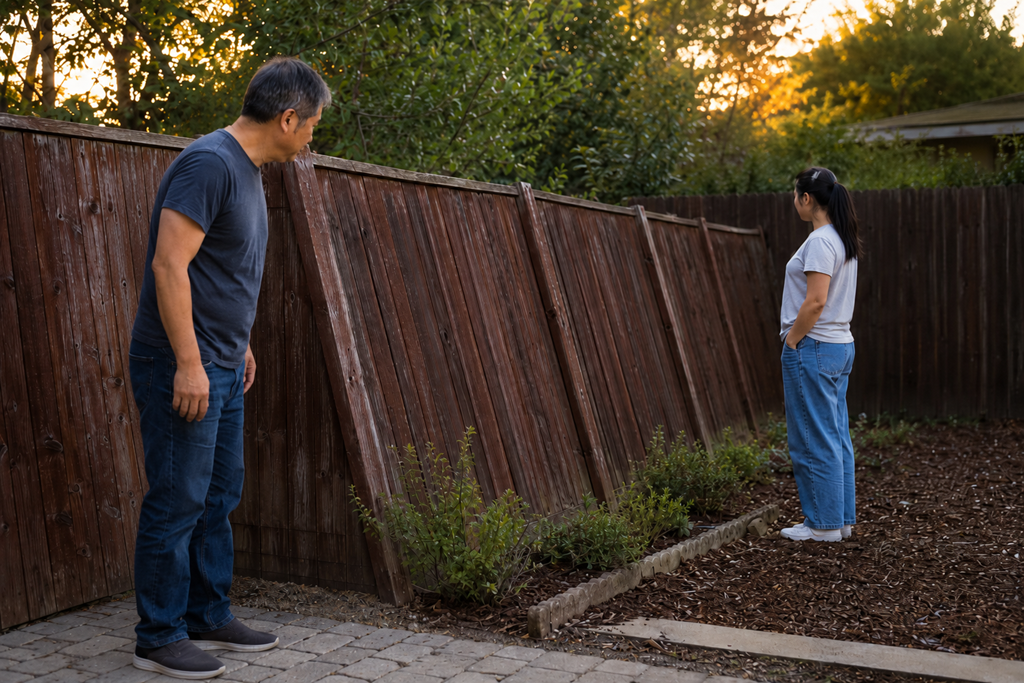
A leaning fence is not always a sign that the entire fence needs to be replaced, but it is a reason to look more closely. The visible tilt may come from one loose or damaged post, shifting soil, weakened rails, gate strain, or deterioration affecting a larger section. What matters is whether the lean is stable, spreading, or connected to other signs of structural weakness.
For many homeowners, the change happens gradually. A fence that once looked straight begins to angle slightly toward the yard. A gate stops closing smoothly. One panel appears out of line with the rest. Because the fence is still standing, it can be easy to treat the problem as cosmetic.
The lean itself, however, does not explain what is happening below or behind the visible boards. Understanding the cause is what helps determine whether a focused repair, a larger repair, or eventual replacement is worth discussing.
The Lean Is a Symptom, Not the Whole Problem
A fence usually leans because part of its support system is no longer holding the fence in its intended position.
The problem may be limited to one post or connection. It may also involve several posts, weakened rails, changing soil conditions, moisture damage, or stress from a gate. Two fences can appear to lean by the same amount while needing very different responses.
That is why judging the fence only by its angle can be misleading. A minor-looking tilt with a badly weakened post may deserve more attention than a more noticeable lean caused by a single repairable section.
A professional evaluation should focus on what is allowing the movement, not merely on making the fence look straight again.
A Small Lean May Still Point to a Focused Repair
Not every leaning fence requires full replacement.
When neighboring panels remain straight, the rails are sound, and the problem is limited to one post or short section, a targeted repair may be reasonable. The condition of the surrounding fence matters because a repair needs stable material to connect to.
This distinction can be helpful for Sacramento-area homeowners who are worried that any visible movement automatically means replacing the entire fence. A qualified fence professional may be able to explain whether the problem is isolated and whether repairing that area would provide a practical amount of additional service life.
The important question is not simply whether the fence can be straightened. It is whether the repaired section can remain properly supported afterward.
A Longer Leaning Section Can Signal a Broader Issue
A different situation exists when several connected panels are moving in the same direction.
A long leaning run may indicate that multiple posts or support points have weakened. You may also notice rails pulling away, boards shifting out of alignment, post bases deteriorating, or previous repairs beginning to move again.
In that situation, correcting one visible point may not address the condition affecting the rest of the fence. A repair that treats only the most obvious section could leave nearby weak areas unchanged.
This does not automatically mean replacement is required. It does mean the estimate should explain how much of the fence is affected and why the proposed scope stops where it does.
The Fence’s Location Changes the Importance of the Lean
A leaning fence along an unused edge of a large yard may create a different decision than one beside a gate, walkway, driveway, patio, play area, or neighboring property.
Location affects how the fence functions in everyday life. A leaning section can interfere with a gate, reduce usable space, press against landscaping, or move toward an area where people regularly walk or gather.
The fence may also serve a purpose beyond marking a boundary. It may provide privacy, help control access to part of the property, or separate pets from nearby activity. A change in its position can therefore matter even when the boards still look reasonably intact.
When comparing repair options, explain how the surrounding area is used. That context can help the professional evaluate the practical consequences of leaving the fence as it is.
Soil, Water, and Exposure Can Affect What Happens Next
Fence movement is not always caused by the visible wood alone.
Soil around a post can settle, shift, soften, or pull away. Irrigation patterns, drainage, dry conditions, seasonal rain, plant roots, and repeated sun exposure can also influence the materials and ground surrounding a fence.
Sacramento-area properties can have different conditions from one side of a yard to another. One section may receive regular irrigation while another stays comparatively dry. A shaded post may age differently from one exposed to strong afternoon sun.
These conditions do not provide a diagnosis by themselves. They are useful observations to mention during an estimate because they may help explain why one part of the fence moved while the rest remained straight.
Waiting Can Allow the Scope to Become Less Predictable
A slight lean may remain unchanged for some time, or it may gradually place more stress on adjoining parts of the fence.
As movement continues, rails can twist, fasteners can loosen, gates can fall out of alignment, and neighboring panels can begin carrying forces they were not intended to carry. A problem that was once limited to one support point may eventually involve a larger section.
This does not mean every leaning fence is an emergency. It means that waiting without understanding the cause can make the eventual repair decision harder to predict.
An evaluation can help separate a stable imperfection from active movement or structural deterioration. That information gives the homeowner a better basis for deciding whether to repair the fence, monitor it, or begin planning for replacement.
Making the Fence Look Straight Is Not the Same as Repairing It
One common misunderstanding is that a fence has been fixed if it can be pushed, pulled, or temporarily braced into a straighter position.
Changing the visible angle does not necessarily restore the support underneath it. If the post, surrounding soil, rails, or connections remain weak, the fence may begin leaning again.
Temporary bracing can also hide how much movement is occurring. A professional should be able to explain what part of the structure is failing and how the proposed work addresses that specific condition.
Be cautious when an estimate focuses only on appearance without discussing the posts, rails, connections, soil conditions, or neighboring panels involved.
Questions to Ask During a Fence Evaluation
A few focused questions can make repair recommendations easier to compare:
- Is the leaning limited to one post or affecting several sections?
- Are the nearby rails and panels strong enough to support a repair?
- Is the gate contributing to the movement?
- What appears to be causing the lean?
- How much useful life might the proposed repair provide?
- What conditions would make replacement more practical?
- Does the estimate address the cause or only straighten the visible section?
Clear answers should connect the recommended work to the actual condition of the fence. Be wary of explanations that remain vague or immediately recommend full replacement without identifying what has failed.
Look Beyond the Angle Before Making a Decision
A leaning fence should not automatically be treated as a minor cosmetic issue or as proof that the entire fence is finished. It is a visible clue that something has changed.
The useful question is whether the movement is isolated, stable, and repairable or part of a broader pattern of weakening supports and connected damage. A careful evaluation should explain the cause, the affected area, and what the proposed repair is expected to accomplish.
By looking beyond the visible tilt, Sacramento-area homeowners can compare recommendations more thoughtfully and make a better-informed repair-or-replacement decision before committing to the work.