A sliding door that will not lock properly deserves attention because the problem may involve more than the latch itself. The panel may be sitting slightly out of alignment, the rollers may no longer be supporting it evenly, or the frame and locking parts may not be meeting as intended. Even when the door still closes, an unreliable lock can affect security, daily use, and the amount of strain placed on the door.
A Door Can Look Closed Without Being Securely Locked
A sliding door may appear fully closed even when its locking parts are not properly engaged.
The latch may pass above or below the receiving piece on the frame. It may catch only at the edge, release with light movement, or require the panel to be lifted, pushed, or pulled before the lock will turn.
This can make the problem easy to dismiss. The glass panel reaches the frame, the handle moves, and the door seems closed. However, reaching the frame is not the same as locking securely.
A properly operating lock should engage consistently during normal use. When the process depends on a particular movement, angle, or amount of force, the door may be revealing an underlying problem.
The Lock May Be Revealing a Movement Problem
It is natural to assume that a door that will not lock simply needs a new latch. Sometimes the locking hardware is the main issue, but the problem can also begin elsewhere in the door system.
A sliding panel must sit at the correct height and position for its latch to line up with the receiving hardware on the frame. If the panel has dropped slightly, shifted out of alignment, or begun moving unevenly, the lock may no longer meet its matching part correctly.
Possible contributing conditions can include:
- Worn or unevenly adjusted rollers
- Resistance along the lower track
- A panel that no longer sits squarely in the opening
- Loose, worn, or damaged locking hardware
- Movement in the frame or receiving hardware
- Previous adjustments that addressed the symptom without correcting the cause
These possibilities do not mean every locking problem requires extensive work. They do explain why replacing one visible part without evaluating the door’s movement may not provide a lasting solution.
Lifting, Pushing, or Wiggling the Door Is a Useful Clue
Many people gradually develop a special routine for locking a difficult sliding door.
They may lift the handle while turning the lock, push the panel firmly toward the frame, pull the door inward, or move it back and forth until the latch catches. Because the routine eventually works, it can start to feel like a normal part of using the door.
That workaround is useful information.
It suggests that the locking parts may be capable of connecting, but only after the panel is moved into a position it does not reach naturally. The issue may therefore involve how the door is sitting or traveling rather than only how the lock operates.
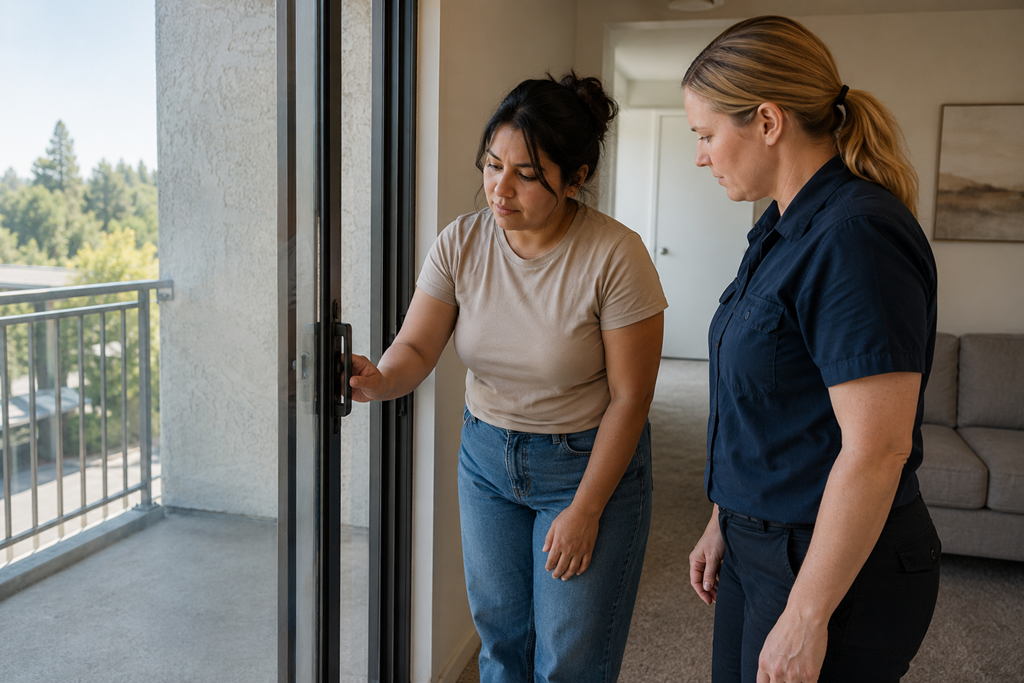
For Sacramento-area homeowners or renters preparing for a repair appointment, demonstrating the exact movement normally required can help a professional understand the pattern more quickly.
Repeated Force Can Place More Strain on the Door
Forcing a difficult lock may temporarily secure the door, but it can also place added strain on the handle, latch, frame hardware, and panel.
A person may pull harder on the handle because the lock feels stiff. Another family member may push against the glass frame while turning the lever. Over time, these habits can make the door less predictable and may contribute to additional wear.
The concern is not that one difficult use will necessarily cause major damage. The more practical issue is that repeated force can hide a developing alignment or movement problem until the door becomes harder to operate.
A lock that is becoming less reliable is often easier to evaluate before the panel stops closing or the hardware stops engaging altogether.
An Unreliable Lock Can Create a False Sense of Security
A lock lever may move into its usual position without the latch fully securing the panel. In other cases, the latch may catch lightly but release when the door is pulled.
This is why the feel of the lever alone does not always confirm that the door is locked.
A door that does not remain securely closed may also allow a small gap along the frame. That gap can affect how the door seals against outdoor air, dust, and seasonal weather. The exact effect depends on the door and the condition causing the problem, but it is another reason not to view the lock as an isolated decorative part.
The issue does not need to be treated as a dramatic emergency. It should, however, be treated as a functional problem rather than an inconvenience that will always remain unchanged.
A Useful Evaluation Looks Beyond the Latch
When a sliding door professional evaluates a locking problem, the inspection should consider how the entire panel operates.
That may include observing whether the door moves smoothly, whether the panel sits evenly in the opening, whether the vertical gaps are consistent, and whether the locking parts line up without the door being lifted or forced.
The goal is to understand the relationship between the symptom and its cause.
For example, adjusting or replacing locking hardware may be reasonable when the panel moves correctly and the problem is isolated to worn components. If the panel has dropped because of roller wear, changing the latch position alone may compensate for the misalignment without addressing why it occurred.
A complete evaluation helps distinguish between a hardware problem and a door-position problem.
Questions to Ask Before Approving a Repair
A few focused questions can make the proposed repair easier to understand:
- Is the problem limited to the lock, or is the panel out of alignment?
- Are the rollers and lower track affecting how the latch meets the frame?
- Will the proposed repair correct the cause or only reposition the locking hardware?
- Does the panel show other wear that could affect how long the repair lasts?
- What should normal locking and sliding feel like after the work is completed?
Clear answers should connect the recommended work to the behavior you have noticed. Be cautious when an explanation focuses only on replacing parts without addressing obvious lifting, dragging, uneven gaps, or repeated misalignment.
Repair or Replacement Depends on the Cause
A locking problem does not automatically mean the entire sliding door needs replacement.
An otherwise sound door may need a limited repair involving adjustment, roller service, or locking hardware. A more extensive recommendation may become reasonable when several components are worn, the frame is damaged, replacement parts are unsuitable, or the door has broader performance problems.
The important distinction is whether the recommendation is based on the condition of the complete door rather than the locking symptom alone.
Before making a decision, ask what is being repaired, what caused the failure, and whether other reasonable options were considered. This makes it easier to compare Sacramento-area sliding door professionals based on the quality of their evaluation instead of comparing only the names of parts or the total price.
Treat the Lock as Information About the Door
A sliding door that will not lock properly is communicating that something is no longer meeting, moving, or supporting the panel as intended.
The lock may be the failed component, or it may be the place where a different problem first becomes noticeable. Paying attention to how the door closes, whether it requires lifting or force, and whether the panel sits evenly can provide useful context before scheduling service.
A thoughtful evaluation should explain both the locking failure and the reason behind it. That understanding can help you choose a repair based on the actual condition of the door rather than relying on a temporary workaround.