When a sliding door stops moving freely, pushing or pulling harder can turn a manageable problem into a more expensive one. Extra force may place added stress on the rollers, track, handle, frame, or lock while hiding the real reason the panel is binding. The better response is to stop treating resistance as something to overpower and start treating it as useful information about what needs attention.
Resistance Is a Warning, Not a Challenge
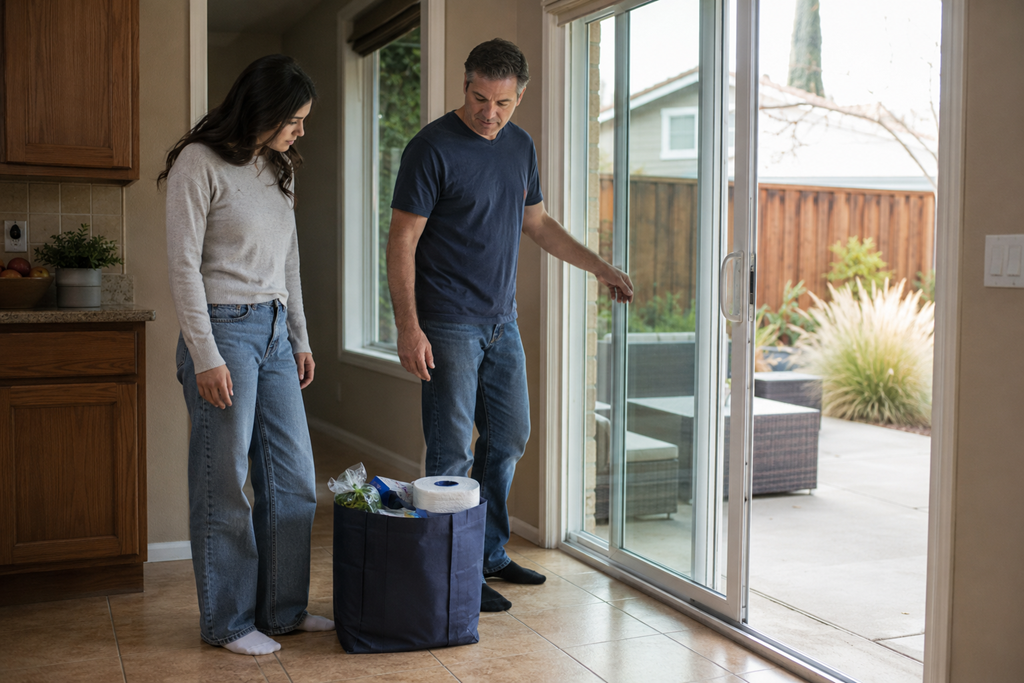
A sliding door that once moved easily may begin catching at one point, dragging along the track, or requiring a slight lift on the handle. At first, the change may seem minor. The door still opens, so using more force can feel like the quickest solution.
That extra effort does not necessarily overcome the underlying problem. It may simply transfer pressure to other parts of the door.
For example, a panel that is no longer riding evenly on its rollers may resist movement near the middle of the opening. Pulling harder might move it temporarily, but the force can also strain the handle, scrape the track, or shift the panel farther out of alignment.
The resistance itself is often the first useful clue that something has changed.
Extra Force Can Spread the Problem
A sliding door works as a connected system. The panel, rollers, track, frame, handle, and locking hardware all depend on one another being reasonably aligned.
When one part stops working smoothly, repeated force may affect parts that were not originally causing the problem. Depending on the condition of the door, this can contribute to:
- A loose or damaged handle
- Deeper wear along the lower track
- A panel that sits unevenly in the frame
- Rollers that become harder to adjust or replace
- A latch that no longer meets the lock correctly
- Additional strain on the surrounding frame
This does not mean every difficult door is already seriously damaged. It means continuing to force it can make it harder to separate the original problem from the damage created afterward.
Stopping early may preserve more repair options.
The Track May Not Be the Only Cause
It is easy to assume that every stuck sliding door has a dirty track. Dirt, pet hair, leaves, and other debris can certainly interfere with movement, especially on doors that open to patios and balconies.
However, a track can look reasonably clean while the door still resists movement.
The underlying issue may involve worn rollers, damaged roller assemblies, an uneven panel, a bent section of track, or hardware that is no longer aligned correctly. In some cases, the door may move well through most of its path but bind at one specific location.
The amount of effort required does not reveal which part is responsible. A door that feels extremely heavy may have a relatively focused roller problem, while a door that only catches occasionally may be developing a broader alignment issue.
That is why forcing the panel is not a reliable test of how serious the condition is.
Temporary Workarounds Can Become Everyday Habits
Many sliding door problems develop gradually. People often adjust their behavior without realizing how much the door has changed.
A Sacramento-area homeowner may begin lifting the handle while pulling. A renter may learn to jerk the panel past the same spot. Family members may use two hands, lean their body weight into the door, or ask another person to push from the opposite side.
These habits can make the door seem usable for longer, but they also make the problem easier to overlook.
A useful question is not simply, “Can I still open it?” It is, “Does this door require a movement or amount of force that should not normally be necessary?”
A sliding door should not require a practiced technique from everyone who uses it.
Notice How the Door Behaves Before Scheduling Repair
You do not need to diagnose the door yourself. A few simple observations can make a repair conversation more useful without taking the door apart or attempting technical adjustments.
Notice whether the resistance occurs throughout the entire opening or only in one place. Pay attention to scraping, grinding, clicking, or changes in the sound of the rollers. Look at whether the gap between the panel and frame appears even from top to bottom.
It is also helpful to notice whether the handle moves while the door remains stationary, whether the panel shifts when gentle pressure is applied, and whether the lock still engages without lifting or pushing the door into position.
These details can help a sliding door professional focus the inspection and explain whether the concern appears limited to the rollers, track, alignment, locking hardware, or a combination of parts.
A Clean Track Does Not Automatically Mean the Door Is Fine
Cleaning visible debris is different from correcting a mechanical problem.
A homeowner may clear the lower track and expect the door to move normally again. When it does not, the temptation is often to apply lubricant or pull harder. That can delay recognition that the rollers are worn, the panel is sitting too low, or the track has already been damaged.
The same misunderstanding can happen when the door moves more easily in one direction than the other. Improved movement does not necessarily mean the condition has resolved. It may simply mean the panel is placing less pressure on the problem area during that part of its travel.
A professional evaluation is often more useful than continuing to experiment with force.
When Continuing to Use the Door May Create More Risk
A door that is mildly stiff is different from a panel that feels unstable.
It is generally better to stop forcing the door when the panel appears to lift out of the track, lean away from the frame, wobble during movement, or require significant body weight to open. The same applies when the handle is loosening, the lock no longer secures the panel, or the glass or surrounding frame appears damaged.
For renters, the appropriate next step may be reporting the change to the property manager or maintenance contact. Homeowners can describe the symptoms to a local sliding door repair professional before scheduling an evaluation.
The goal is not to assume the worst. It is to avoid turning continued use into another source of damage.
Questions That Can Improve the Repair Conversation
Before comparing repair recommendations, consider asking:
- What appears to be creating the resistance?
- Has the added force affected the handle, lock, frame, or track?
- Can the affected parts be repaired individually?
- Is the panel properly aligned and supported?
- Is the door safe and practical to keep using before the repair?
- What would make replacement worth discussing instead of repair?
Clear answers should connect the recommended work to the way the door is behaving. A provider should be able to explain why a particular repair is being suggested rather than relying only on a general statement that the door is old or difficult to move.
Stopping Sooner Can Preserve Better Options
A stuck sliding door is not asking for more strength. It is signaling that something is interfering with normal movement.
Pausing before the handle loosens, the track becomes more worn, or the panel shifts farther out of alignment can make the problem easier to evaluate. It may also help a Sacramento-area homeowner or renter have a more focused conversation about what needs repair and what does not.
The most useful response is often the simplest one: stop forcing the panel, notice what it is doing, and have the cause evaluated before a difficult door becomes a larger repair decision.