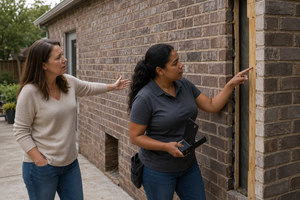
Pest prevention is usually easier than repeated treatment because it focuses on the conditions that allow pests to enter, find food or moisture, and remain hidden before the problem becomes established. Treatment can reduce visible activity, but when access points, shelter, or attractants remain unchanged, the same type of pest may return and require another round of attention.
A recurring pest problem often feels like a series of separate annoyances. Ants disappear and then show up in another part of the kitchen. Rodent activity stops for a while but later returns near the garage. Insects are treated around one doorway, only to appear near a window or utility opening.
These may not be completely new problems. They can be signs that the property still offers a repeatable route, resource, or hiding place.
Treatment Addresses Activity, While Prevention Addresses Recurrence
Pest treatment and pest prevention serve different purposes.
Treatment is often intended to address pests that are already present. Depending on the situation, it may reduce activity, remove a nest, control a population, or help manage an established problem.
Prevention looks at what could allow the problem to continue or return. That may include gaps around doors and utility lines, damaged screens, moisture near the structure, accessible food, cluttered storage, vegetation touching the building, or other sheltered areas.
This does not mean treatment is unnecessary. Once pest activity is established, professional treatment may be an important part of the response. The difference is that treatment alone may not resolve the conditions that made the property appealing or accessible in the first place.
A prevention-focused approach connects those two parts: addressing what is happening now and reducing the chances that the same pattern will keep rebuilding itself.
Repeated Pest Activity Usually Has a Repeatable Cause
Pests do not require a visibly neglected property to become a problem. A clean, well-maintained home can still have small openings, damp areas, damaged seals, landscaping contact, or storage conditions that are difficult for the homeowner to notice.
That is an important distinction because recurring pest activity is not automatically evidence that someone has failed to keep the property clean.
The more useful question is: What continues to make this location accessible or useful to the pest?
For ants, that might be a reliable food or moisture source combined with an entry route. For rodents, it could be an opening near the garage, roofline, crawlspace, or utility area. Other insects may be drawn to standing water, organic debris, exterior lighting, protected gaps, or materials brought onto the property.
A qualified pest control professional should be able to explain the likely pattern without making vague claims or assigning unnecessary blame.
Prevention Can Keep a Small Issue From Becoming a Larger Project
Early signs of pest activity are often easier to evaluate because there may be fewer affected areas, less hidden damage, and a clearer path to the source.
Once activity spreads behind walls, into stored materials, through multiple rooms, or across connected units, identifying the full pattern can become more complicated. Additional visits, monitoring, repairs, cleanup, or coordination with property owners may be needed.
Prevention does not eliminate every possibility of pest activity. It simply gives homeowners, renters, and property managers a better chance to address vulnerable conditions before they support a persistent problem.
For Sacramento-area properties, changing outdoor conditions can also influence where pests look for food, moisture, and shelter. Heat, dry periods, irrigation, seasonal rain, and nearby vegetation may all affect activity around a structure. A prevention plan should consider how the property functions throughout the year rather than treating every sighting as an isolated event.
Prevention Does Not Mean Expecting a Perfectly Pest-Free Property
One common misunderstanding is that prevention should guarantee that no pest will ever enter the home again.
That is not a realistic standard. Doors open, packages arrive, vegetation grows, weather changes, and neighboring properties may affect local pest activity. Multi-unit buildings may also have shared walls, plumbing routes, utility spaces, and common areas that one resident cannot control alone.
A more practical goal is to reduce the conditions that make repeated activity likely and to notice new signs early enough to respond before they become harder to manage.
A provider who promises permanent results without inspecting the property or discussing contributing conditions may be setting an unclear expectation. A stronger explanation distinguishes between what can be corrected, what can be monitored, and what may require ongoing management.
Repeated Service Is Not Always a Warning Sign
Some pest situations legitimately require follow-up visits, monitoring, or ongoing service. Continued service can also be preventive rather than reactive, especially when a property has recurring environmental pressures or a history of activity.
The concern is not repetition by itself. The concern is repetition without explanation.
If the same treatment is performed several times but no one reassesses entry points, moisture, food access, storage conditions, exterior changes, or the accuracy of the original pest identification, the underlying reason for the recurrence may remain unclear.
A qualified provider should be willing to explain why follow-up is recommended, what each visit is intended to accomplish, and whether anything has changed since the original inspection.
A Prevention-Focused Inspection Should Connect the Evidence
A useful pest inspection should do more than confirm that a pest was seen.
The provider should look for evidence that helps explain the pattern, such as where activity is concentrated, how pests may be entering, what conditions may be supporting them, and whether the problem appears isolated or established.
The explanation should also separate different responsibilities. Pest treatment may fall within the provider’s scope, while repairing a damaged door, correcting a plumbing leak, changing storage practices, trimming vegetation, or sealing a construction gap may require the property owner or another qualified professional.
This distinction matters when comparing estimates. One proposal may cover only treatment, while another may include inspection, monitoring, limited exclusion work, follow-up visits, or recommendations for repairs. The prices may look different because the scopes are different.
Questions to Ask Before Scheduling Repeated Treatment
When recurring activity is being discussed, a few focused questions can reveal whether the provider is looking beyond the immediate sighting:
- What evidence suggests this is a recurring problem rather than a one-time entry?
- Which access points or property conditions may be contributing to the activity?
- What will the treatment address, and what will it not address?
- Will any repairs, moisture corrections, storage changes, or exclusion work be needed?
- How will we determine whether the plan is working?
The provider may not be able to answer every question before inspecting the property. However, the eventual explanation should connect the recommended service to visible evidence rather than relying only on a generic treatment schedule.
Compare the Full Plan, Not Just the Cost of One Visit
A lower per-visit price may appear attractive, but it does not reveal whether the provider is addressing the reason pests keep returning.
When comparing Sacramento-area pest control services, review what is included in the assessment, treatment, prevention recommendations, follow-up process, and communication. Ask whether the estimate covers only the visible activity or also includes an evaluation of likely entry routes and contributing conditions.
This does not mean the most expensive plan is automatically the best. It means the scope should be clear enough for you to understand what problem the provider intends to solve.
Prevention Makes the Next Decision Easier
Pest prevention is easier than repeated treatment because it aims to interrupt the pattern before the property repeatedly supports the same problem. Treatment may still be needed, but it is more useful when paired with a clear explanation of how pests are entering, what is helping them remain, and what can realistically be changed.
Before agreeing to another round of service, ask whether the provider has identified the conditions behind the recurrence. A well-explained plan should help you understand not only how the current activity will be addressed, but also what may reduce the likelihood of having to address it again.