A security door should do more than create a stronger barrier at the entrance. It should also open, close, latch, and fit the space in a way that works with the people who use the doorway every day. If the door interferes with groceries, strollers, mobility needs, pets, deliveries, or normal foot traffic, its protective value may be harder to maintain in real life.
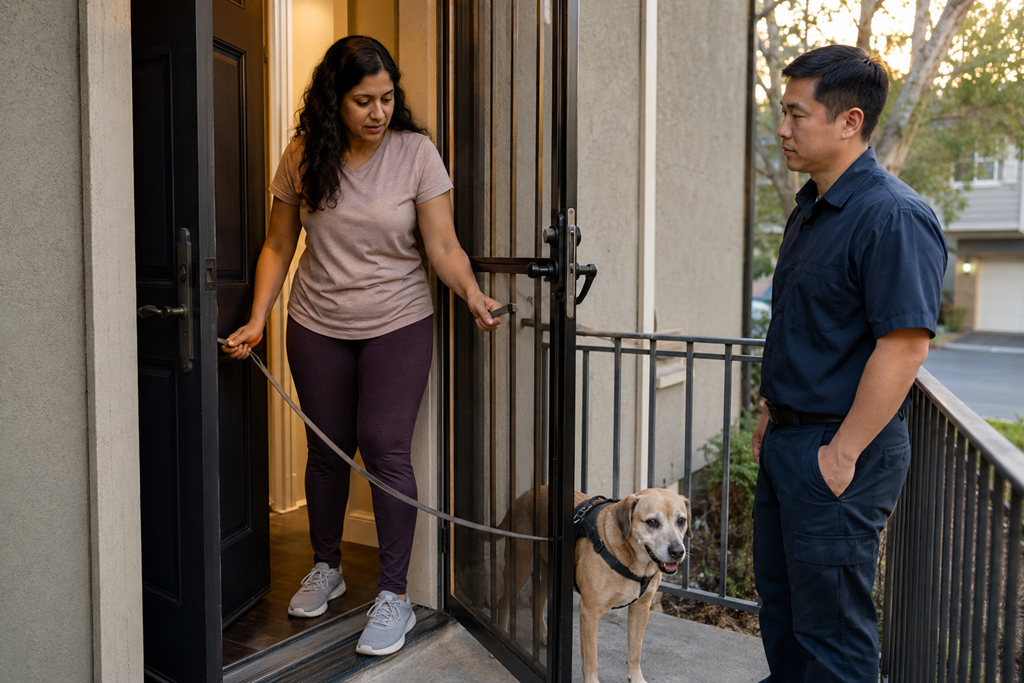
The issue often becomes noticeable only after someone imagines an ordinary day rather than a security-focused demonstration. A door may look sturdy when closed, yet feel awkward when a person is carrying packages, helping a child through the entrance, walking a dog, or trying to operate two doors with one free hand.
That does not necessarily mean the door itself is unsuitable. It may mean the design, swing direction, hardware position, or surrounding entry layout needs more careful consideration.
A Difficult Door Can Create Everyday Compromises
Protection depends partly on consistent use. When a security door is inconvenient to operate, household members may begin working around it.
They might leave it open while bringing items inside, avoid latching it during frequent trips, use another entrance, or prop it out of the way when expecting deliveries. These behaviors are not always caused by carelessness. They can be signs that the installation does not fit the household’s normal routines.
A useful security door should make its intended use feel natural. Opening it, passing through it, and securing it again should not require an unnecessarily complicated sequence.
This is an important distinction: daily usability is not merely a comfort feature. It helps support the protective purpose of the door.
The Entire Entryway Has to Work Together
A security door does not function by itself. It becomes part of an entry system that may include the primary door, porch or landing, steps, railings, columns, planters, lighting fixtures, doorbells, handles, thresholds, and nearby walkways.
A door that fits within the frame can still create problems if its open position blocks the path to the steps or leaves too little room between the door edge and a porch feature. The handle may also be difficult to reach if it conflicts with the primary door or forces the user into an awkward position.
The available space matters both when the security door is closed and when it is fully open. A Sacramento-area homeowner with a shallow porch may face a different usability question than someone with a wide landing and an unobstructed approach.
The installation discussion should therefore include more than the dimensions of the doorway. It should also consider how people approach, enter, exit, and move around the door.
Everyday Routines Reveal What a Showroom Cannot
Security doors are often compared by appearance, construction, finish, screen or mesh design, and locking features. Those details may be relevant, but they do not show how the door will function during a normal week.
A homeowner may need to consider whether the entry can comfortably accommodate:
- A person carrying grocery bags or a laundry basket
- A stroller, rolling cart, walker, or mobility aid
- Children or pets moving through the doorway
- Furniture, appliances, and larger deliveries
- Several household members entering at the same time
- Frequent trips between the house, driveway, garage, or yard
These situations can reveal conflicts that are easy to miss when the entryway is empty.
For example, an outward-opening security door may leave enough room for one person but create a bottleneck when someone is pulling a cart or managing a pet. A raised transition may appear minor until wheels need to cross it. A handle that feels simple during an estimate may be inconvenient when the user has only one free hand.
Thinking through these ordinary moments can produce a more realistic picture of whether the proposed door supports the household.
Protection and Convenience Are Not Opposing Goals
Homeowners sometimes assume that choosing stronger protection requires accepting inconvenience. In practice, a well-planned installation should account for both.
A door does not become less protective simply because its swing path, handle placement, and passage space were carefully considered. Those details can make it easier for the household to close and secure the door consistently.
Likewise, the door that looks heaviest or most imposing is not automatically the best match for every entrance. A substantial door that repeatedly strikes a railing, blocks a walkway, or creates an uncomfortable threshold may not serve the home as effectively as a properly fitted option that works with the available space.
The better question is not simply, “How strong is this door?”
It is, “Will this door provide the desired protection while remaining practical to use every day?”
What to Observe During an Estimate
A useful estimate should help the homeowner understand how the proposed door will interact with the actual entryway.
Instead of evaluating only a sample or catalog image, ask the installer to explain the planned swing path and the amount of usable passage that will remain. It may also be helpful to stand where the open door would be positioned and imagine approaching the entrance with occupied hands.
The relationship between the security door and the primary door deserves attention as well. Consider whether both handles can be operated comfortably, whether one door interferes with the other, and whether a person has enough room to step aside while opening or closing them.
The threshold and surrounding landing should also be part of the conversation. Homeowners do not need to perform their own technical assessment, but they can describe the household’s routines and ask the professional to explain how the installation will accommodate them.
A provider who takes daily use seriously should be able to discuss these details without dismissing them as unimportant.
Questions That Keep the Conversation Practical
Before choosing a security door or approving an installation plan, Sacramento-area homeowners may want to ask:
- How far will the security door open in this particular entryway?
- How much usable passage will remain when the door is open?
- Will the security door interfere with the primary door, railing, column, planter, or walkway?
- Can the handle and lock be operated comfortably with one hand?
- How will strollers, carts, mobility aids, pets, or larger deliveries move through the entrance?
- What alternatives are available if the preferred door creates a clearance problem?
The goal is not to design the installation yourself. It is to make sure the provider understands how the entrance is actually used and can explain the proposed solution clearly.
Small Friction Should Not Be Dismissed
Some usability concerns may initially sound minor. A homeowner may be told that the household will eventually become accustomed to an awkward handle, narrow opening, or inconvenient door sequence.
People do adapt to their homes, but repeated inconvenience can change how a feature is used. A small problem that occurs several times every day may matter more than a noticeable issue that rarely comes up.
It is also easy to underestimate an entryway problem by testing the door while standing still and empty-handed. Everyday movement is different. People may be carrying items, guiding children, holding a leash, moving quickly between spaces, or trying to keep a pet from slipping outside.
A realistic discussion should account for those conditions rather than assuming every entrance and every household operates the same way.
The Provider’s Explanation Can Be as Important as the Product
When comparing local security-door professionals, pay attention to how each provider responds to questions about daily use.
A thoughtful provider may examine the full landing, observe nearby obstacles, ask who regularly uses the entrance, and explain how the door will function when open and closed. The provider should also be willing to identify limitations rather than suggesting that every product works equally well in every doorway.
Unclear or dismissive answers may leave important questions unresolved. Before accepting an estimate, the homeowner should understand what is being installed, how it will operate, and whether any entryway adjustments are expected.
The quality of that explanation can help distinguish a carefully planned installation from a product-focused recommendation.
A Better Standard for the Final Decision
A security door should help protect the entrance without turning ordinary movement through the doorway into a repeated obstacle.
That means evaluating more than appearance or construction alone. The door should fit the opening, cooperate with the surrounding entryway, and support the routines of the people who will use it.
Before comparing quotes or committing to an installation, describe how the entrance functions on a normal day. Ask the provider to show how the proposed door will accommodate those activities and to explain any tradeoffs clearly.
The strongest choice is often the one that household members can use properly and consistently without having to work around it.