Security screens can change more than how a door or window is protected. The mesh, frame, color, placement, and size of the screened opening can also reduce perceived airflow, soften the view outdoors, change daylight, and make a room feel different during everyday use. Those changes may be minor in one location and noticeable in another, which is why comfort should be evaluated before choosing a screen.
This can be easy to overlook during an estimate. A security screen may appear to fit the opening correctly, match the home, and provide the desired level of protection. Only after spending time in the room might a homeowner notice that the breeze feels weaker, the yard looks slightly muted, or the opening feels more enclosed than expected.
That does not necessarily mean the screen is poorly designed or incorrectly installed. It means protection, ventilation, visibility, and comfort are connected parts of the same decision.
A Correctly Fitted Screen Can Still Change the Room
Any material placed across an open door or window changes what passes through that opening. Security mesh is designed to create a stronger barrier than an unobstructed opening, so some difference in air movement and visibility is normal.
The effect is not always dramatic. In some locations, a homeowner may barely notice it. In others, particularly where a single door or window provides much of a room’s ventilation or outdoor view, the change can become part of everyday life.
The frame can matter as much as the mesh. Wider perimeter sections, horizontal rails, lock areas, and reinforced corners may interrupt a sightline or reduce the usable open area. A screen that looks unobtrusive from across the room may feel different when someone sits close to it or looks through it from a particular angle.
This is why evaluating a security screen only by its measurements or appearance from the exterior may not reveal the full experience.
Airflow Depends on the Entire Opening
It is tempting to judge airflow by looking at the mesh alone. The actual result also depends on the size of the opening, the type of door or window, the direction air normally travels, and how much of the opening is occupied by the screen frame.
A large security door serving a naturally breezy entry may continue to provide noticeable ventilation. A smaller window in a room with limited cross-ventilation may show a more obvious difference.
The operating position matters as well. A window that opens only partially may already have a limited airflow path. Adding a security screen can further change how air enters or moves around the room, even when the screen itself fits properly.
On warm Sacramento days, homeowners may rely on certain openings during cooler parts of the morning or evening. If a particular door or window plays an important role in releasing heat or creating cross-ventilation, that use should be discussed before the screen style is selected.
A useful estimate should therefore consider more than whether the screen fits the opening. It should also consider how the opening currently helps ventilate the home.
Visibility Changes With Light, Distance, And Angle
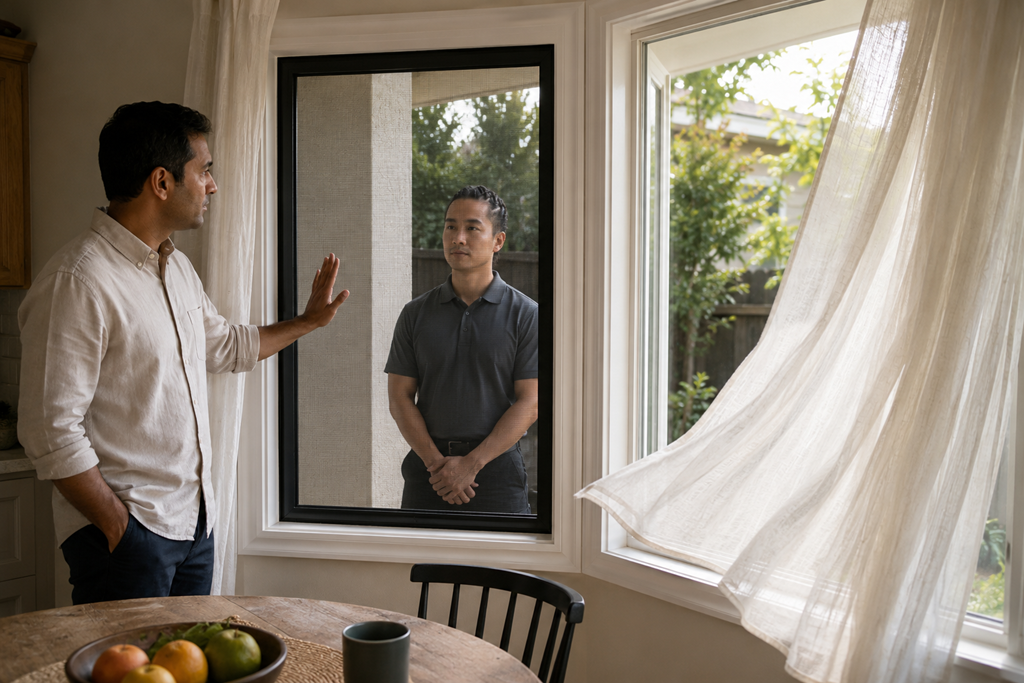
Security mesh does not look identical under every condition. Its visibility can change depending on whether the viewer is standing inside or outside, how close they are to the screen, and which side is more brightly lit.
Looking from a darker room toward a bright outdoor area may make certain dark mesh finishes seem less prominent. When the lighting reverses, such as when interior lights are on after sunset, the screen can appear more noticeable.
The view can also change with distance. Fine mesh may visually blend into the background from several feet away but become easier to see when someone stands close to the opening. Reflections, sun exposure, glare, and surrounding wall colors may influence the effect.
Frame placement is another consideration. A crossbar that appears harmless on a drawing could align with a seated person’s eye level, the center of a frequently used window, or a favorite view from the kitchen table.
These effects are not necessarily defects. They are reasons to evaluate the screen from the positions where people will actually use the room.
Comfort Is Personal And Location-Specific
Two homeowners can look at the same screen and respond differently. One may value the more enclosed feeling, while another may be sensitive to reduced light or a softened outdoor view.
The room’s purpose often shapes that reaction.
A security screen at a front entry may provide ventilation while allowing the primary door to remain open. In that location, a slight visual change may feel like a reasonable tradeoff. At a bedroom window, home office, or dining area with a valued view, the same mesh and frame combination may receive more scrutiny.
Daily routines matter too. A homeowner who frequently watches children or pets in the yard may prioritize clear sightlines. Someone who uses an opening mainly for evening ventilation may care more about airflow and the way the screen looks under indoor lighting.
The goal is not to find a screen that creates no change at all. It is to understand the likely changes and decide whether they fit the way the opening is used.
Small Samples Can Hide Full-Size Effects
A mesh sample can help show color, texture, and construction, but it cannot fully demonstrate how an installed screen will affect an entire opening.
A small piece viewed under showroom lighting may look different when stretched across a full-size door or window. It also does not show how the surrounding frame, lock hardware, rails, and mounting position will influence the view.
Another common misunderstanding is assuming that stronger-looking mesh automatically creates the same airflow or visibility in every product. Different mesh patterns, wire dimensions, finishes, and frame designs can create different experiences even when the products serve a similar security purpose.
Homeowners can also become focused on exterior appearance while forgetting to inspect the opening from inside the home. Since most daily interaction occurs from the interior, that perspective deserves equal attention.
Whenever possible, examine a full-size example, an installed screen, or a temporary panel from several realistic viewing positions. This can reveal more than studying a small sample at arm’s length.
Questions That Make The Estimate More Useful
A few specific questions can help a Sacramento-area homeowner understand what to expect before approving a security screen installation:
- How might this mesh and frame design change airflow through this particular opening?
- Can I view a full-size example from both sides rather than relying only on a small sample?
- Where will the frame rails, lock area, and other reinforced sections fall within my normal sightline?
- How does the mesh tend to look in bright daylight and when the interior is more brightly lit?
- Are there other screen configurations that balance protection, visibility, and ventilation differently?
The answers should be connected to the actual door, window, room, and household routine. Broad statements such as “you will not notice it” or “airflow will be the same” may not account for the specific opening.
A helpful professional should be willing to discuss reasonable tradeoffs without presenting one feature as though it is the only consideration.
Choose For The Way The Opening Is Actually Used
A security screen can be well made, correctly measured, and professionally installed while still changing how an opening feels. The important question is whether those changes are acceptable for the room and the people who use it.
Before comparing estimates, think about what the opening contributes now. Notice where people sit or stand, how much ventilation comes through it, what they regularly look toward, and how the light changes during the day.
That information gives a security screen professional a better basis for recommending an appropriate mesh, frame, and configuration. It also helps the homeowner compare options according to everyday comfort rather than protection or appearance alone.
The best-informed choice is not necessarily the screen with the least visible mesh or the strongest-looking frame. It is the option whose security, airflow, visibility, and daily-use tradeoffs have been clearly explained before installation begins.