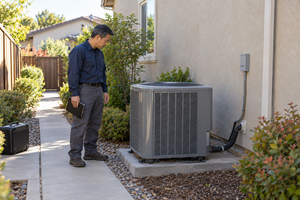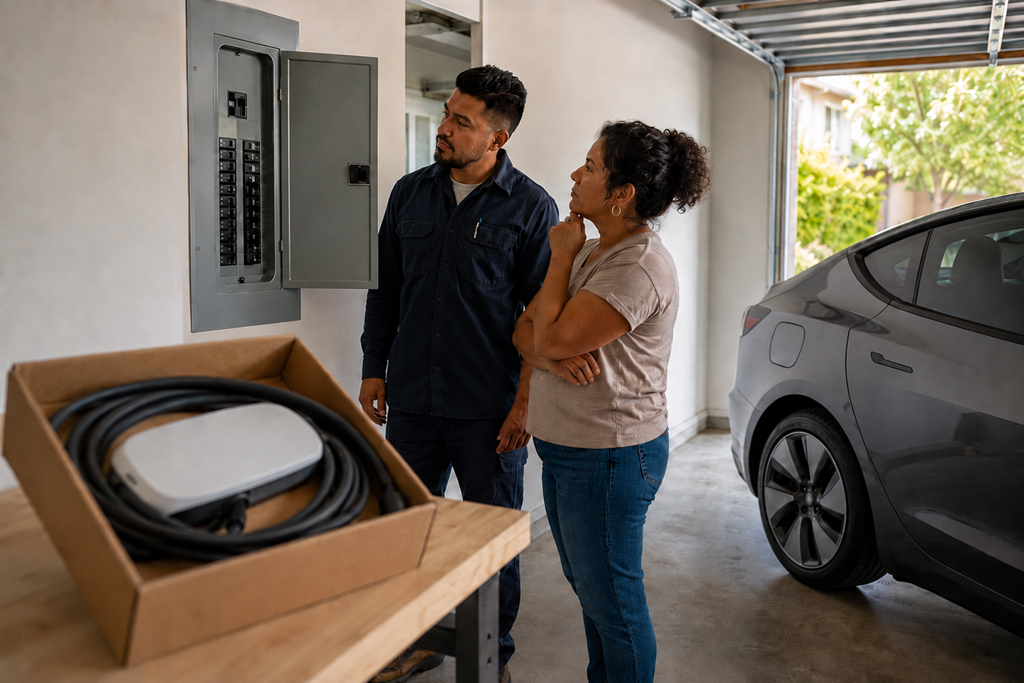
Your electrical panel matters because an EV charger adds a significant, sustained demand to the same electrical system that already powers your air conditioner, kitchen, laundry equipment, lighting, and other household circuits. Before installation, a qualified electrician should evaluate whether the panel has enough usable capacity, appropriate space, and a suitable path to support the charging setup being considered.
This issue often catches homeowners off guard. The charger may already be selected, the parking location may seem obvious, and the installation may appear to involve little more than mounting equipment on a garage wall. Then a provider looks at the electrical panel and explains that the rest of the home must be considered before the charger can be connected.
That does not automatically mean the home needs a major electrical upgrade. It means the charger cannot be evaluated separately from the system that will supply it.
The Charger Is Only the Visible Part of the Project
The charging unit is the part homeowners see and use, but the electrical panel determines how power is distributed throughout the property.
A home’s electrical system is already serving many different needs. Depending on the property, those may include air conditioning, cooking equipment, laundry appliances, water heating, lighting, workshop tools, a spa, or other major electrical loads.
Adding an EV charger introduces another demand that may continue for several hours at a time. A qualified electrician therefore needs to consider how the proposed charger fits with the home’s existing electrical use.
The evaluation may include:
- The panel’s available electrical capacity
- The condition and configuration of the panel
- Available space for the required electrical components
- The charging power being requested
- The home’s existing major electrical loads
- The distance between the panel and the parking location
- Any future electrical upgrades the homeowner is already considering
Two Sacramento-area homeowners can purchase the same charging equipment and receive very different installation recommendations because the homes behind those chargers are different.
An Empty Breaker Position Does Not Tell the Whole Story
One of the most common misunderstandings is that an unused space inside the electrical panel automatically means there is room for an EV charger.
Physical space and electrical capacity are separate issues.
A panel may have an open position for another breaker but still require further evaluation before an additional load is added. Another panel may look full even though a qualified electrician can identify an appropriate professional solution.
This is also why adding together the numbers printed on existing breakers does not give a homeowner a reliable answer about remaining capacity. Electrical demand is evaluated according to the home’s equipment and expected use, not simply by totaling visible breaker ratings.
The useful question is not merely:
“Is there an empty slot?”
It is:
“Can this electrical system appropriately support the charging setup I am considering?”
A provider should be able to explain that distinction in plain language without expecting the homeowner to interpret the panel independently.
Your Household’s Existing Electrical Use Matters
The amount of electrical demand already placed on the home can influence which charging options are practical.
For example, a home that relies on several large electric appliances may need to be evaluated differently from one with fewer major electrical loads. Air-conditioning equipment can also be relevant for Sacramento-area properties because it may operate for extended periods during hot conditions.
This does not mean homeowners need to stop using other equipment while charging their vehicles. It means the installer should understand the home’s overall electrical demands before recommending a charger setting or installation design.
A useful evaluation looks beyond the charger box and considers the system as a whole.
It can also help to mention future plans. A homeowner who expects to add a second electric vehicle, replace a gas appliance with an electric model, install a heat pump, or complete a home addition may want the provider to consider those possibilities.
The immediate project does not need to solve every future need. However, sharing those plans may help the homeowner understand whether the proposed installation preserves useful flexibility or is intended only for the current situation.
Faster Charging Is Not Automatically the Best Fit
It is easy to assume that the most powerful home charger is always the best choice. In practice, the most appropriate charging level depends on both the home and the driver.
A person who parks overnight and drives a moderate distance each day may not need the same charging power as someone with a lengthy commute, irregular work hours, or multiple electric vehicles.
Choosing a charger without first discussing actual driving habits can lead to paying for power that is not necessary or requesting an installation that is more involved than the household needs.
A qualified provider may discuss whether a lower charging rate could still replenish the vehicle comfortably during the time it is normally parked. The provider may also explain whether the charger can be configured for a level that fits the available electrical system.
That conversation should not feel like settling for an inferior result. It should help match the equipment to the way the vehicle will actually be used.
The goal is not necessarily to install the largest charger the home can possibly accommodate. The goal is to create a charging setup that is appropriate for the property and dependable for the driver’s routine.
A Panel Upgrade Should Be Explained, Not Assumed
Some EV charger projects do involve panel or electrical-service upgrades. Others do not.
A homeowner should not assume that an upgrade will be required before the property has been evaluated. At the same time, a provider should not promise that the existing panel is sufficient without reviewing the relevant details.
When an upgrade is recommended, the explanation should be specific.
The provider should be able to clarify:
- What limitation was identified
- Whether the issue involves capacity, condition, configuration, or another factor
- Why the proposed work addresses that limitation
- Whether another charger setting or installation approach was considered
- Which parts of the recommendation are required for the current installation
- Which parts are optional preparations for future electrical needs
A recommendation can be expensive and still be appropriate. What matters is whether the homeowner understands why the work is being proposed and how it connects to the charger installation.
Vague statements such as “your panel is too old” or “every EV charger needs an upgrade” deserve further explanation. The age of equipment may be relevant, but the provider should identify the actual condition or limitation rather than relying on a broad claim.
The Panel’s Location Can Change the Estimate
Electrical capacity is only one part of the project. The physical relationship between the panel and the parking space can also affect the installation.
A charger mounted close to the panel may allow for a relatively direct electrical route. A charger on the opposite side of a finished garage, beside an outdoor driveway, or inside a detached structure may involve additional materials and labor.
Depending on the property, the route could affect:
- Wiring distance
- Conduit placement
- Wall or ceiling access
- Exterior weather protection
- Trenching through a yard or paved area
- Restoration of finished surfaces
- The final charger location
This is why a charger’s retail price does not reveal the full project cost.
A useful installation estimate should be based on the actual property, not only the charger model. Photos can help a provider begin the conversation, but they may not reveal the complete electrical route, panel condition, or obstacles between the panel and the vehicle.
What to Ask Before Accepting an Installation Estimate
Homeowners do not need to become electrical experts before comparing local providers. They do need enough information to understand what each estimate assumes.
Helpful questions include:
- Did you evaluate the panel’s available capacity, not just its open spaces?
- What charging power are you recommending?
- Why does that charging level fit my driving routine and vehicle?
- Can the existing panel support the proposed setup?
- Is additional panel or service work being recommended?
- What specific condition or limitation makes that work necessary?
- Does the estimate include the complete route to the charging location?
- Are wall repairs, trenching, exterior materials, or restoration included?
- Are permit and inspection responsibilities clearly identified?
- Could another charger setting change the installation scope?
- How would a future second EV or planned electrical upgrade affect this recommendation?
The strongest answers will usually connect the recommendation to the home, the charger, and the driver’s needs rather than relying on a one-size-fits-all statement.
Be Cautious With Quotes Based on Too Little Information
An unusually simple quote may be appealing, but homeowners should understand what the provider reviewed before relying on it.
A quote may need clarification when the provider:
- Has not asked about the charger model or charging power
- Has not seen the electrical panel
- Has not discussed the home’s major electrical equipment
- Has not evaluated the route to the parking location
- Gives a firm price without identifying what is included
- Assumes an upgrade is required without explaining why
- Dismisses panel capacity because an empty breaker position is visible
- Pressures the homeowner to purchase equipment before compatibility is discussed
An initial estimate based on photographs is not automatically unreliable. It may simply need to be treated as preliminary until the property details are confirmed.
The important distinction is whether the provider clearly states what is known, what still needs to be evaluated, and what could change the final scope.
The Panel Evaluation Makes the Rest of the Decision Easier
The electrical panel should not be viewed only as a possible obstacle. It is the starting point for understanding which home-charging options make sense.
A proper evaluation can help clarify:
- How much charging power the home can support
- Whether the desired charger is an appropriate match
- Whether additional electrical work should be discussed
- Where the charger can reasonably be placed
- What should appear in the installation estimate
- Which questions should be resolved before committing
For Sacramento-area homeowners, reviewing the panel early can prevent the project from being planned around assumptions that do not fit the property.
The most useful estimate is not necessarily the fastest or least expensive one. It is the estimate that clearly connects the proposed charger to the home’s electrical system, the installation route, and the driver’s actual charging needs.
Once those details are understood, comparing local EV charging providers becomes a much more informed decision.