Security screens work best when Sacramento homeowners plan privacy and airflow as two separate needs instead of assuming one screen will solve both in the same way. A screen may let useful air move through a door or window while still leaving certain rooms visible from a walkway, neighboring property, or raised viewing angle. The right plan starts with where air is needed, where sightlines matter, and how the opening is actually used during the day.
This decision can initially seem simple: choose a screen, install it, and enjoy ventilation with more separation from the outside. In everyday use, however, homeowners may discover that an opening feels private from one direction but exposed from another, or that a screen allows air through without creating the noticeable breeze they expected.
Planning around those realities before installation can help prevent disappointment.
Privacy And Airflow Are Two Different Questions
A security screen can provide a physical barrier while allowing more ventilation than a closed primary door or window. That does not automatically make the opening visually private.
Visibility through a screen can change based on:
- The brightness inside and outside the home
- The viewing angle and distance
- The density and color of the mesh
- The location of lamps and overhead lighting
- How close furniture and occupants are to the opening
A darker screen may make an interior less noticeable under some conditions, but it should not be treated as one-way privacy material. Someone standing directly outside may see something different from a person passing at an angle or looking down from an elevated position.
Airflow has its own variables. Even when a screen allows air to pass, the amount of useful ventilation can depend on the size of the opening, the mesh, the surrounding walls, the direction of the breeze, and whether air has another path through the home.
The practical goal is not to find a screen that promises maximum privacy and maximum airflow everywhere. It is to decide what each opening needs to accomplish.
The Room Determines What Privacy Really Means
Privacy needs are not the same throughout a house.
A screened front entry may need to admit fresh air without giving people approaching the porch a direct view through the main living area. A bedroom window may need protection from a neighboring second-story view. A kitchen window may need ventilation while still allowing the homeowner to see outside.
The same product can feel appropriate in one location and uncomfortable in another.
Before comparing screen options, consider what normally happens near each opening. A room may feel private when empty but exposed when someone is seated at a desk, preparing food, watching television, or walking through a hallway.
This is why product descriptions alone rarely settle the decision. The important question is not simply whether the mesh limits visibility. It is whether the completed installation will provide enough privacy for the way that specific room is used.
Sightlines Can Change By Angle And Time Of Day
A security screen may appear relatively private when viewed from straight ahead but reveal more of the room from a side angle. Elevated walkways, porch steps, neighboring windows, shared driveways, and sloped properties can also create sightlines that are easy to miss during a quick estimate.
Lighting can change the experience further.
During the day, outdoor light may make it harder to see into a dimmer room. In the evening, illuminated interiors can become more noticeable against darker outdoor surroundings. A screen that feels private during an afternoon consultation may not feel the same after lamps are turned on.
Homeowners do not need to predict every possible view. They can focus on the approaches that matter most:
- The path visitors use to reach the door
- Nearby sidewalks or shared access areas
- Neighboring windows and balconies
- Exterior stairs or raised landings
- Places where household members regularly sit or pass
A useful privacy discussion should consider those real viewing positions rather than relying only on how the screen looks from directly in front of it.
Useful Airflow Is More Than An Open Screen
Homeowners sometimes expect a security screen to create a strong breeze simply because the primary door or window can remain open. In reality, a screened opening allows an opportunity for airflow, but it does not create air movement on its own.
The result can be affected by:
- The direction of the outdoor air
- Whether another door or window creates a cross-breeze
- The amount of mesh and framing across the opening
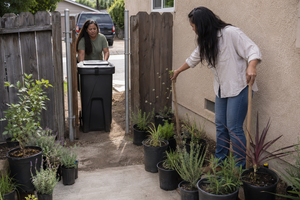
- Nearby walls, fences, landscaping, and covered patios
- Interior curtains, furniture, and partially closed doors
A front security door may provide noticeable evening ventilation when another opening is available at the back of the house. The same door may produce much less movement when the interior air has nowhere to travel.
This distinction matters when comparing products. A discussion about airflow should address the complete room or ventilation path, not only the percentage of the opening covered by mesh.
Privacy May Work Better As A Separate Layer
A common planning mistake is expecting the security screen to provide security, airflow, insect control, shade, and complete visual privacy by itself.
A more realistic approach is to let the screen serve its primary role while using a separate feature to manage sensitive sightlines. Depending on the room, that could involve an adjustable window covering, a lightweight curtain, thoughtful furniture placement, or an exterior privacy feature positioned away from the opening.
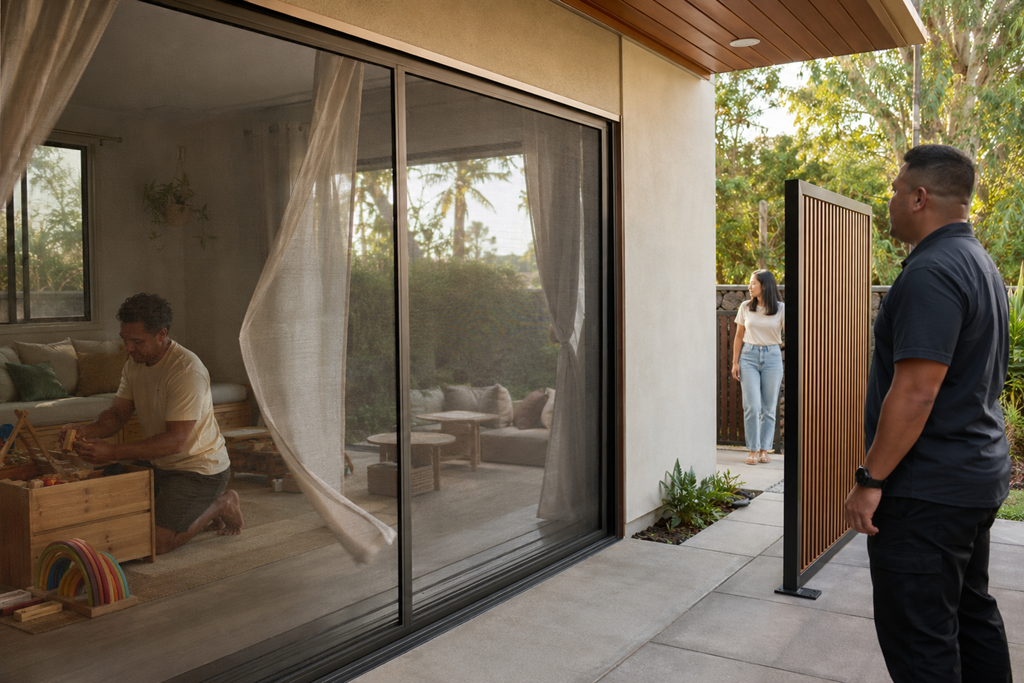
For example, a lower window covering may block views toward a seated workspace while leaving the upper portion open for ventilation. A folding interior screen may interrupt a direct view through an entry without preventing air from moving through the surrounding space.
Any added feature should preserve safe operation, walking clearance, emergency access, and the ability to open or close the security screen properly. Physical changes near the installation should be discussed with a qualified professional when their effect is uncertain.
Separating the two goals often creates more flexibility than choosing an overly restrictive screen in an attempt to solve every concern at once.
A Useful Consultation Should Reflect Daily Life
A security-screen estimate can easily become focused on measurements, frame colors, locks, and mesh selections. Those details matter, but they do not explain how the opening will feel once the household begins using it.
A more informative consultation considers real situations.
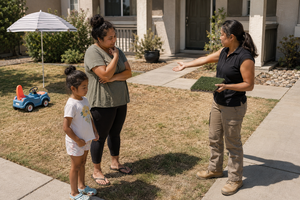
For an entry door, that may mean discussing where someone stands while opening the primary door, what can be seen from the porch, and whether the screen can remain open without exposing the full hallway.
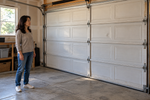
For a window, it may mean reviewing the viewing angle from outside, the location of beds or desks, the movement of curtains, and whether the selected screen changes the expected ventilation.
When possible, a temporary panel, sample section, or comparable installed product can help demonstrate how mesh appears under realistic lighting. It will not reproduce every condition, but it may reveal issues that are difficult to understand from a small sample held indoors.
The installer should be willing to discuss limitations as well as benefits. Statements such as “this provides privacy” or “this allows excellent airflow” are less useful unless the provider explains what those claims mean for the specific opening.
Questions That Help Define The Right Plan
A few focused questions can make a security-screen consultation more useful:
- From which outdoor angles is this room likely to remain visible?
- How might visibility change when interior lights are on at night?
- How does this mesh option affect ventilation compared with other available options?
- Can the opening be tested with a full-size panel or similar installation?
- Will curtains, shades, handles, furniture, or the primary door interfere with normal operation?
- Could a separate privacy layer be used without restricting airflow or access?
Clear answers should connect product features to the homeowner’s actual rooms and routines.
Assumptions That Can Lead To Disappointment
One common assumption is that darker mesh automatically provides complete privacy. Darker material may affect visibility, but lighting and viewing position can still reveal the interior.
Another assumption is that the screen option with the most visual coverage will always feel more comfortable. A denser appearance may reduce light or airflow more than expected without eliminating every sightline.
Homeowners may also evaluate privacy only from inside the house. Looking outward through a screen does not reveal exactly what someone outside can see looking in.
Finally, ventilation may be judged from product specifications rather than room conditions. A mesh designed for airflow cannot overcome a blocked exterior area, a closed interior path, or the absence of moving air.
These misunderstandings are easy to make because privacy and airflow are often discussed as general screen features. In practice, they are experiences shaped by the entire opening and its surroundings.
Plan Each Opening Around What It Must Do
The most useful security-screen plan may not use the same privacy strategy for every door and window.
One opening may prioritize strong ventilation and an unobstructed outdoor view. Another may require a separate shade or interior barrier because it faces a shared walkway. A third may need only occasional airflow and can remain covered most of the time.
Sacramento-area homeowners can make a more informed decision by identifying the rooms where ventilation matters, locating the sightlines that create discomfort, and asking prospective installers to explain how each proposed screen will perform under those real conditions.
A well-planned installation does not depend on a vague promise that the screen will provide both privacy and airflow. It matches each opening with a practical combination of ventilation, visibility control, security, and everyday usability.