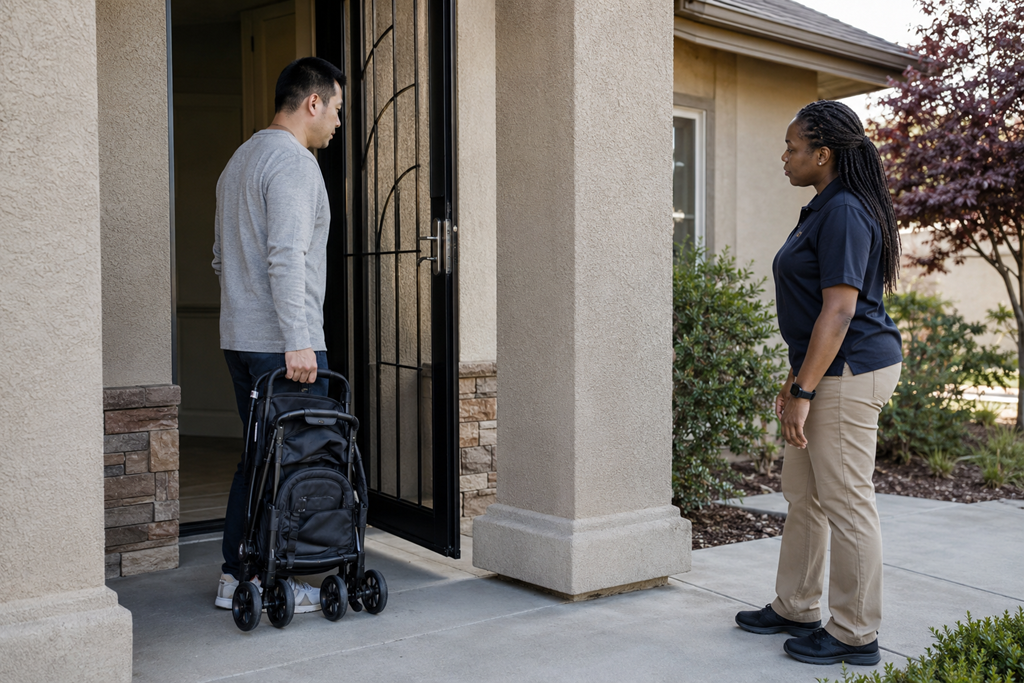
A security door fits your entryway when it can open, close, latch, and be used comfortably without crowding the porch, blocking a walkway, striking nearby railings or planters, or interfering with the main door. The right decision depends on the entire entry layout—not only the width of the opening or the strength and appearance of the door.
This distinction is easy to miss. A homeowner may find a security door that appears to match the opening and complements the house, only to discover that the open door takes up most of the landing, blocks a porch light, or makes it awkward to carry groceries through the entrance.
Before choosing a door, consider how the entrance functions during ordinary use. The best fit is not simply a door that can be installed. It is one that works naturally with the space around it.
The Door Opening Is Only Part of the Fit
The dimensions of the doorway matter, but they do not tell the whole story.
A security door becomes a moving part of the entryway. When it opens, its full width travels across the porch or landing. The hinges, handle, closer, frame, threshold, and relationship with the main door all affect how the entrance feels.
Nearby features may also influence the decision, including:
- Porch railings or columns
- Steps and changes in elevation
- Large planters or decorative objects
- Wall-mounted lights and doorbells
- Benches, package areas, or shoe storage
- Gates or walkways approaching the entrance
- Trim, siding, stucco, and uneven framing
A door can technically fit within the opening while creating an inconvenient or cramped path once it begins moving.
That is why a useful entryway assessment should look beyond measurements and examine the entire area through which the door will travel.
Follow the Door Through an Ordinary Day
A practical way to think about fit is to picture how people actually use the entrance.
Imagine arriving with grocery bags, guiding a child through the doorway, carrying a large package, bringing in a bicycle, or opening the door for a visitor. Consider where you stand while unlocking the door and whether there is enough room to step aside as it swings.
The entrance may feel spacious when the existing door is closed. Once a second door is added, the usable standing and walking area can change noticeably.
For Sacramento-area homeowners, the question is not merely whether the security door looks appropriate from the street. It is whether the entrance continues to work during the routines that happen there every day.
A good fit should allow people to approach, unlock, open, pass through, and close the door without repeatedly repositioning themselves or nearby objects.
The Swing Path Can Change How the Porch Works
Door swing is one of the most important parts of evaluating the entryway.
A partially or fully opened security door may extend toward a railing, wall, planter, step, gate, or narrow walkway. Even when it does not strike anything, it can reduce the space available for standing or passing.
This may be especially noticeable on a shallow porch or small landing. Someone opening the door may need to step backward toward the stairs or squeeze between the door and another feature.
The swing can also affect how visitors approach the entrance. A door that opens across the natural walking path may require people to move around it before entering.
These issues do not automatically mean a security door is unsuitable. They mean that the swing direction, hinge position, dimensions, and surrounding layout should be evaluated together before a product is selected.
The Main Door and Security Door Must Work Together
The security door is only one half of a two-door arrangement.
The main entry door must still open and close comfortably. Handles should not create an awkward conflict, and there should be enough room to operate both doors without uncomfortable reaching or twisting.
Consider what happens when both doors are partly open. This is often when spacing concerns become more apparent.
A homeowner may also plan to leave the main door open at times for airflow while keeping the security door closed. In that situation, the relationship between the doors affects not only movement but also how useful the entrance feels.
The goal is for the two doors to function as a coordinated entry system rather than as separate products competing for the same space.
Small Entryway Details Can Become Daily Annoyances
Features that seem minor during a brief product discussion can become noticeable after installation.
A wall light may be partially blocked by an open door. A door closer may sit close to trim or decoration. A handle may be uncomfortable to reach from the usual standing position. A planter may need to be moved every time the door opens fully.
The threshold also matters. Changes in height or surface material can affect how naturally people cross the entrance. Uneven trim or an opening that is not perfectly square may influence how the finished installation looks and operates.
These details may not prevent installation, but they can affect the overall experience. It is better to recognize them during an assessment than after the door has been ordered.
A Door Can Fit on Paper and Still Feel Wrong
Product dimensions can confirm whether a door is generally compatible with an opening. They cannot fully show how the entrance will feel in use.
This is where homeowners sometimes become frustrated. The measurements appear correct, but the installed door makes the entry feel crowded or changes the route people naturally take.
A full-size temporary frame, careful swing evaluation, or other visual demonstration can make the decision easier to understand. Seeing how much porch space the door occupies may reveal issues that are difficult to picture from a catalog image or small sample.
This does not mean that every entrance requires a custom solution. It means that product selection should follow an evaluation of the space rather than relying on appearance alone.
Appearance Still Matters, but It Should Come Later
Color, pattern, finish, and decorative style are reasonable considerations. A security door becomes a visible part of the home’s exterior, so homeowners naturally want it to look appropriate.
However, appearance should not distract from basic usability.
A design that looks ideal in a showroom image may not be the right choice if its proportions, handle placement, or swing create problems at the actual entrance. Similarly, the strongest-looking option is not automatically the most practical option for every home.
The entryway should first support comfortable movement and reliable operation. Once those needs are understood, appearance can help distinguish between suitable choices.
Questions to Ask During an Entryway Assessment
A few focused questions can help keep the conversation centered on fit:
- How far will the door extend across the porch when fully opened?
- Will it interfere with the railing, steps, lighting, planters, or walkway?
- How will the security door and main door handles align?
- Where will someone stand while unlocking and opening the door?
- Will the normal route into the home need to change?
- Are there uneven surfaces, trim conditions, or threshold details that may affect installation?
- Can the proposed door position be demonstrated before the final selection?
Clear answers should connect the product to the actual entryway rather than discussing the door only in general terms.
Be cautious when measurements are taken quickly without considering the porch, landing, walking path, or main door. A useful evaluation should account for how the entrance will operate after the security door is added.
The Right Fit Should Feel Uneventful
A well-fitted security door should not require the household to think about it every time someone enters or leaves.
It should open without colliding with nearby features, allow enough room to move, work comfortably with the main door, and preserve the natural approach to the home. Its appearance and security features remain important, but they should be supported by a layout that functions well.
Before comparing products or committing to an installation, look at the entryway as an active space rather than an empty opening. That perspective can help Sacramento homeowners choose a security door that belongs at the entrance instead of one that merely fits within its measurements.