A fence usually needs repair when the damage is limited to a small area and the surrounding posts, rails, panels, and materials are still stable. Replacement becomes more reasonable when problems are widespread, the fence has lost structural support, or repeated repairs are no longer restoring dependable privacy, security, or appearance. The decision is less about how old the fence looks and more about how much of it is still sound.
For many Sacramento-area homeowners, the answer is not immediately obvious. A fence may have several worn boards but remain structurally dependable. Another fence may look acceptable from a distance while weakened posts allow an entire section to move. Understanding the difference can help you discuss the right scope of work before comparing estimates.
Start With the Extent of the Damage
The clearest distinction is whether the problem is isolated or spread across the fence.
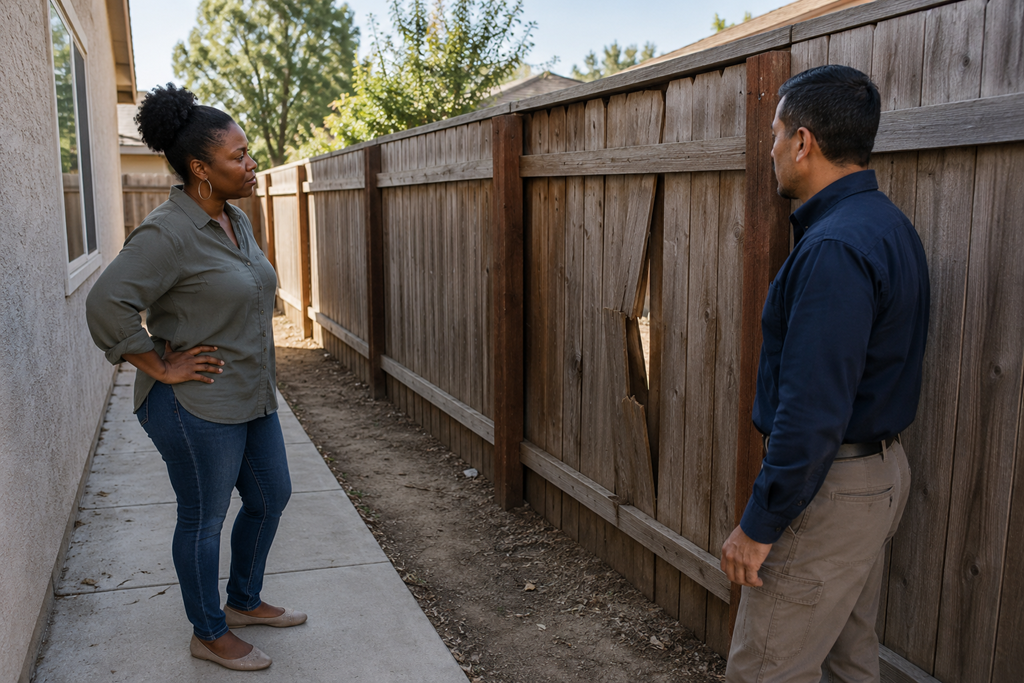
One broken board, a damaged gate component, or a single loose panel may point toward repair. These problems can often be addressed without disturbing sections that are still performing well.
Replacement deserves more consideration when similar problems appear repeatedly along the fence line. Multiple leaning sections, deteriorated posts, separating rails, extensive warping, or widespread material damage may indicate that the fence is declining as a system rather than failing in one spot.
Visible damage alone does not always reveal the full condition. A qualified fence professional may need to evaluate how the posts, rails, panels, fasteners, and gate components work together before recommending a scope.
Stable Posts Often Make Repair More Practical
Posts provide the support that keeps a fence upright. When most posts remain stable and properly aligned, damaged boards, rails, panels, or gate parts may still be reasonable repair candidates.
The situation changes when several posts move, lean, crack, or show deterioration near the ground. Replacing surface materials while leaving unreliable support underneath may improve the fence’s appearance without resolving the larger problem.
This is one reason homeowners sometimes feel disappointed after a repair. The visible section was corrected, but the supporting structure was already weakening elsewhere.
A useful professional evaluation should distinguish between damage to replaceable components and deterioration affecting the fence’s main support.
Consider Whether the Fence Still Performs Its Everyday Job
A fence does not need to look perfect to remain useful. The more important question is whether it still performs the function that matters to the property.
That function may include:
- Providing privacy between neighboring properties
- Keeping a gate secure and usable
- Creating a dependable boundary for children or pets
- Supporting the appearance of an outdoor area
- Separating a yard from a driveway, alley, pool area, or utility space
A small cosmetic flaw may not justify replacement when the fence remains stable and functional. By contrast, recurring gaps, a gate that will not remain aligned, or sections that move under ordinary pressure may affect how reliably the fence serves its purpose.
The repair-or-replacement decision should account for function, not appearance alone.
Repeated Repairs Can Change the Value of Another Repair
Past repair history matters.
A fence that needs its first limited repair is different from one that has already received several patches in nearby sections. Repeated work may indicate that deterioration is moving through materials installed at roughly the same time or exposed to similar conditions.
That does not automatically mean the entire fence should be replaced. It does mean the next repair should be considered in context.
Ask whether the proposed work is expected to correct an isolated problem or simply postpone attention to neighboring sections that are showing the same pattern. A less expensive repair may still be worthwhile, but it should be chosen with realistic expectations.
Material Condition Matters More Than a Single Flaw
Different fence materials show decline in different ways.
Wood may develop splitting, warping, decay, loose boards, or deteriorated post bases. Metal fencing may show corrosion, bent sections, failed connections, or alignment problems. Vinyl and composite components may crack, separate, fade, or become distorted.
Sacramento heat, sun exposure, dry conditions, irrigation, and seasonal rain can affect different sections unevenly. One side of a fence may receive more moisture, shade, or direct sun than another.
Because conditions vary along the property, one damaged area does not necessarily represent the entire fence. A useful estimate should identify which materials remain serviceable and which components are contributing to the problem.
Matching an Older Fence Can Affect the Decision
Repair may be structurally practical but visually imperfect.
Replacement boards or panels may not precisely match older materials because of fading, weathering, discontinued styles, or differences in material availability. This does not necessarily make repair a poor choice, especially when the primary goal is restoring function.
However, appearance may carry more weight when the damaged section is highly visible, connected to an outdoor living area, or part of a fence with extensive mismatched repairs.
Before approving the work, ask how closely the repaired area is expected to match the existing fence. This helps prevent a technically successful repair from producing an unexpected visual result.
Repair and Replacement Do Not Have to Be All-or-Nothing
Some fence projects fall between a minor repair and complete replacement.
A contractor may recommend replacing one full run, rebuilding a gate section, or addressing several connected panels while leaving the rest of the fence in place. This can make sense when deterioration is concentrated along one side of the property.
Partial replacement can also create questions about transitions, material matching, post placement, and how new sections will connect to older ones. Those details should be included in the estimate rather than decided after work begins.
The goal is to define a scope that addresses the actual pattern of damage without automatically preserving every old component or replacing every usable one.
Questions That Can Make an Estimate More Useful
When meeting with a local fence professional, a few focused questions can help you understand the recommendation:
- Is the damage limited to the visible section, or are nearby components weakening too?
- Which posts and structural components can remain?
- What is likely to happen if only the damaged area is repaired?
- Would the new materials visibly differ from the existing fence?
- Is partial replacement a practical option?
- What work is included around gates, transitions, cleanup, and material removal?
A clear estimate should identify the section being repaired or replaced, the materials involved, and any existing components that will remain. Be cautious when the proposed scope is vague or when repair is dismissed without an explanation of what has failed.
Choose the Scope Based on the Fence’s Overall Condition
Repair is usually the stronger option when damage is contained, support remains dependable, and the work can restore the fence’s function without creating another predictable problem nearby.
Replacement becomes easier to justify when deterioration is widespread, several supporting components are failing, the fence no longer performs its purpose, or repeated repairs are consuming money without producing a dependable result.
The best decision is not automatically the least expensive project or the most extensive one. It is the scope that matches the condition of the fence and gives you a clear understanding of what the work is expected to accomplish.
Before hiring a Sacramento-area fence professional, ask for the recommendation to be explained in terms of structural support, extent of damage, expected appearance, and remaining serviceable materials. That explanation can make it much easier to compare quotes and decide whether repair, partial replacement, or full replacement fits the property.