A patio cover can make an outdoor area noticeably more comfortable by blocking direct sunlight, but shade alone does not guarantee a cool patio. The way the cover is positioned, the direction of afternoon sun, airflow beneath it, the roofing material, and heat stored in nearby concrete or walls can all affect how the space feels during the hottest part of the day.
This distinction is easy to miss when planning a patio project. A homeowner may picture a covered space as consistently cool, only to discover that low sunlight still reaches beneath the roof, warm air collects in one area, or nearby surfaces continue releasing heat after the patio becomes shaded.
Understanding how these factors work together can help Sacramento-area homeowners discuss more realistic comfort goals before comparing patio-cover designs or estimates.
Shade Reduces Direct Sun, Not the Outdoor Temperature
The main cooling benefit of a patio cover comes from preventing direct sunlight from striking people, furniture, doors, windows, and patio surfaces.
That can make a meaningful difference. A shaded chair generally feels more comfortable than the same chair sitting in full sun, even though the surrounding outdoor air is at the same temperature.
A patio cover does not function like an indoor cooling system, however. It does not remove heat from the air. On a hot day, the space beneath the cover can still feel warm, especially when the air is still or surrounding materials have absorbed heat for several hours.
This is why a useful planning conversation should go beyond whether the patio will be shaded. It should also address when the shade is needed, what parts of the patio matter most, and how air is likely to move through the covered area.
The Hottest Part of the Patio Can Shift During the Day
Morning and afternoon conditions can be very different.
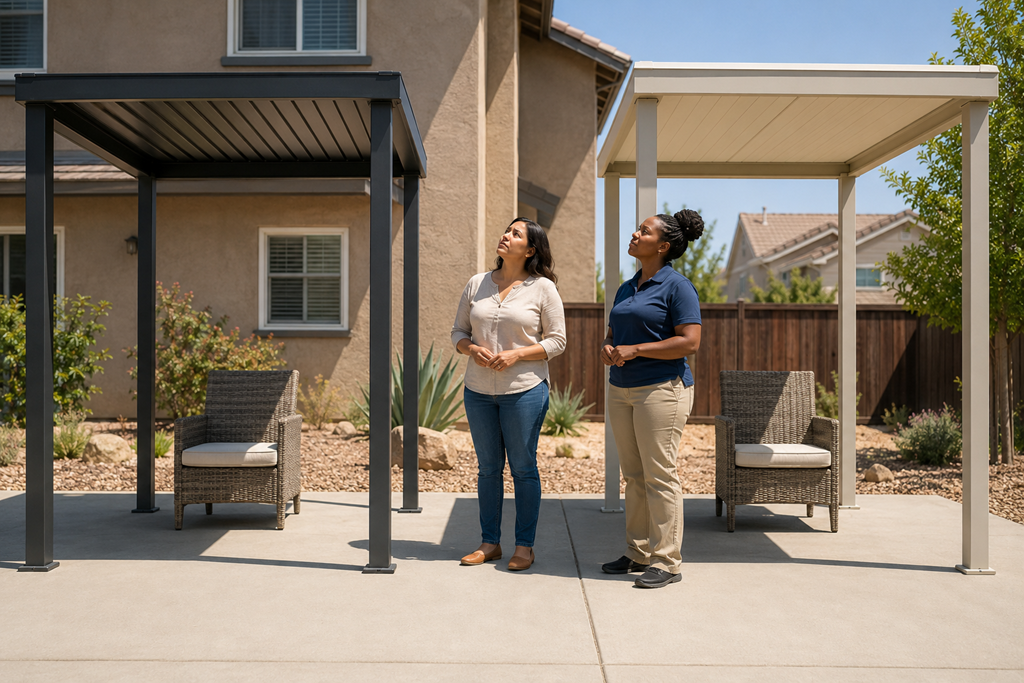
A patio that is comfortably shaded by the house early in the day may receive direct sunlight later as the sun moves lower in the sky. That lower sunlight can reach beneath the outside edge of a patio cover and strike seating, dining areas, or a sliding glass door.
The opposite can also happen. A cover designed around intense afternoon exposure may cast more shade than expected across the house or patio during other parts of the day.
This does not necessarily mean the cover was designed incorrectly. It means shade is not a fixed shape. Its location and depth change with the sun’s position.
Before settling on a cover size or orientation, it can help to observe the patio at the times when the space is actually used. A design based only on a midday visit may not address the low western sunlight that reaches the yard near the end of the day.
Nearby Concrete and Walls Can Keep the Area Warm
The temperature beneath a patio cover is influenced by more than the roof overhead.
Concrete patios, stucco walls, masonry, dark furniture, and other sun-exposed surfaces can absorb heat and release it gradually. As a result, a covered seating area may remain warm even after direct sunlight has moved away.
A large concrete area outside the cover can also affect comfort. Sunlight may no longer fall directly on the chairs, but heat from the exposed patio can still be felt around the shaded zone.
This is one reason two covered patios with similar dimensions may not feel the same. One may be surrounded by open landscaping and moving air, while another sits between a warm exterior wall and a broad sun-exposed concrete surface.
A patio-cover professional does not need to promise a specific temperature difference to have a useful conversation about this. The important point is whether the proposed design accounts for the actual surroundings rather than treating every backyard the same.
Airflow Can Matter as Much as the Amount of Shade
A deeply shaded patio can still feel uncomfortable when warm air has no easy way to move through it.
Roof height, nearby walls, privacy screens, landscaping, fences, and the home’s shape may all influence airflow. Adding coverage without considering those conditions can sometimes create a space that feels shaded but still stagnant.
More openness is not automatically better either. An exposed side may allow helpful air movement while also admitting low-angle sunlight.
The goal is not simply to maximize shade or maximize airflow. It is to understand the tradeoff between the two based on how the patio is arranged and when the homeowner expects to use it.
This is especially relevant when a project includes side panels, curtains, privacy features, or plans for future enclosures. Each additional element may change how sunlight and air move through the area.
The Cover Material Can Affect How the Space Feels
Patio-cover materials can differ in how they absorb, transfer, and reflect heat. Roof color, surface finish, insulation, ventilation, and construction style may also influence the experience beneath the cover.
Homeowners do not need to become material experts before requesting an estimate. They should, however, be cautious about assuming that every solid cover will perform the same way simply because it produces shade.
A productive provider conversation should explain the practical differences between the proposed options in plain language. That discussion may include how the roof is expected to behave in direct sun, whether it includes features intended to reduce heat transfer, and whether its appearance or performance changes the project’s cost and structure.
Claims should remain realistic. Statements such as “this option may reduce the amount of heat transferred beneath the roof” are more useful than guarantees that a particular cover will keep the patio cool under all conditions.
More Coverage Is Not Always the Best Answer
When heat is the concern, extending the cover farther into the yard can seem like the obvious solution. Sometimes that added depth is appropriate. In other situations, it may create new tradeoffs.
A larger cover may darken an adjacent room, shade plants that benefit from sunlight, interfere with an open activity area, or cover parts of the patio that do not need protection.
The better question is not, “How large can the cover be?” It is, “Which areas need protection during the hours when we are most likely to use them?”
A dining table close to the house may need dependable afternoon shade, while an exercise area or container garden farther out may be better left open. Defining those activity zones can lead to a more purposeful design than covering the entire available surface.
Questions That Can Improve the Planning Conversation
Before choosing a patio-cover design, Sacramento homeowners may find it useful to ask:
- Which areas will be shaded during the hours when we use the patio most?
- Could low morning or afternoon sunlight still reach beneath the cover?
- How might the home, fences, landscaping, and nearby walls affect airflow?
- What should we realistically expect the proposed roofing material to do about heat?
- Could a larger cover noticeably reduce natural light inside the home?
- Are there design options that balance shade with openness and ventilation?
The strongest answers will connect directly to the property. General statements about a product being “cooler” or “better for hot weather” are less helpful when the provider has not discussed the patio’s direction, surroundings, and intended use.
A Useful Estimate Should Reflect the Actual Backyard
An estimate does not need to contain a technical study of heat movement. It should show, however, that the provider has considered more than square footage.
Listen for discussion of the patio’s orientation, the areas the household wants to use, the times of day when heat is most noticeable, the proposed cover height and depth, and the effect on nearby doors or windows.
A provider who immediately recommends the largest available cover without asking how the space is used may be focusing on dimensions rather than comfort.
Similarly, a proposal based on a brief visit during one part of the day may leave important questions unanswered. Homeowner observations, photos taken at different times, or temporary markers showing a proposed footprint can help make the conversation more specific.
Plan for Better Comfort, Not a Perfect Temperature
A well-planned patio cover can reduce direct sun and make an outdoor space more usable, but it cannot eliminate Sacramento heat or control every outdoor condition.
The most useful goal is to improve comfort where and when it matters most. That means considering sun angle, airflow, materials, nearby surfaces, indoor light, and the activities planned for the patio—not simply choosing the greatest possible amount of shade.
When homeowners understand that distinction, they can ask better questions, compare proposals more carefully, and choose a patio-cover design with expectations that match the property.